

Among the elderly or those with mobility impairments, the 4-wheel rollator has become a common assistive walking tool. It not only provides better stability and safety but also helps users maintain their ability to walk independently. However, using a 4-wheel rollator correctly is not as simple as just "pushing it around."
Many elderly people experience arm pain, joint strain, or even falls due to improper posture, braking methods, or height adjustments.
Therefore, understanding how to use a 4-wheel rollator walker correctly is key to ensuring safety and maximizing its effectiveness.
This article will systematically explain the usage, posture points, adjustment techniques, and safety details of a 4-wheel rollator walker from a professional perspective, helping you use this important walking aid scientifically and safely.

What is a 4-Wheel Rollator Walker?
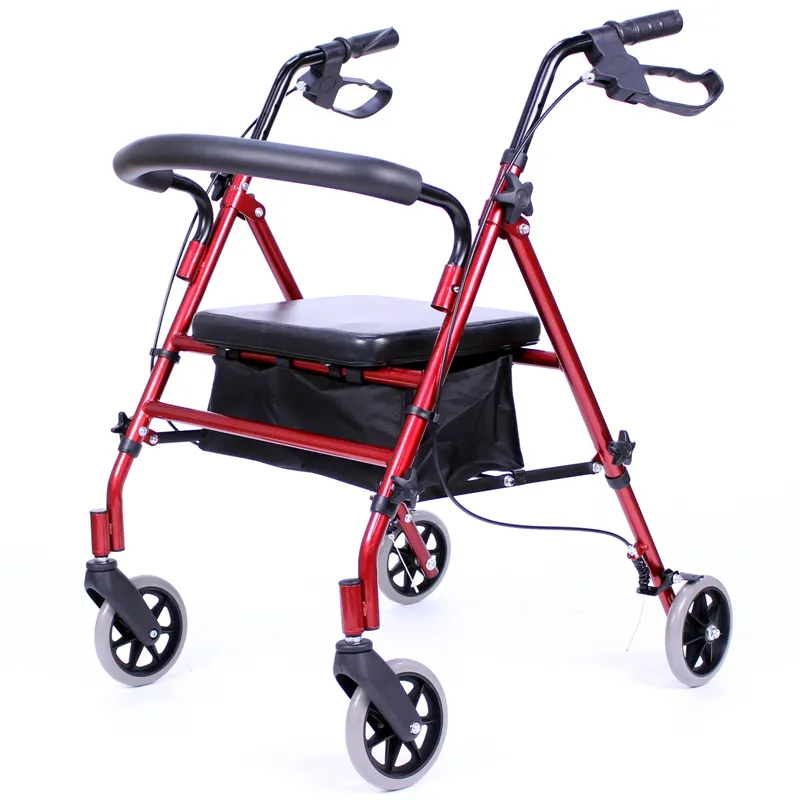
A 4-wheel rollator walker is a walking assistance device with four wheels, a two-hand braking system, a handle bracket, and a support frame.
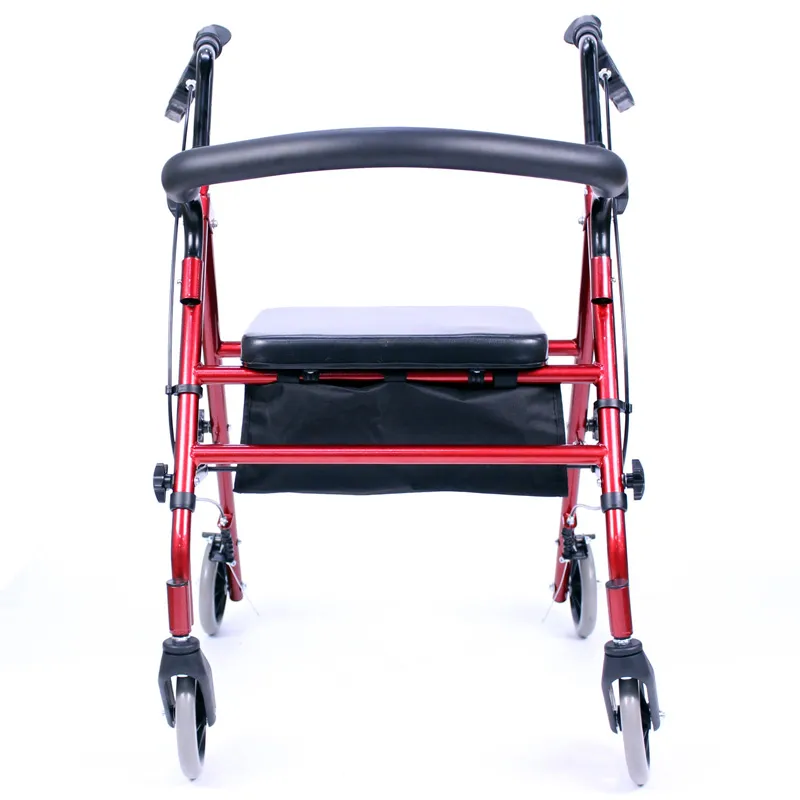
It is often equipped with a height-adjustable handle, a braking device, a storage basket, and a foldable seat.
Unlike traditional wheelless or two-wheeled walking aids, the 4-wheel rollator walker is more suitable for outdoor walking. It helps users maintain balance while walking more effortlessly, making it suitable for elderly people with decent walking ability but who require some support.
Why learn the correct way to use a 4-wheel rollator?
While a 4-wheel rollator provides support, incorrect use can reduce stability and may cause:
• Excessive strain on the wrists and shoulders;
• Loss of control while sliding downhill;
• Falls due to tilting;
• Skidding accidents due to unlocked brakes.
Therefore, using a 4-wheel rollator correctly is not just about "pushing skills," but a crucial principle of safety and body protection.
How to adjust the height and structure of a 4-wheel rollator to match your body?
Adjusting the height, handle angle, and structure of the 4-wheel rollator is the first step to ensuring correct use.
A suitable height allows the body to maintain a natural posture, preventing muscle strain.
1. Correct Handle Height Adjustment
• Stand naturally with arms hanging down;
• The handles of a 4-wheel rollator walker should be level with your wrists;
• When gripping the handles, elbows should be naturally bent at approximately 15 degrees;
• Shoulders should be relaxed while walking, neither raised nor leaning forward.
This posture ensures balance and avoids excessive strain on the upper limbs.
2. Checking Structural Stability
Before use, ensure the following components are safe and reliable:
• All four wheels are secure and rotate smoothly;
• The braking system is responsive and can stop completely;
• The seat or storage basket is stable and not loose;
• The folding mechanism is securely locked and will not fold accidentally while walking.
3. Choosing the Appropriate Width and Weight
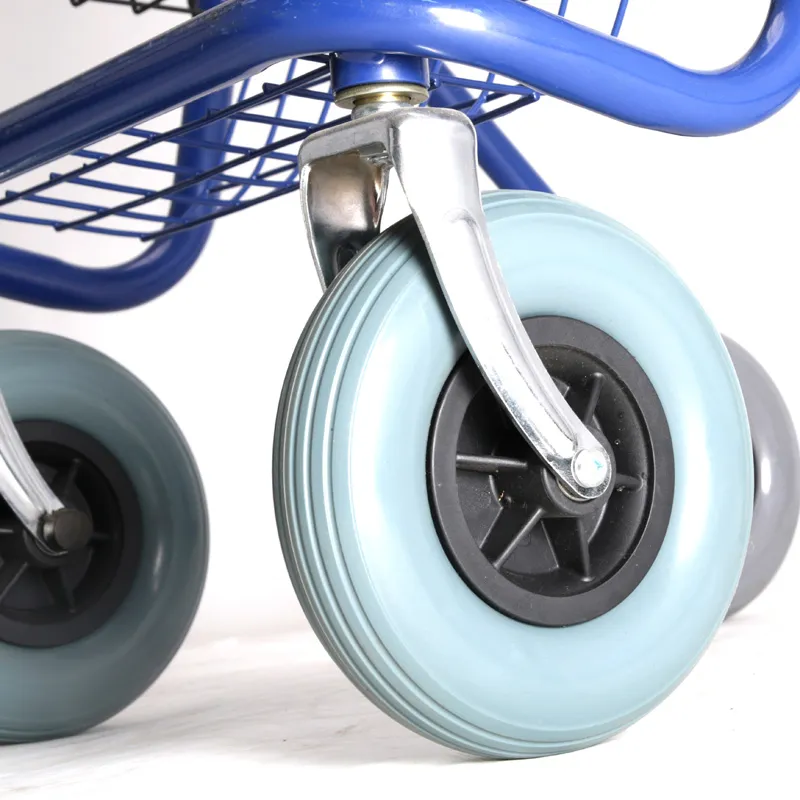
• For outdoor use, choose a slightly wider 4-wheel rollator walker with larger wheels to enhance stability;
• If the user has limited physical strength, a lightweight design is recommended for easy pushing and carrying.
Note: Rollator walker adjustments should be made standing by the user to ensure they fit their individual height and posture.
What preparations are needed before using a 4-wheeled rollator walker?
Many elderly people start walking as soon as they get the rollator walker, but proper use should begin with the "preparation phase."
Good preparation can significantly reduce risks.
1. Environmental Check
• The ground should be flat, non-slip, and free of obstacles;
• Avoid wet, slippery floors or sloping sections;
• If outdoors, choose a sidewalk or pedestrian zone to avoid vehicle interference.
2. Equipment Check
• Check that the brake lever is responsive;
• Confirm that all four wheels rotate smoothly without abnormal noise;
• Confirm that all clips and screws are secure;
• If using a foldable model, ensure it is fully unfolded and locked.
3. Physical Preparation
• Before starting, lightly warm up your ankles and knees;
• If you have low blood pressure or feel dizzy, rest before walking;
• Grip the handles firmly with both hands, ensuring your center of gravity is in the center line of the rollator.
These simple preparatory movements are fundamental for safe use of a 4-wheel rollator.
How to correctly use a 4-wheel rollator while walking?
Correct walking posture and movements are the most crucial aspects of using a 4-wheel rollator walker.
Improper pushing methods may lead to excessive strain on your arms or loss of rollator control.
1. Correct Body Posture
• Your body should be positioned behind the center line of the rollator;
• Keep your back straight, without leaning forward;
• Look straight ahead, avoiding prolonged periods of looking down;
• Grip the handles lightly with your wrists relaxed.
2. Walking Rhythm
• Take a step first, then push gently: Don't rely on the rollator to "pull you along";
• Maintain a distance of about 20 cm between your feet and the front wheel of the rollator;
• Walk at a steady, even pace, neither too fast nor too slow;
• When going uphill or downhill, reduce speed and be prepared to brake at any time.
3. Uphill and Downhill Techniques
• Uphill: Lean slightly forward and gently push the rollator with both hands simultaneously;
• Downhill: Lean slightly back, lightly apply the brakes, and control the rollator to descend slowly;
• Do not completely release your grip when going downhill to prevent loss of control.
4. Turning and Stopping
• Slow down when turning, applying slight pressure with the outside hand;
• Before stopping, lightly apply the brakes to bring the rollator to a smooth stop;
• After coming to a complete stop, you can fully lock the brakes before resting.
How to correctly use the braking system of a 4-wheel rollator?
The braking system is one of the most critical safety features of a 4-wheel rollator walker. Mastering the correct usage is key to preventing slips and falls.
1. Two Braking Modes
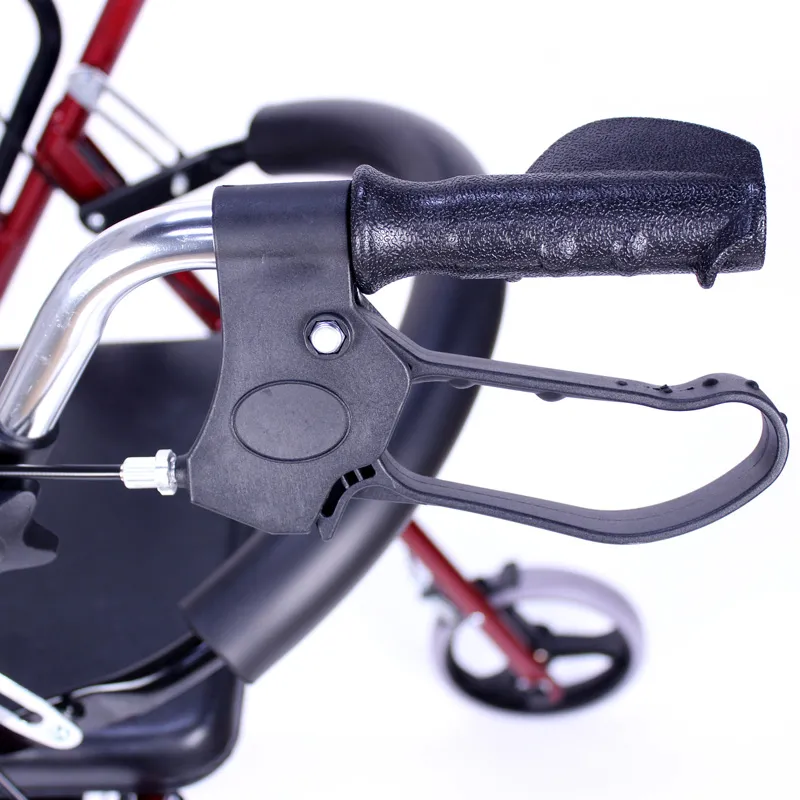
• Temporary Braking: Gently squeeze the brake lever to slow down or stop.
• Parking Brake: Lock the brake lever downwards to completely secure the wheels.
2. Correct Usage Procedures
• To stop while walking, gradually slow down.
• Gently squeeze the brake to bring the vehicle to a slow stop.
• To rest or sit down, immediately lock the brake.
• Remember to unlock the brake before walking again.
3. Common Mistakes
• Failing to brake downhill, resulting in coasting.
• Forgetting to lock the brake before sitting down to rest.
• Not checking brake wear after long-term use.
Reminder:
Check the brake cables weekly for looseness and the lever for sensitivity to ensure the 4-wheel rollator's braking is safe and reliable.
How to Safely Use the 4-Wheel Rollator Walker Seat During Rest?
Most 4-wheel rollator walkers come with a folding seat for elderly people to rest during rides. However, incorrect sitting posture or brake operation may lead to a tipping risk.
1. Safety Procedures Before Sitting Down
• Ensure the ground is level;
• Grasp the rollator handles with both hands simultaneously;
• Fully lock the brakes;
• Slowly turn and sit down, keeping your body centered.
2. Key Points for Getting Up
• Before getting up, ensure the brakes are still locked;
• Hold onto the handles firmly with both hands and stand up slowly;
• Release the brakes only after you are firmly standing and ready to walk.
3. Prohibited Actions
• Do not sit down on a slope;
• Do not sit down without locking the brakes;
• Do not ride while sitting on the seat.
These details determine the safety of using a 4-wheel rollator and reflect the professionalism of proper operation.
What safety precautions should elderly people take when using a 4-wheel rollator?
Safety is always the primary consideration when using a 4-wheel rollator walker.
Whether at home or outdoors, the following principles should be followed.
1. Choose a Safe Route
• Avoid complex terrain such as steps, gravel, and potholes;
• The walking route should be well-lit and level;
• Avoid going out in inclement weather (rain, snow, strong winds).
2. Maintain a Stable Center of Gravity
• Keep your center of gravity in the center of the rollator while walking;
• Avoid operating with one hand or carrying heavy objects while walking;
• If using a storage basket, place items in the center with a moderate weight.
3. Regularly Check the Equipment's Condition
• Check tire wear monthly;
• Ensure the handles and brakes are not loose;
• If there are any unusual noises or shaking, maintain or replace the equipment immediately.
4. Manage Walking Time Reasonably
Even when using a 4-wheel rollator, it is not recommended to walk for too long at a time.
It is recommended to rest for 5 minutes every 20-30 minutes to avoid fatigue leading to loss of control.
What are some common mistakes when walking with a 4-wheel rollator?
Many users make mistakes when using a 4-wheel rollator walker. Here are some common ones:
• Excessive force with both hands – prolonged excessive force can cause wrist inflammation;
• Leaning forward – easily disrupts the center of gravity, increasing the risk of falls;
• Walking too fast – reduces braking reaction time;
• Lifting the rear wheel while pushing – severely damages the balance structure;
• Neglecting brake maintenance – failure of critical components can lead to skidding accidents.
Avoiding these mistakes is fundamental to the safe use of a 4-wheel rollator.
How to properly maintain and care for a 4-wheel rollator?
Proper maintenance not only extends its lifespan but also ensures safety every time you use it.
1. Regular Cleaning
• Wipe the frame with a soft cloth to prevent dust accumulation;
• Avoid washing the bearings or brake components with water;
• After outdoor use, dry the wheels to prevent rust.
2. Tire and Brake Inspection
• Check tire wear every two weeks;
• Check brake cables for looseness monthly;
• If braking distance increases, adjust or replace parts promptly.
3. Storage
• Store in a dry, well-ventilated place;
• Avoid direct sunlight and moisture;
• When not in use for extended periods, fold and cover with a dust cover.
A well-maintained 4-wheel rollator not only pushes more smoothly but also maintains optimal braking performance.
What are the long-term benefits of using a 4-wheel rollator correctly?
Long-term, correct use of a 4-wheel rollator walker offers significant benefits to the health and independence of older adults:
• Increased lower limb strength and joint flexibility;
• Improved cardiopulmonary function and blood circulation;
• Reduced risk of falls and increased sense of security;
• Maintained social activity and slowed decline;
• Increased self-confidence and autonomy.
However, these benefits are contingent on correct use and safe operation.
Why is Dayang Medical a strong choice for purchasing mobility equipment?
Dayang Medical combines factory-level manufacturing, certified quality systems, strong R&D capabilities and practical purchasing advantages—competitive prices, customizable OEM services, and export experience—making it an ideal China-based manufacturer and supplier for hospitals, distributors, retailers and brands seeking reliable, high-quality mobility and medical products.