

Caring for elderly people with limited mobility, especially those who are bedridden or have difficulty walking, is one of the most common and challenging tasks: transferring them from bed to other locations—such as wheelchairs, sofas, dining tables, bathrooms, or even showers.
Many caregivers ask:
Is there a safe, effortless, and protective method for the elderly?
The answer is: an electric lift transfer chair.
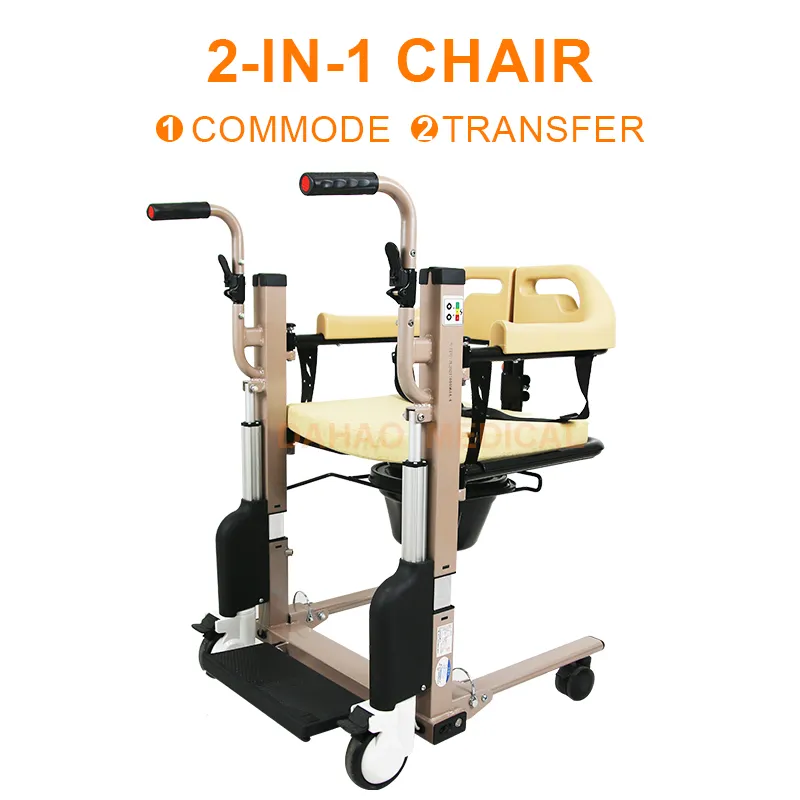
An electric lift transfer chair is a nursing device specifically designed for the elderly, patients in rehabilitation, and people with mobility impairments. It helps users smoothly transfer from bed to wheelchair, bed to toilet, and bed to sofa without pushing or carrying.
This article will delve into the structural principles, usage, advantages, and suitable users of an electric lift transfer chair, and systematically answer the core question, "Why is it the safest transfer solution?" through multiple question-based subheadings.
Why is transferring an elderly person from bed difficult?
For elderly people with limited mobility, seemingly simple actions such as getting up, sitting down, and moving around actually involve multiple aspects of body coordination.
For example, core muscle strength, lower limb support strength, arm coordination, and balance.
However, with age, many elderly people experience a significant decline in these abilities due to muscle atrophy, joint degeneration, or diseases (such as stroke, Parkinson's disease, post-fracture sequelae, etc.).
Therefore, transferring from bed to a wheelchair, toilet, or sofa becomes a high-risk action.
Common problems include:
• The elderly person cannot exert force themselves, making them prone to falls;
• Caregivers need to lift them forcefully, which can easily cause lower back injuries;
• Without assistive devices, the transfer is unstable, easily leading to fractures or slips;
• It places a psychological burden and physical stress on both the elderly person and the caregiver.
These problems accumulate over long-term care, causing physical fatigue and even caregiver accidents.
Therefore, the electric lift transfer chair was developed to solve this core problem.
What is an electric lift transfer chair?
An electric lift transfer chair is an intelligent care device that combines a lifting system, a set of wheels, and a human support structure.
It uses electric controls for height adjustment and smooth movement, helping caregivers easily and safely transfer elderly people from bed to other locations.
It typically consists of the following components:
• Electric lifting system: The core power source for smooth lifting;
• Seat structure: Ergonomically designed seat and backrest for comfort;
• Adjustable support bars: Ensure stability during transport;
• Caster system: Four-wheel or multi-wheel structure for easy movement and with braking function;
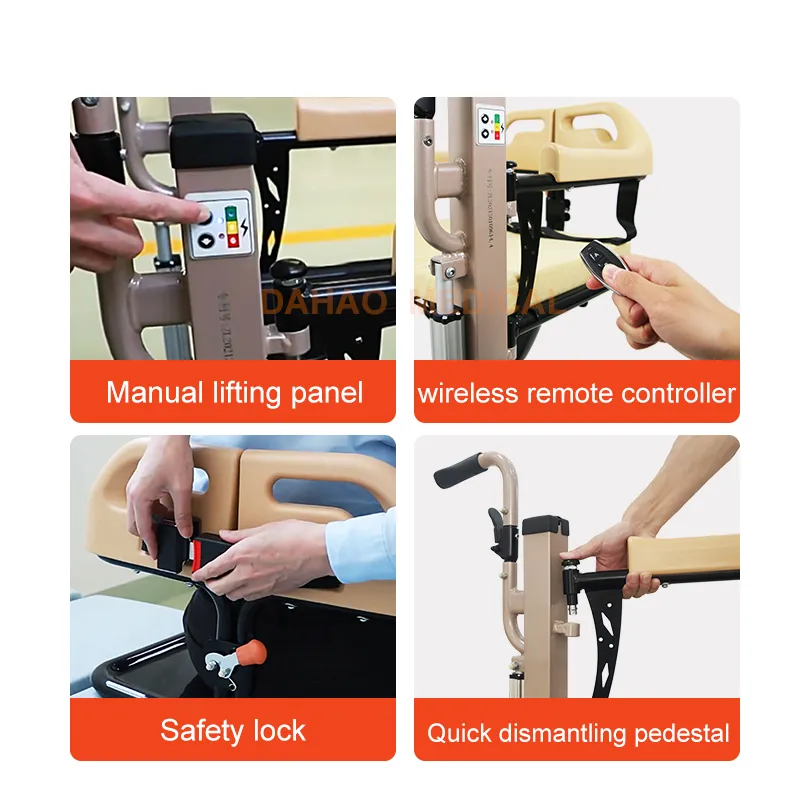
• Battery and controller: Simple operation, supporting remote or button control.
In other words, the electric lift transfer chair combines a wheelchair, lifting system, and caregiver assistance into one.
It can not only move but also be raised and lowered, and can seamlessly connect beds and chairs.
Why is an electric lift transfer chair recommended?
When caring for the elderly, many people have tried manual transfer, carrying, or using cloths, but these methods often have safety hazards and inefficiencies.
In comparison, electric lift transfer chairs offer significant advantages:
1. Reduced burden on caregivers
Traditional manual transfers require two or even three people to lift the chair, easily causing back strain for caregivers.
Electric lift transfer chairs use a motor-driven system to raise and lower the chair; caregivers simply operate a button to raise or lower the seat, achieving a smooth transfer.
2. Improved safety for the elderly
Electric lift transfer chairs feature a sturdy steel structure and a multi-point support system to prevent slipping, tilting, or pinching.
Some models also include seat belts, brake locking systems, and anti-tipping designs, greatly enhancing safety during transport.
3. Enhanced dignity and comfort for the elderly
Being lifted or carried is an uncomfortable and embarrassing experience for the elderly.
Electric lift transfer chairs allow them to move as if sitting in a regular chair, maintaining both physical comfort and psychological dignity.
4. Multi-functional Chair
An electric lift transfer chair can not only facilitate bed-to-chair transfers, but also be used for:
• Assisting with toileting;
• Assisting with bathing;
• Assisting with meals;
• Short trips.
Therefore, it can almost replace many nursing care devices, becoming a core tool for home or institutional care.
What safety risks exist when transferring elderly people from bed?
Many families often face the following safety hazards without using an electric lift transfer chair:
• Falls due to improper lifting: If the elderly person is heavy or uncoordinated, they are prone to slipping while being lifted.
• Back injuries to caregivers: Prolonged bending and moving patients is a major cause of occupational diseases in nursing care.
• Improper posture during transfer: If the elderly person's body is not properly secured, shoulder or spinal strains are likely.
• Slippery floors or obstacles: Without assistive devices, it is easy to lose control and slip during movement.
An electric lift transfer chair effectively avoids these risks through a combination of mechanical lifting, fixed support, and stabilizing wheels.
How does an electric lift transfer chair work?
Understanding the principle helps in using it better.
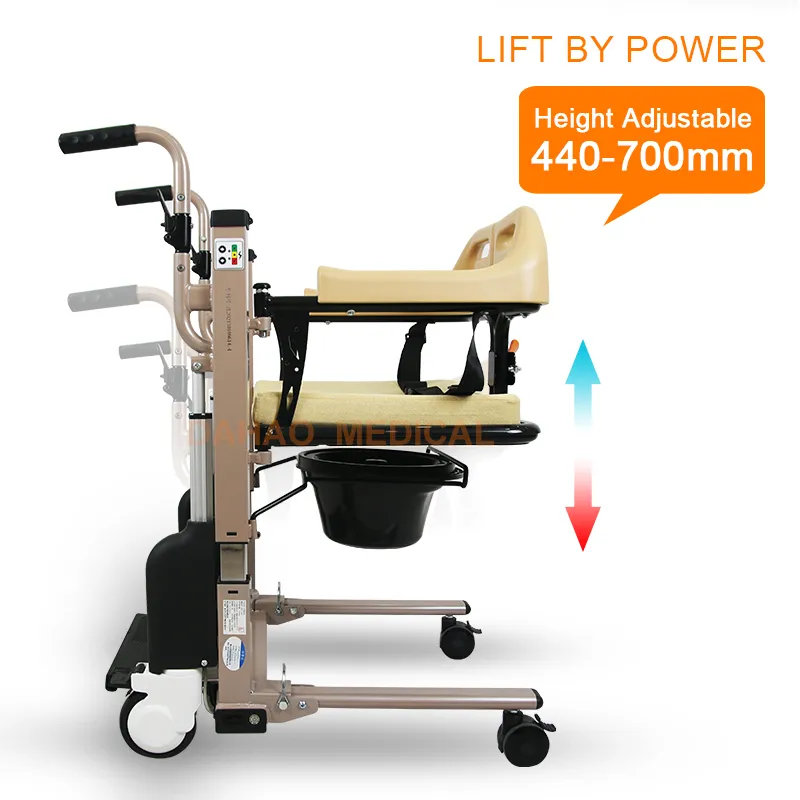
The core of an electric lift transfer chair is an electric lifting mechanism that uses a built-in motor to drive a screw or hydraulic rod for height adjustment.
The workflow is as follows:
• Push the electric lift transfer chair to the bedside;
• Adjust the seat to be at the same height as the bed;
• Help the elderly person sit on the chair using the side safety armrests or support bars;
• Press the control button, and the chair lowers or rises to the target height;
• Lock the casters and move the chair stably.
The entire process requires no lifting or significant force, allowing the elderly person to move smoothly with stable support.
Why is an electric lift transfer chair safer than manual transfer?
This is one of the most frequently asked questions in caregiving. The answer can be explained from the following aspects:
1. High Mechanical Stability
The metal structure of the electric lift transfer chair is designed to distribute weight evenly, preventing tipping.
2. Precise Control
The electric control system allows for millimeter-level height adjustment, ensuring seamless integration with the bed, toilet, or sofa.
3. Anti-slip and Anti-fall System
Most electric lift transfer chairs are equipped with safety locks and anti-fall mechanisms to prevent sudden descent in the event of a power outage or unexpected stop.
4. Wheel Braking System
A four-wheel independent braking structure ensures the chair remains stable during transport, preventing slippage.
5. Secure Safety Belts and Guardrails
Effectively prevent the elderly person's body from tilting or sliding down.
Therefore, in nursing safety standards, electric lift transfer chairs are recognized as a "low-risk, high-control" professional nursing tool.
Who are suitable elderly people for electric lift transfer chairs?
Electric lift transfer chairs are not only designed for those who are completely bedridden; they are suitable for a wide range of people.
Mainly including:
• Elderly people with lower limb weakness who cannot stand independently;
• Stroke patients in rehabilitation;
• Patients with Parkinson's disease, cerebral palsy, or neurodegenerative diseases;
• Elderly people who need to remain in bed for extended periods after surgery;
• Families with limited caregivers and limited home care resources.
For elderly individuals who cannot walk steadily, have difficulty getting in and out of bed, or require assisted movement, an electric lift transfer chair is almost always the optimal solution.
What are the core parameters of an electric lift transfer chair?
When purchasing or selecting an electric lift transfer chair, the following parameters are particularly crucial:
Project | Recommended range | Instructions |
| Maximum Load Capacity | 100–150kg | Determines the weight range suitable for users |
| Lifting Height | 40–75cm | Adapts to different heights of beds, toilets, sofas, etc |
| Material | Steel or aluminum alloy construction | Balances strength and rust resistance |
| Motor Type | DC low-noise motor | Smooth lifting and lowering with low noise |
| Power Supply | Rechargeable battery | Easy for indoor and outdoor use |
| Safety Configuration | Anti-slip mat, seat belt, braking system | Enhances overall safety |
When choosing an electric lift transfer chair, prioritize structural stability and smooth lifting, rather than solely focusing on price.
Advantages of Electric Lift Transfer Chairs in Home Care
In home care scenarios, electric lift transfer chairs have extremely wide applications:
• Toileting assistance: Directly connects to the toilet, eliminating the need for assistance;
• Bathing assistance: Waterproof design ensures safe bathing for the elderly;
• Meal assistance: Adjustable height to table level;
• Going out assistance: Safe and stable for short-distance movement.
These functions make care more efficient and considerate, significantly reducing the burden on family members.
What precautions should be taken when using an electric lift transfer chair?
To ensure safety and extend the equipment's lifespan, please remember the following usage guidelines:
• Check the battery level and brakes before use;
• Keep the floor level during lifting and lowering to avoid tilting;
• Always fasten the seatbelt after the elderly person sits on the chair;
• Lock the casters after transfer to prevent slippage;
• Avoid overloading and adhere to the maximum load-bearing capacity;
• Regularly check the motor and screw system to prevent loosening.
Proper use of the electric lift transfer chair not only extends the equipment's lifespan but also ensures the safety of the elderly person and caregivers.
Are Dayang Medical products easy to assemble?
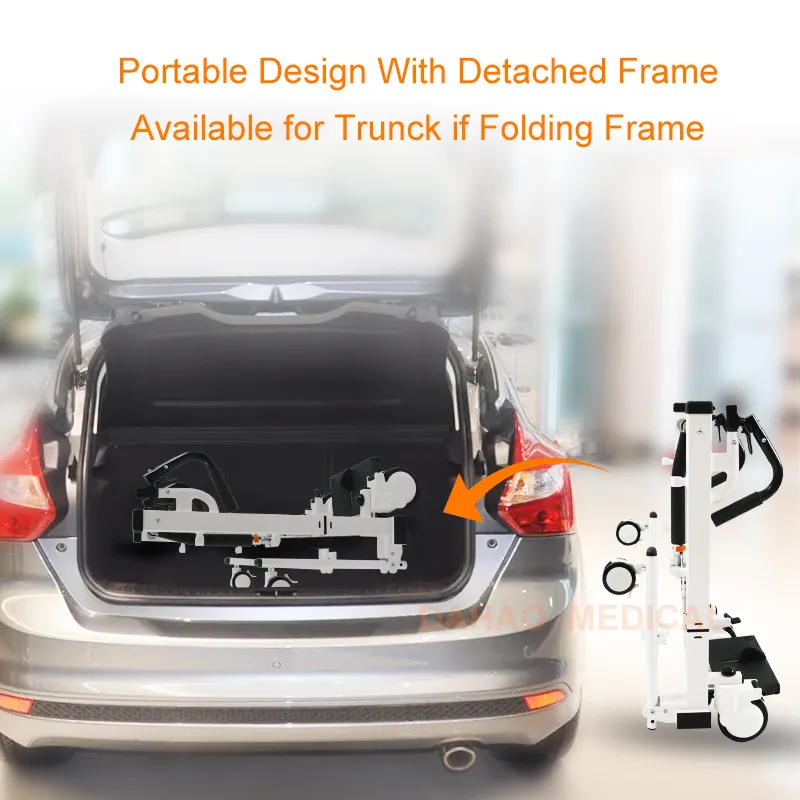
Yes, most of our wheelchairs, walkers, and patient beds are designed for easy assembly, requiring minimal tools. This benefits distributors and end-users, especially those selling online. Buyers who purchase from our factory in China receive detailed manuals and support materials. Our products combine high-quality construction with user-friendly design while maintaining low-price purchasing options.
Distributors appreciate that easy assembly reduces customer complaints and improves sales performance, especially when combined with our factory promotions.