

When choosing a walking aid, weight is often one of the most important factors for buyers. Lightweight rollator walkers are widely popular due to their portability, ease of operation, and foldability.
However, the question "How heavy is a lightweight rollator walker?" cannot be answered with a simple number. Different materials, sizes, structures, and functional configurations all directly affect the overall weight and user experience of the walker.
This article will analyze the weight range of lightweight rollator walkers, influencing factors, suitability recommendations for different groups, and key considerations when purchasing, helping you determine which weight is best for you.
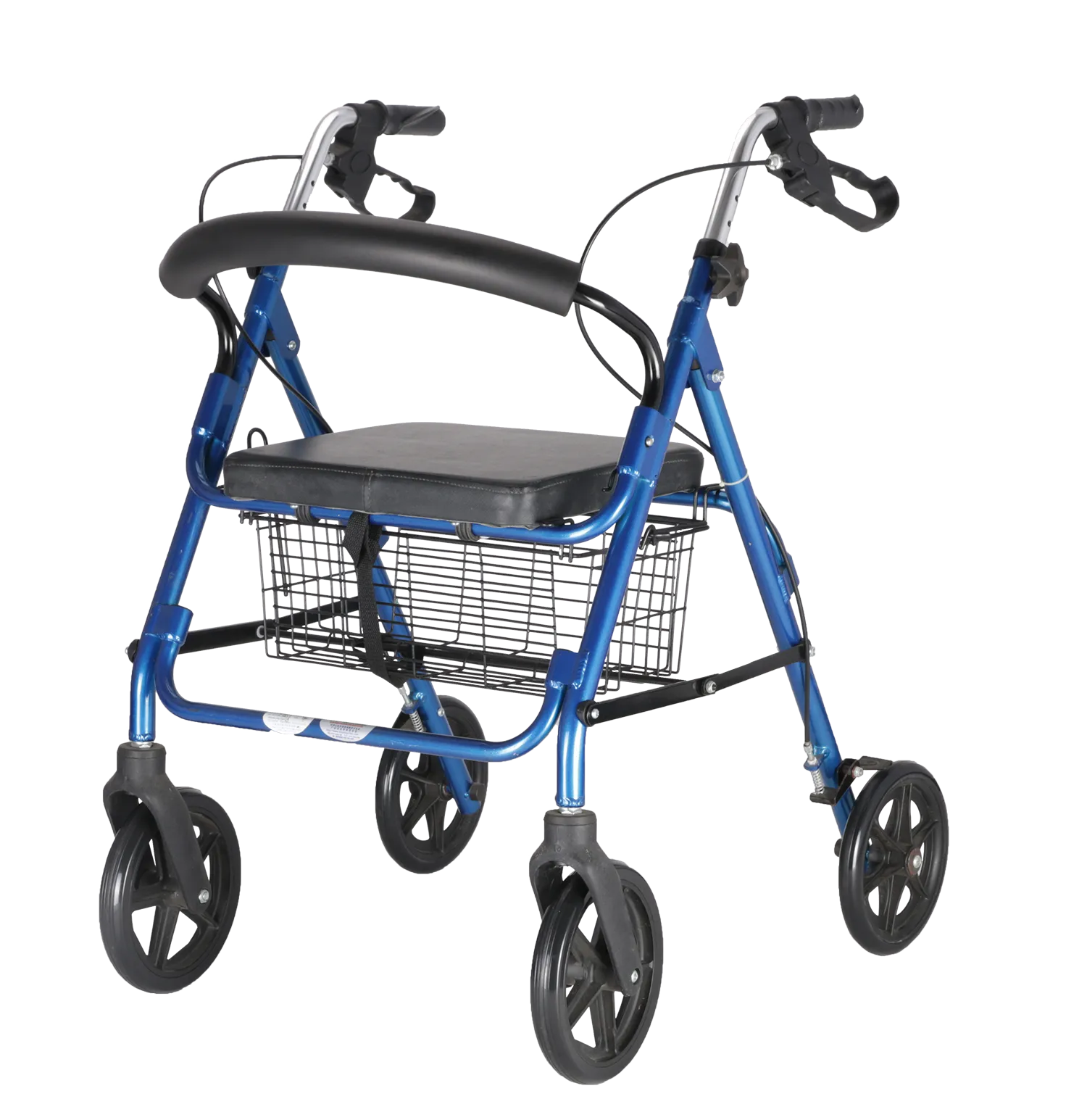
What is the standard weight of a lightweight rollator walker?
Why do "lightweight rollator walkers" vary in weight?
"Lightweight rollator walker" is not a fixed specification, but rather a term relative to traditional walking aids. Generally, a typical four-wheeled walking aid weighs between 9 kg and 12 kg, while a lightweight rollator walker typically weighs between 6 kg and 8.5 kg.
The main reasons for this difference include:
• Material differences: Aluminum alloy is lighter than steel, while carbon fiber is lighter but more expensive.
• Structural design: Whether it includes a seat, storage basket, or detachable accessories.
• Load-bearing capacity requirements: Lightweight models typically have a load-bearing capacity of 100-120 kg, while reinforced models can reach 150 kg.
Therefore, the "lightness" of a "lightweight rollator walker" is not absolute, but rather a balance made relative to functionality, materials, and stability.
What materials are generally used to manufacture lightweight rollator walkers?
Aluminum alloy walkers are really lighter?
Most lightweight rollator walkers on the market currently use aerospace-grade aluminum alloy structures.
The advantages of aluminum alloy are:
• Lightweight: Its density is lower than steel, only about one-third that of steel.
• High strength: After anodizing, it is strong enough to support stable daily walking.
• Strong corrosion resistance: Particularly suitable for use in high humidity or outdoor environments.
Some high-end lightweight rollator walkers even use carbon fiber, a material that maintains extremely low weight (around 5 kg) while possessing excellent torsional strength and rigidity, but at a higher price, and is often used for advanced medical or rehabilitation applications.
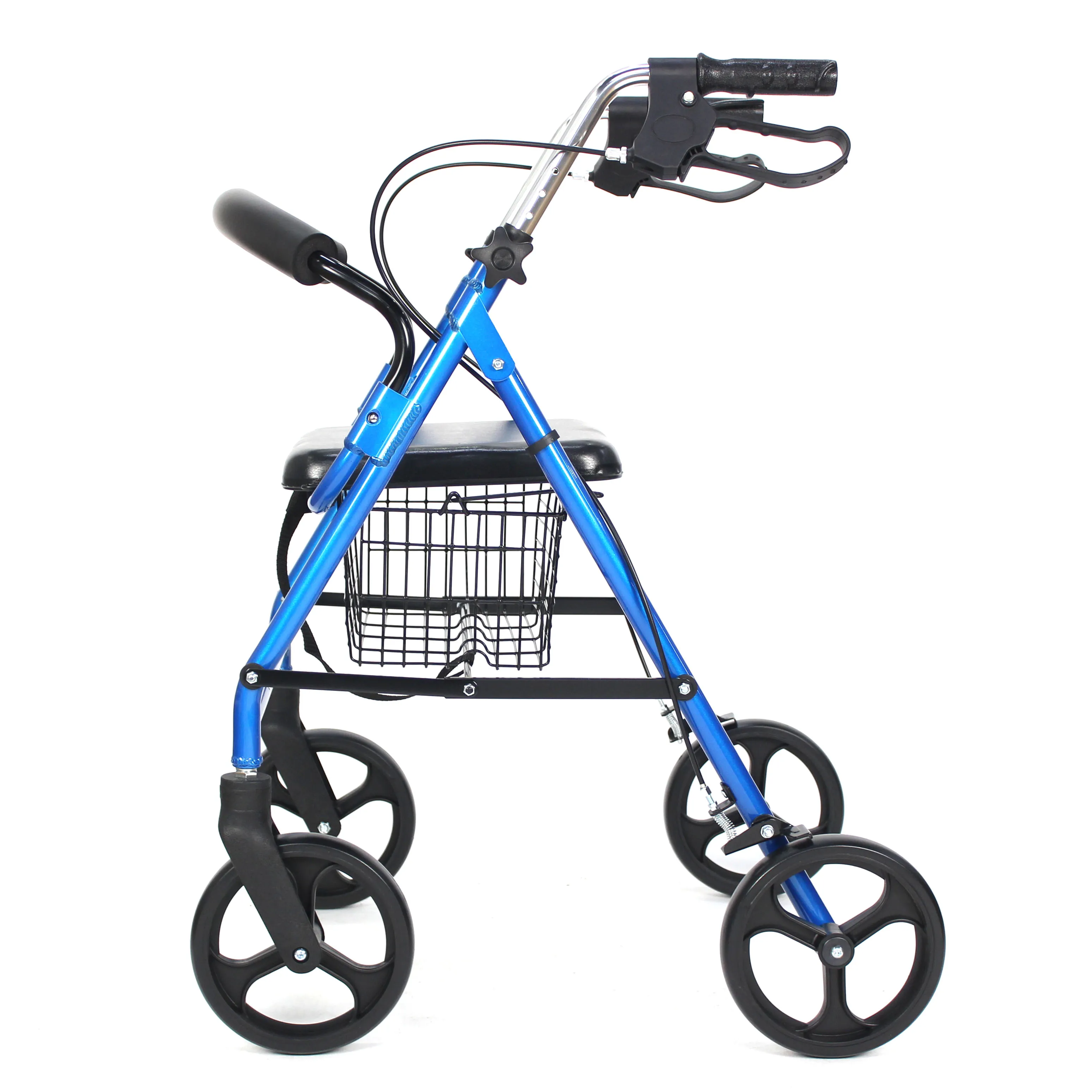
What are the main components of a walking aid's weight?
Which components make a lightweight rollator walker heavier?
The total weight of a walking aid depends not only on the main frame but also directly on the following components:
1. Wheel Size
Larger wheels (8-inch or 10-inch) allow for better obstacle clearance but are about 0.5 kg heavier than smaller wheels.
2. Seat and Backrest
Some lightweight rollator walkers come with a seat and backrest for added comfort, but this adds about 1 kg.
3. Storage Accessories
Mesh bags, baskets, or hanging bags are additional burdens, generally between 0.3 and 0.6 kg.
4. Folding Mechanism
The folding system requires connecting axles and fixing devices, which is also a hidden source of weight.
Therefore, the purchase decision should be based on the actual usage scenario—if only for indoor use, an ultra-lightweight, seatless model is suitable; if long-distance outdoor walking is required, a slightly heavier lightweight rollator walker with a seat is more appropriate.
Is a lighter lightweight rollator walker always better?
Why might an overly light walker be unsafe?
Many consumers mistakenly believe that "the lighter the better," but this is not the case.
The lightweight nature of a lightweight rollator walker needs to be balanced with stability.
If the walker is too light (e.g., less than 5 kg), the following problems may occur:
• Decreased stability, making it easy to be pushed or tip over;
• Difficulty in maintaining traction with the braking system;
• Insufficient load-bearing capacity, unable to support heavier users;
• Easily affected by wind during outdoor use.
Therefore, for most users, a 6-8 kg lightweight rollator walker is the best choice that balances safety and portability.
What weight of lightweight rollator walker is suitable for different groups of people?
How should seniors choose a suitable lightweight rollator walker?
Different users have different needs regarding the weight of their walking aids. Here are recommended weight ranges for common user groups:
Target audience | Recommended weight for walking aids | Reasons |
| Elderly individuals with limited mobility | 6–7 kg | Effortless to push, easy to operate; folds easily and is lightweight |
| Users who need to walk outdoors | 7–8.5 kg | Larger, more stable wheels allow for traversing uneven terrain |
| Post-operative recovery patients | Under 6 kg | Suitable for short-distance indoor use, minimizing strain |
| Individuals with less strength (such as women or those who are physically weak) | 5–6.5 kg | Lighter, easy to carry onto vehicles or store |
In other words, a lightweight rollator walker is not just about weight; it's a comprehensive choice considering stability, safety, and convenience.
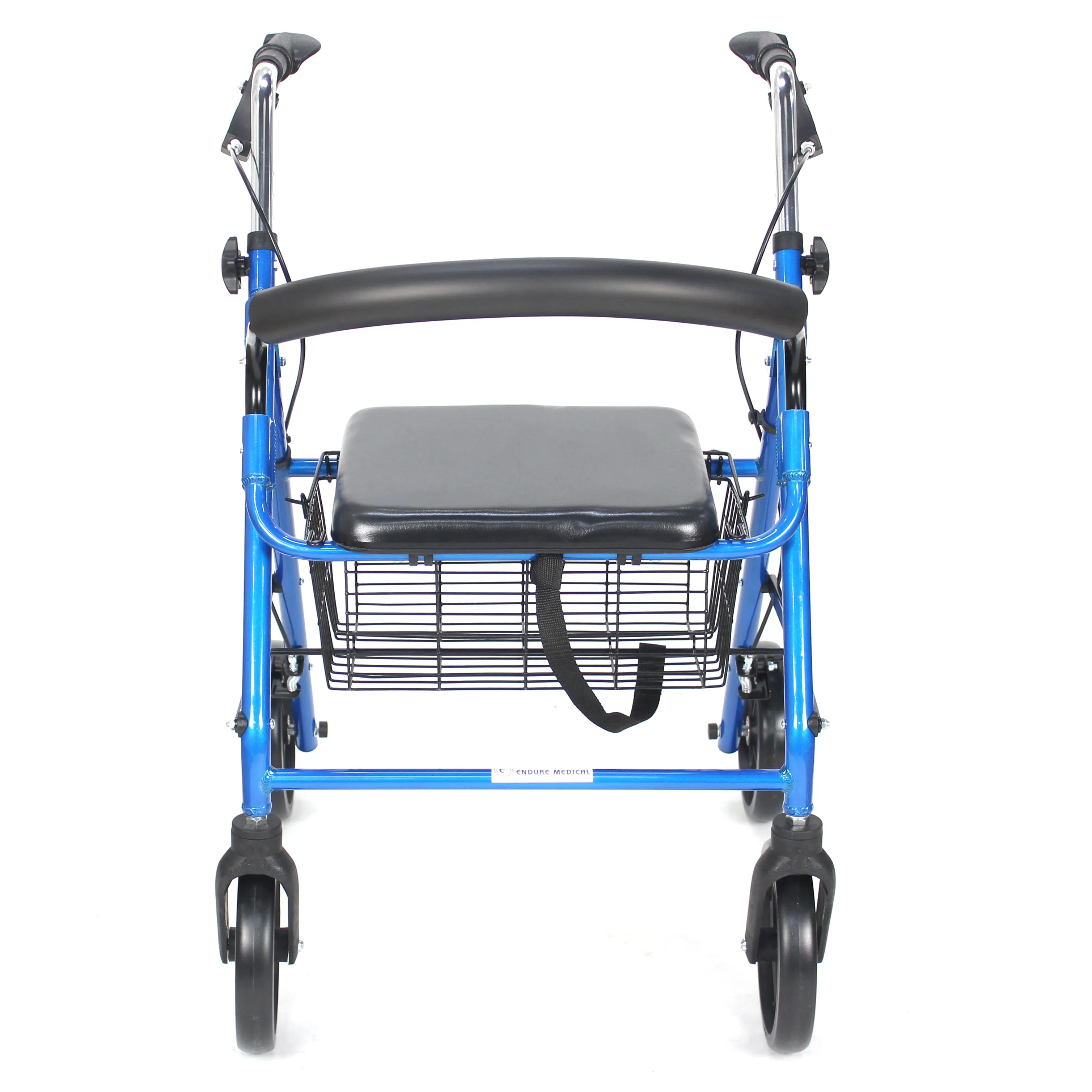
Does the weight of a lightweight rollator walker significantly affect portability?
Can a lightweight rollator walker be easily carried upstairs or put in a car?
One of the biggest advantages of a lightweight rollator walker is its ease of carrying and storage.
• Compact when folded: Most models can be folded with one hand, with a folded width of no more than 30 cm.
• Moderate weight: A 6-8 kg walker can easily fit in a car trunk.
• Easy to carry upstairs: Even female users can independently carry an aluminum lightweight rollator walker.
However, it's important to note that if you frequently need to carry things upstairs, prioritize models weighing less than 7 kg and check for handles or folding buckles to improve ease of use.
Does the weight of a lightweight rollator walker affect its load-bearing capacity?
Will a lighter weight result in insufficient load-bearing capacity?
The weight of a walking aid is related to its load-bearing capacity, but the relationship is not simple.
Modern lightweight rollator walkers utilize optimized structural designs, allowing them to withstand loads of 100-120 kg even at a lighter weight.
However:
• Ultralight carbon fiber rollator walkers generally have a load-bearing capacity limited to below 100 kg;
• Aluminum alloy models are more balanced and typically support 120 kg;
• Steel rollator walkers, while heavier, can support loads exceeding 150 kg.
Therefore, if the user is larger or needs to sit on the rollator for extended periods, it is recommended to choose a slightly heavier but more stable model.
How to determine if a rollator is "lightweight"?
What key parameters can be used as a basis for judgment?
When choosing a walking aid, you can determine if it qualifies as a "lightweight rollator walker" based on the following parameters:
• Overall weight: Less than 8.5 kg;
• Material: Aluminum alloy or carbon fiber;
• Folding width: No more than 30 cm;
• Can be pushed and folded with one hand;
• Simple yet functional accessories (including a braking system and storage bag).
If a walking aid meets all of the above conditions, it can be classified as a lightweight rollator walker.
How to strike a balance between lightness and stability?
Should you choose the lightest or the most stable?
This depends on the usage scenario:
• Indoor or flat ground users: Choose a lightweight rollator walker weighing less than 6 kg;
• Outdoor or uneven ground users: Prioritize models weighing 7-8 kg with large wheels and a sturdy frame;
• Users who need to sit down and rest: It's better to choose a model with a seat, even if it's 1 kg heavier.
The key principle is: Safety always takes precedence over lightness.
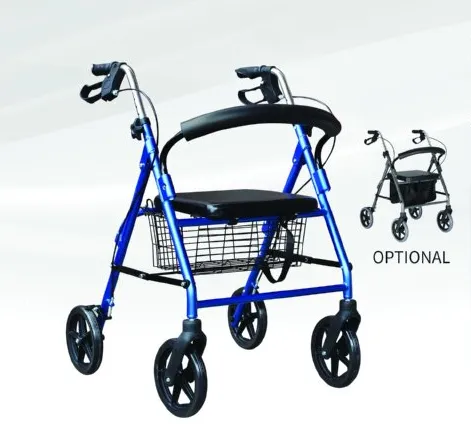
When Choosing a Lightweight Rollator Walker, weight is Only One Factor
While "how heavy is a lightweight rollator walker?" is the most obvious question, judging solely by weight is not comprehensive.
An ideal lightweight rollator walker should strike a balance between:
• Moderate weight (6-8 kg);
• Sturdy frame;
• Smooth handling;
• Easy folding;
• Suitable for individual weight and usage scenarios.
The true value of a lightweight rollator walker is not just "light," but "light and reliable." When purchasing, it is essential to consider your own physical condition, usage environment, and carrying needs to find the ideal walking companion that is both lightweight and safe.
Is it possible to order samples or trial units before placing a large purchase?
Yes. Dayang encourages buyers to evaluate sample units before committing to large orders. Sample policies vary by product and customization level, but we typically offer paid samples or discounted trial units for qualified customers. Sample orders allow purchasers to verify fit, finish, functionality and compliance.
Contact our sales team to request sample prices, shipping estimates, and potential discounts that can be applied to future bulk purchases or promotional offers.