

In modern nursing and rehabilitation environments, electric hospital beds have become indispensable equipment in hospitals, nursing homes, and home care. However, when purchasing one, people often encounter the question: "What exactly is the difference between a fully electric and a semi-electric hospital bed?"
Although they may look similar and both offer patient posture adjustment and convenience, there are significant differences in operation methods, control systems, user experience, and energy consumption.
Understanding the differences between these two types of electric hospital beds not only helps in choosing more suitable nursing equipment but also improves patient comfort and nursing efficiency.
This article will systematically answer this question and analyze in detail the structural principles, control methods, and usage scenarios of the two types of beds.
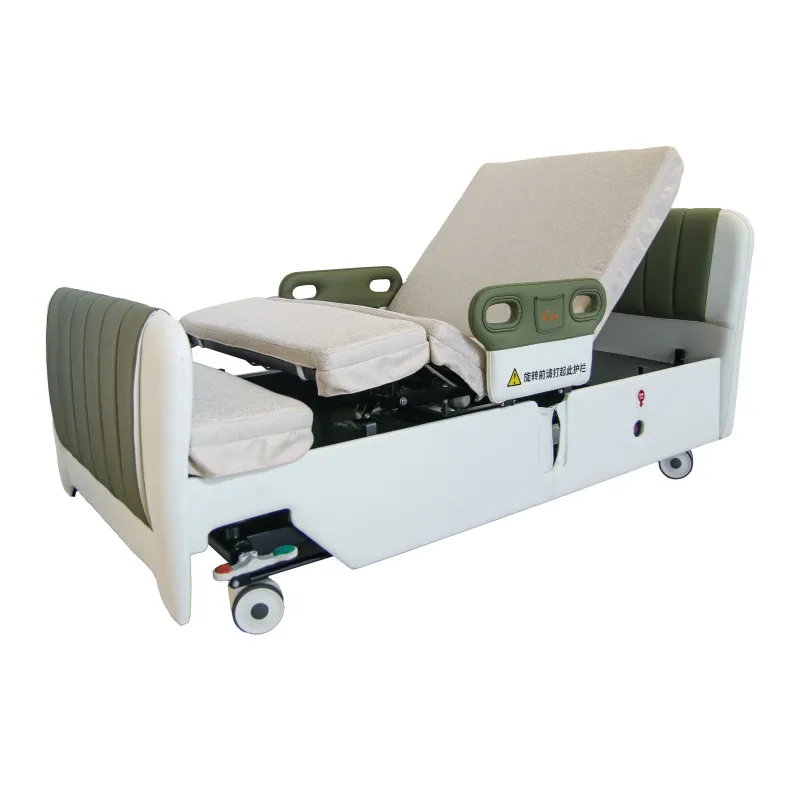
What is an electric hospital bed?
An electric hospital bed is a medical care device that uses a motor-driven mechanism to adjust the bed's posture.
It typically performs the following functions:
• Backrest height adjustment (assists patients sitting up);
• Leg lift (promotes blood circulation);
• Overall height adjustment (facilitates operation by nursing staff).
The core value of electric hospital beds lies in:
• Reducing the physical burden on caregivers;
• Improving patient comfort;
• Enhancing nursing safety;
• Suitable for long-term bedridden patients, post-operative rehabilitation patients, or elderly patients.
In the development of electric hospital beds, two main types have emerged: fully electric hospital beds and semi-electric hospital beds.
What is a fully electric hospital bed?
A fully electric hospital bed refers to a bed where all adjustments are automatically completed by a motor system, requiring no manual operation.
Users simply press a button using a wired or wireless remote control to raise or lower the backrest, legs, or the entire bed.
The entire process is driven by a motor, making operation easy and precise.
Key features of fully electric hospital beds:
• Fully electric control system: Backrest, leg, and bed height adjustments are all driven by motors.
• Remote control operation: Controlled by buttons, requiring no physical effort; some models support intelligent remote control or one-button reset function.
• Power-driven: Requires a continuous power connection to operate the electric functions.
• Safety Protection System: Most fully electric hospital beds are equipped with anti-pinch devices and limit switches.
• Wide Applicability: Suitable for patients who are bedridden for extended periods, require high-intensity care, or are elderly.
What is a Semi-Electric Hospital Bed?
A semi-electric hospital bed is a type of bed that falls between a manual and a fully electric bed.
It is partially driven by a motor, but some functions still require manual crank operation.
Typically, the backrest or legrest height adjustment of a semi-electric hospital bed can be controlled by a motor, but the overall height adjustment of the bed still requires caregivers to use a manual crank.
Key Features of Semi-Electric Hospital Beds:
• Combined Electric and Manual Control: Some functions are performed by a motor, while others require manual adjustment;
• Lower Energy Consumption: Fewer motors, lower dependence on power supply;
• Relatively Low Maintenance Costs: Simpler structure, easier maintenance;
• Requires Manual Intervention: Caregivers still need to perform physical tasks;
• Suitable for short-term or low-frequency care needs.
In other words, while semi-electric hospital beds achieve partial electrification in function, they still retain the mechanical structure of traditional hospital beds, requiring caregivers to manually operate the crank to adjust the bed height.
Why are fully electric hospital beds more popular for long-term care needs?
1. Easier Operation
The remote control system of fully electric hospital beds allows patients or caregivers to easily control the bed's posture, especially suitable for elderly patients or caregivers with limited physical strength.
2. More Precise Posture Adjustment
Because it is motor-controlled, the bed angle changes are smooth and highly controllable, without vibration or discomfort caused by uneven crank speed.
3. Higher Care Efficiency
The electric system can complete multiple actions with a single button, such as "sitting up—raising legs—raising the bed," greatly improving care efficiency.
4. Better Safety Performance
Fully electric hospital beds are typically equipped with anti-pinch systems, overload protection, and power-off safety locking functions, effectively preventing operational risks.
Therefore, for patients who are bedridden for extended periods or undergoing rehabilitation, fully electric hospital beds better meet the needs for continuous, stable, and comfortable use.
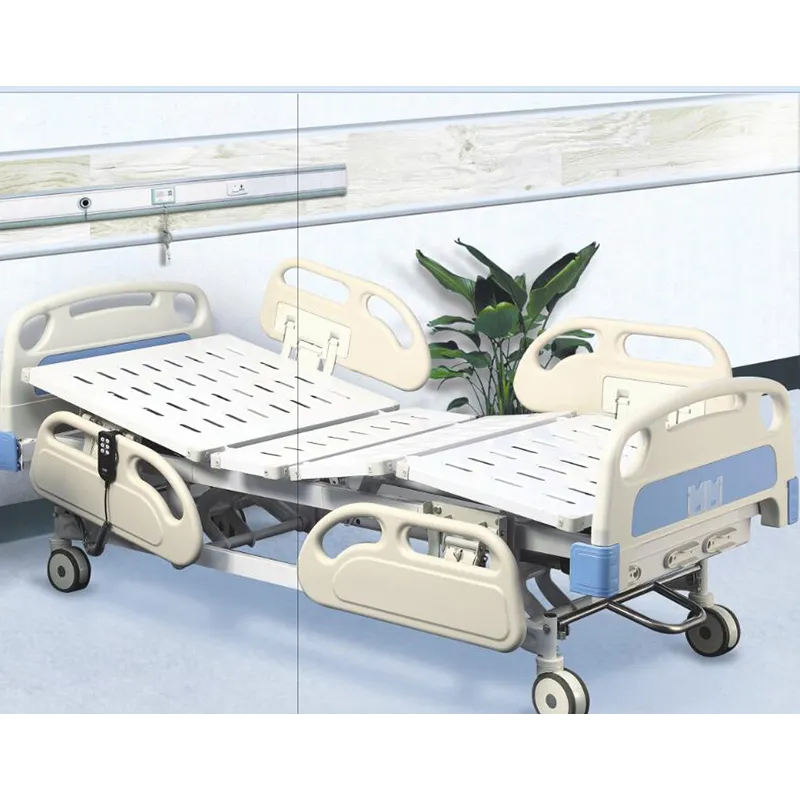
Why do some people still choose semi-electric hospital beds?
Although fully electric hospital beds are more advanced, semi-electric hospital beds still have a certain market share for several reasons, including:
• More affordable: Lower cost compared to fully electric models;
• Lower energy consumption and electricity requirements: Suitable for environments with unstable power supply;
• Simpler structure and easier maintenance: Fewer motors mean a lower failure rate;
• Greater controllability of care: Caregivers can manually adjust the bed height as needed.
Therefore, semi-electric hospital beds are more suitable for scenarios with lighter nursing needs and patients who retain some self-care ability.
Which type of electric hospital bed saves more nursing manpower?
Physical exertion is a significant issue in nursing work.
Comparing the operation methods of fully electric and semi-electric hospital beds reveals:
• Fully electric hospital beds: All movements are driven by motors, requiring no effort from the caregiver;
• Semi-electric hospital beds: Bed height adjustment requires a manual crank, still requiring some physical effort.
Therefore, from the perspective of saving nursing manpower, fully electric hospital beds are clearly superior to semi-electric hospital beds.
Especially in long-term care, elderly care, or hospital wards, fully electric hospital beds can significantly reduce the intensity of care.
Which type of electric hospital bed is easier to maintain?
Maintenance characteristics of semi-electric hospital beds:
• Fewer motors, simpler structure;
• Easy replacement of parts;
• Low maintenance costs;
• Manual function can be used in the absence of electricity.
Maintenance characteristics of fully electric hospital beds:
• More motors, more complex control system;
• Higher requirements for power supply and wiring;
• Professional technicians are required for repairs if the electrical control system malfunctions.
Therefore, semi-electric hospital beds are more economical and practical in terms of maintenance and repair, while fully electric hospital beds require higher levels of technical support and maintenance cycle management.
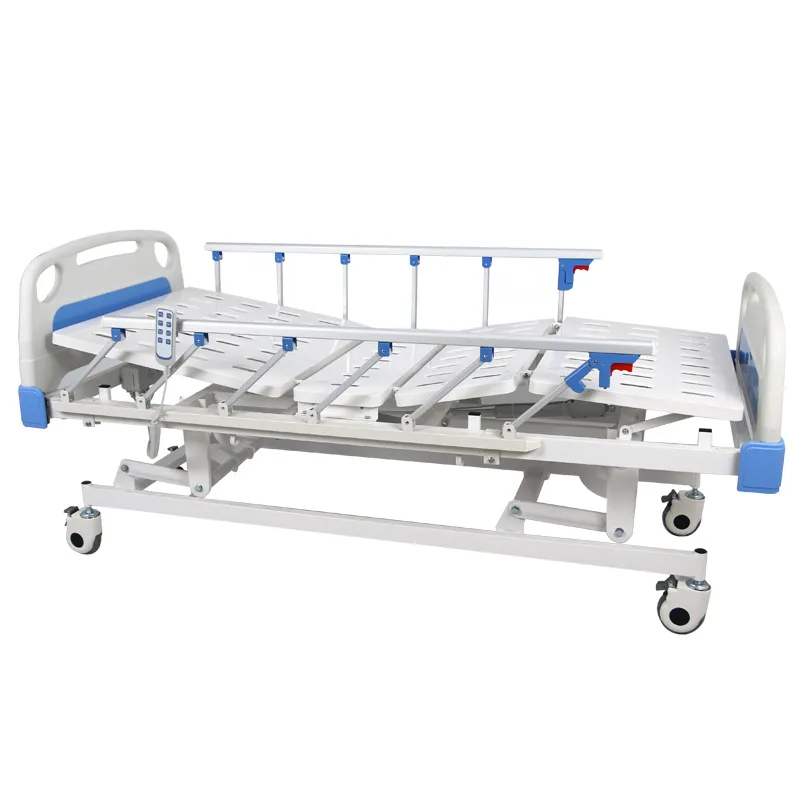
What are the differences in the safety of using electric hospital beds?
Regardless of the type, safety is always the primary consideration in the design of electric hospital beds.
Fully electric hospital beds typically feature:
• Electrical overload protection
• Automatic limit switches
• Anti-pinch design
• Emergency stop button
• Manual recovery mechanism after power failure
While semi-electric hospital beds have a simpler structure, they rely on manual operation, which can lead to human-caused risks such as "forgetting to retract the crank" or "uneven height."
Therefore, in terms of safety, fully electric hospital beds better meet modern nursing standards.
Which type of electric hospital bed is more suitable for home use?
Home users typically consider the following factors when choosing an electric hospital bed:
• Ease of operation;
• Space saving;
• Ease of movement;
• Safety and reliability.
In summary, if there are long-term bedridden patients in the family (such as the elderly or patients in postoperative recovery), fully electric hospital beds are more suitable;
If only short-term assistance is needed or the budget is limited, semi-electric hospital beds are a more economical choice.
How to choose the right electric hospital bed?
When choosing an electric hospital bed, consider the following factors:
1. Patient's condition and nursing intensity
• For patients who are bedridden for extended periods or have insufficient muscle strength, a fully electric hospital bed is recommended.
• For patients requiring short-term care or who are partially self-sufficient, a semi-electric hospital bed is suitable.
2. Location and power supply
• Hospitals and nursing homes are suitable for fully electric hospital beds.
• Homes and rural areas with unstable power supply are suitable for semi-electric hospital beds.
3. Budget and maintenance capabilities
• Fully electric hospital beds are more expensive but easier to operate.
• Semi-electric hospital beds are less expensive and easier to maintain.
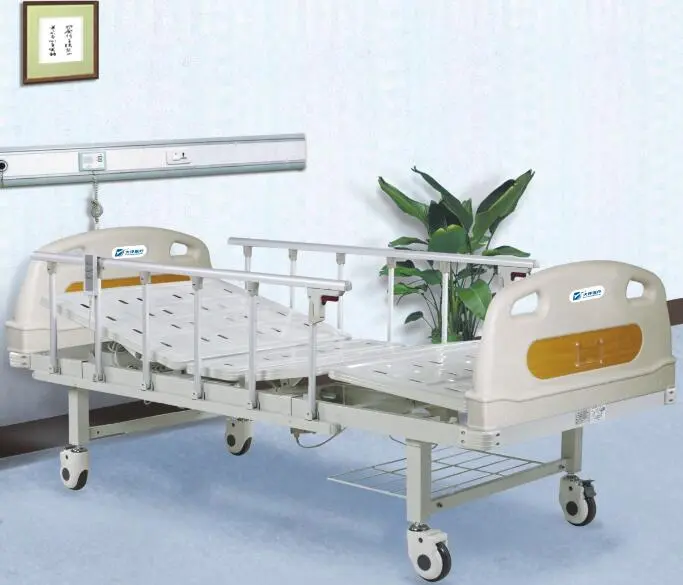
Key Factors in Choosing Between Fully Electric and Semi-Electric Hospital Beds
In summary, the main differences between fully electric and semi-electric hospital beds lie in their drive mechanism, control system, ease of care, and maintenance difficulty.
Fully Electric Hospital Beds:
• Entirely driven by a motor;
• Easy to operate, suitable for long-term bedridden patients;
• Easier to care for and safer.
Semi-Electric Hospital Beds:
• Combines electric and manual operation;
• Economical and practical, easy to maintain;
• Suitable for short-term or light care needs.
The final choice should be based on a comprehensive assessment of the user's physical condition, care needs, and budget.
Proper use of electric hospital beds can not only improve patient comfort but also effectively reduce the burden of care.
Why should distributors consider Dayang Medical for bulk purchasing?
Guangdong Dayang Medical Technology Co., Ltd., founded in 2009, is a trusted manufacturer and supplier of medical equipment in China. Distributors can purchase high-quality products in bulk, including electric wheelchairs, manual wheelchairs, sports wheelchairs, hospital beds, shower chairs, commodes, walking aids, and canes.
Distributors benefit from competitive prices, factory-direct sourcing, promotions, and customized options, making Dayang Medical an ideal China-based supplier for global healthcare brands, hospitals, and clinics.