

As the global population ages and the demand for long-term care, rehabilitation, and home care continues to rise, an increasing number of hospitals, nursing homes, rehabilitation centers, and households are using patient lift transfer chairs to facilitate patient transfers. Compared to traditional methods—such as manual lifting or simple wheelchair transfers—these chairs reduce the physical strain on caregivers and lower the risk of patient falls during the transfer process. By enhancing both care efficiency and patient comfort, they have become increasingly vital assistive devices in modern care environments.
When purchasing a patient lift transfer chair, users often focus on specifications like lifting height, weight capacity, seat comfort, and drive mechanisms (electric vs. manual). However, one crucial yet frequently overlooked question is: do these chairs have brakes? What exactly is the function of the brake, and do all models come equipped with a braking system?
In reality, the braking system is not merely a component of the chair; it is a core safety feature essential for patient safety, care efficiency, and equipment stability. Whether the chair is being used for sitting down or standing up, lifting, transferring between bed and chair, or assisting with toileting, a failure to securely immobilize the unit can increase the risk of sliding, tipping, or accidental movement. Consequently, the vast majority of reputable brands equip their patient lift transfer chairs with professional-grade braking systems, though the specific type of brake, its location, and the method of operation may vary.
So, why do patient lift transfer chairs require brakes? What types of braking systems are available? How should the brakes be used correctly, and what are the key points for daily maintenance? This article provides a comprehensive analysis of these topics to help you better understand the safety design and purchasing considerations for patient lift transfer chairs.
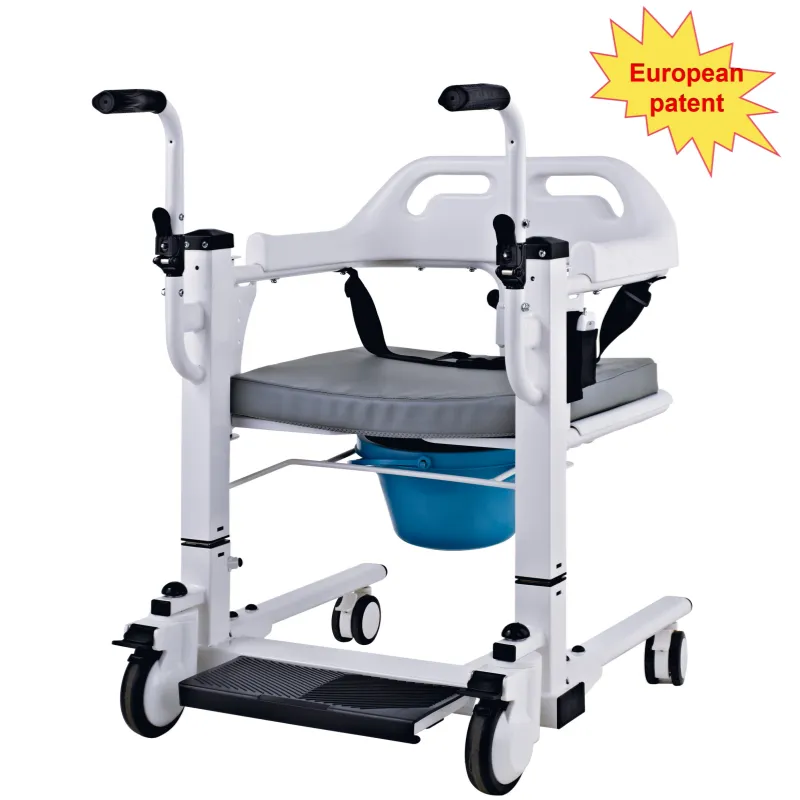
Do patient lift transfer chairs have brakes?
Yes; for the vast majority of legitimate products, a braking system is a standard safety feature.
Patient lift transfer chairs are designed not only to move patients but also to perform multiple functions, including lifting, stabilization, and caregiving support. If the equipment were to slide freely during these operations, it would significantly increase the risk of patient falls and caregiver errors. Consequently, modern patient lift transfer chairs almost invariably feature mechanical or linked braking systems on their casters, allowing the device to move freely or remain securely fixed as needed.
Typically, these chairs utilize four medical-grade swivel casters, with two or all four equipped with foot-operated braking mechanisms. Caregivers can simply press the brake pedal to lock the wheels and stabilize the chair; releasing the lock allows the device to be easily maneuvered, facilitating quick transitions between different care settings.
It is worth noting that brake designs vary across brands and models. While some budget-friendly models may feature brakes only on the rear wheels, mid-to-high-end products often employ four-wheel braking or centralized linked braking systems to further enhance stability and safety.
Why must patient lift transfer chairs be equipped with brakes?
Many assume that because these chairs are heavy and difficult to move, the presence of brakes is of little consequence. In reality, however, the braking system is far more critical to caregiving practice than one might imagine.
First, when a patient is getting into or out of the chair, caregivers often need to open the seat, adjust its position, or assist the patient in shifting their posture. If the chair slides even slightly during this process, the patient's center of gravity could shift, increasing the risk of a fall. For patients with hemiplegia, the elderly, those recovering from surgery, or individuals with poor balance, a displacement of just a few centimeters can compromise the safety of the entire transfer.
Second, the chair's center of gravity shifts as the seat height changes during lifting or lowering. Without reliable immobilization, forces such as ground friction, the caregiver's pushing or pulling, or the patient's own movements could cause the chair to shift. Therefore, standard care protocols usually require the brakes to be locked before any lifting operation begins.
Furthermore, patient lift transfer chairs often need to remain stationary during toileting, bathing assistance, bedside care, and rehabilitation exercises. Brakes not only prevent the device from sliding but also allow caregivers to focus more fully on their tasks, thereby improving overall care efficiency.
Research into medical care safety indicates a strong correlation between the stability of mobility aids and the risk of falls during patient transfers. A robust braking system effectively reduces care-related accidents caused by equipment slippage, making it an indispensable safety feature for modern patient lift transfer chairs.
What types of braking systems are typically used on patient lift transfer chairs?
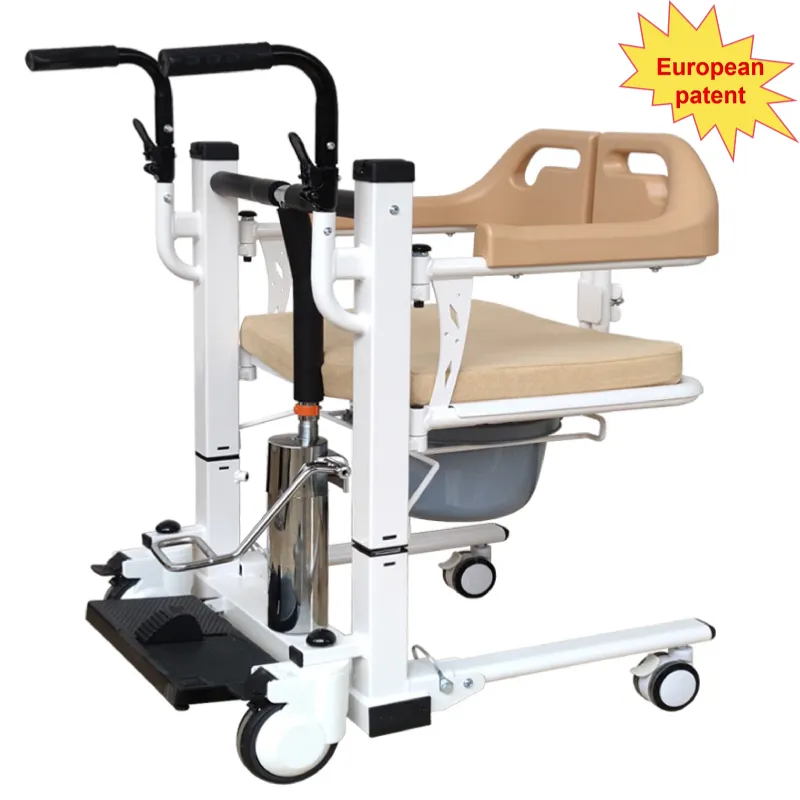
Although designs vary by manufacturer, the patient lift transfer chairs currently on the market primarily utilize the following types of braking systems:
The most common type is the foot-operated mechanical brake. These brakes are mounted directly onto the swivel casters, allowing caregivers to lock the wheels by simply pressing a pedal. Their advantages—simple structure, easy maintenance, and low cost—make them widely used in home care and general medical facilities.
The second type is the independent four-wheel braking system. As the name implies, each caster can be locked individually. Compared to designs with only two braked wheels, a four-wheel system offers superior stability, making it better suited for heavy-duty patient lift transfer chairs or equipment designed to support heavier loads.
The third type is the centralized linked braking system. Often found on mid-to-high-end patient lift transfer chairs, this design uses a single control mechanism to lock multiple wheels simultaneously. This streamlines the process for caregivers by eliminating the need to engage each brake one by one, thereby improving efficiency and reducing safety risks associated with forgetting to lock a specific wheel.
In recent years, some high-end electric patient lift transfer chairs have begun incorporating electronic control systems that automatically prompt users to check the brake status when the lifting function is activated, further enhancing operational safety.
The Role of Transfer Chair Braking Systems in Various Care Scenarios
The braking system of a patient lift transfer chair is not used solely for parking; it plays a crucial role throughout the entire caregiving process.
For instance, when transferring a patient between a bed and the transfer chair, the caregiver must first position the equipment next to the bed, lock the brakes, and then adjust the seat height and position. Failure to lock the brakes could cause the equipment to shift slightly during the move, compromising the precision of the transfer.
When using the chair in a bathroom, the floor is often wet and slippery. Without a reliable braking system, the equipment is more prone to sliding, which increases care-related risks. Consequently, bathroom care is one of the scenarios that places the highest demands on braking performance.
Patient lift transfer chairs also frequently need to remain stationary during rehabilitation exercises. For instance, when a patient performs standing exercises, transfers into or out of the chair, or practices assisted walking, a stable base provides safer support.
Additionally, when a patient needs a brief rest, undergoes minor treatment, or waits for an examination, the locking brakes prevent the patient lift transfer chair from moving due to accidental bumps or floor slopes.
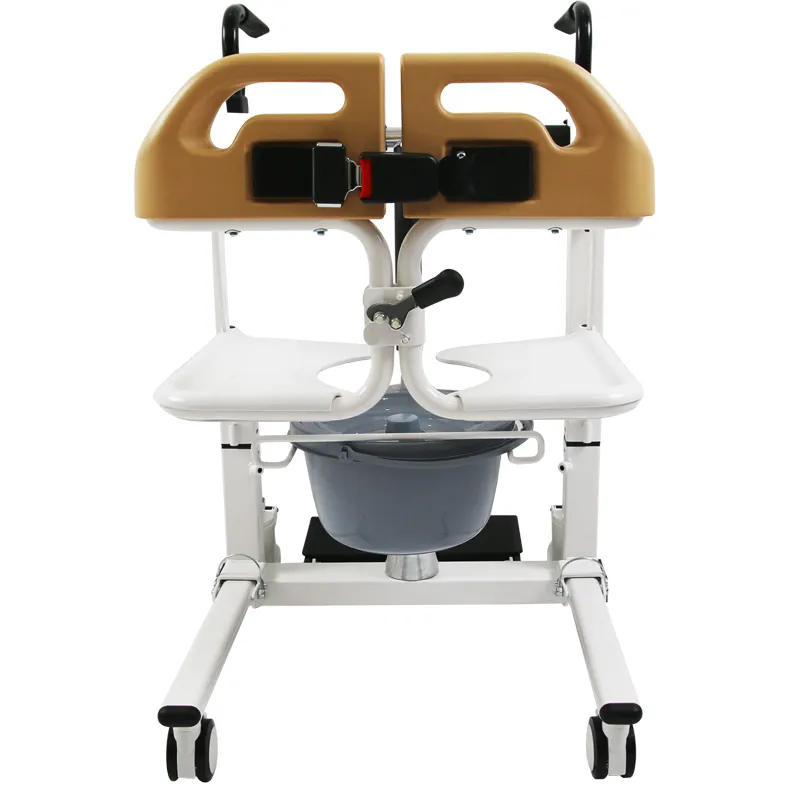
How should the patient lift transfer chair's brakes be used correctly?
Although operating the brakes is straightforward, using them correctly remains crucial.
When moving the equipment, ensure all brakes are disengaged to avoid forcing the unit, which could cause wheel wear or damage the braking mechanism.
Once the patient lift transfer chair reaches the desired location, engage the brakes immediately and verify that the lock is fully engaged. You can gently push the unit to confirm the chair does not move significantly.
Keep the brakes locked during patient transfers, lifting operations, toileting, and bedside care; release them only after the care procedure is complete.
If the patient lift transfer chair is equipped with four-wheel brakes, ensure all of them are locked, not just one. For central linked braking systems, regularly check that the linkage mechanism is functioning properly.
Proper brake usage not only enhances safety during care but also extends the service life of the casters and braking mechanisms.
How should the patient lift transfer chair's braking system be maintained?
While the braking system has a relatively simple structure, it still requires regular maintenance after prolonged use.
First, periodically check the casters for hair, fibers, or other debris. Such foreign objects can impede wheel rotation and compromise braking effectiveness.
Second, inspect the brake pedal for looseness, deformation, or wear. If the wheel does not lock completely when the pedal is pressed, adjust the mechanism or replace the relevant parts promptly.
For patient lift transfer chairs used frequently in environments like hospitals or nursing homes, it is advisable to establish a routine inspection schedule—such as checking brake performance monthly and performing comprehensive maintenance every six months—to ensure the equipment remains in good working order.
Additionally, avoid spraying highly corrosive cleaning agents directly onto the braking mechanism, as this could shorten the lifespan of the metal components. For daily cleaning, wipe with a damp cloth and keep the caster and brake areas dry and clean.
What should you look for regarding the braking system when purchasing a patient lift transfer chair?
Many consumers focus primarily on the lifting mechanism and weight capacity when buying a patient lift transfer chair, often overlooking the brake design. In reality, the braking system is a crucial indicator of product quality.
First, verify that the chair is equipped with at least two medical-grade swivel casters featuring locking mechanisms. If the budget allows, opt for a model with four-wheel braking or a central linked braking system for superior stability.
Second, consider the ergonomic design of the brake pedals. High-quality products typically feature large foot-operated pedals, allowing caregivers to lock or unlock the brakes without bending over, thereby effectively reducing physical strain.
Also, check the caster material. High-quality medical-grade polyurethane (PU) casters offer quieter operation, minimize floor wear, and provide reliable anti-slip performance when locked.
For high-usage environments like hospitals and nursing homes, it is advisable to choose a chair that has undergone durability testing, offers high weight capacity, and comes with comprehensive after-sales service to minimize long-term maintenance costs.
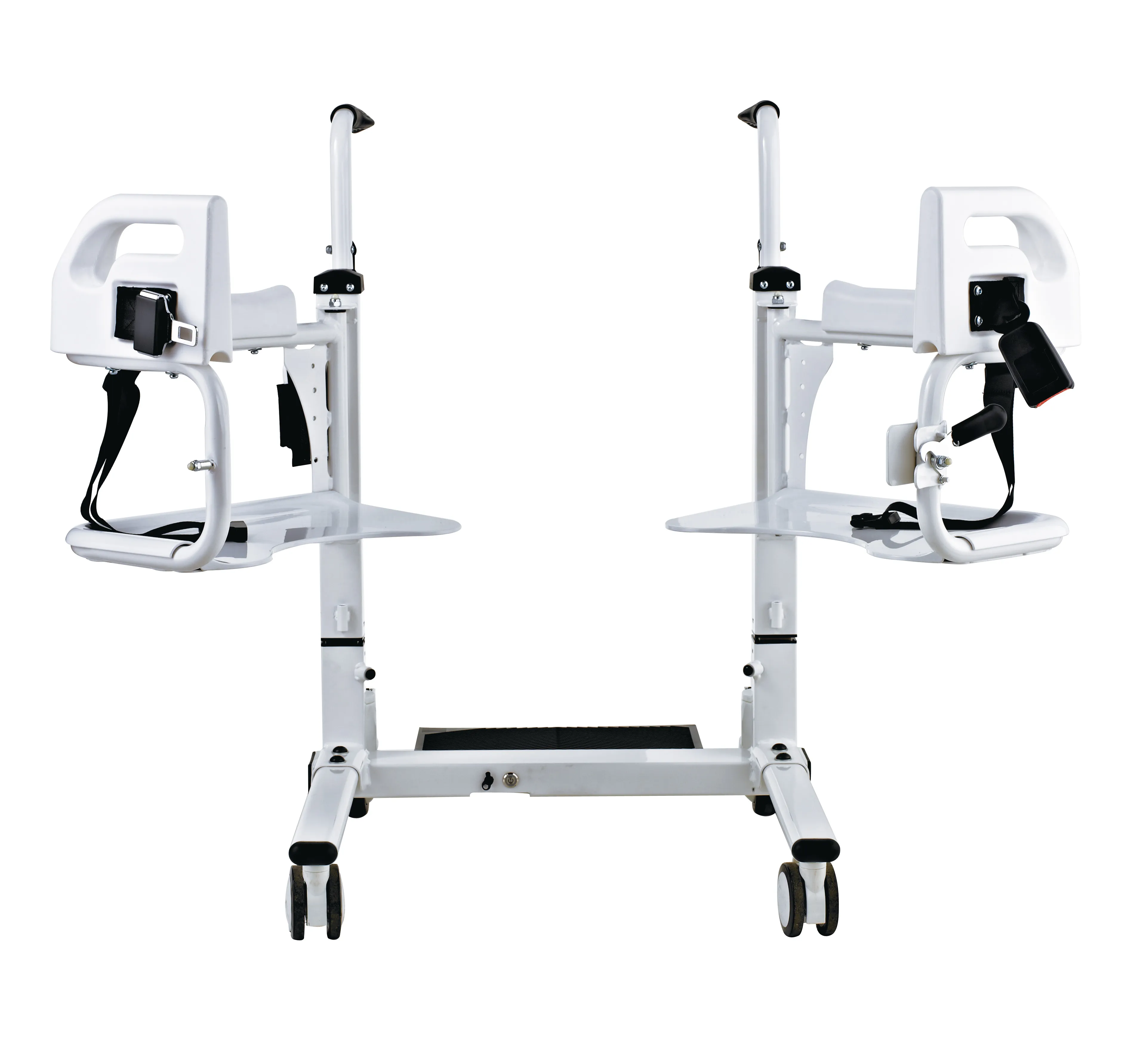
FAQ
Do all patient lift transfer chairs come with brakes?
Most patient lift transfer chairs from reputable manufacturers are equipped with braking systems—usually installed on two or four medical-grade swivel casters—to secure the equipment and enhance safety during caregiving.
Why are brakes essential for patient lift transfer chairs?
Brakes prevent the equipment from sliding during patient transfers (such as getting in/out of the chair or moving between bed and chair), lifting operations, or toileting, thereby reducing the risk of falls and care-related accidents.
What are the common types of braking systems for patient lift transfer chairs?
Common types include foot-operated mechanical brakes, independent four-wheel brakes, and central linked braking systems. Configurations vary depending on the product's market positioning and price point.
When should you lock the brakes when using the transfer chair?
Brakes should be locked before patients get in or out of the chair, during height adjustments, caregiving procedures, toileting, and when the equipment is parked; always confirm the chair is stable before proceeding with further actions.
How can I tell if the transfer chair's brakes are functioning correctly?
After engaging the brakes, gently push the device to test it. If the chair still moves easily, or if the brake pedal feels loose or shows significant wear, it should be inspected and repaired promptly.
What brake features should be prioritized when purchasing a patient lift transfer chair?
It is recommended to choose a patient lift transfer chair equipped with four-wheel brakes or a central linked braking system. Additionally, consider factors such as caster material, locking effectiveness, ease of operation, and the product's overall safety design to ensure a more reliable caregiving experience.