

In modern Intensive Care Units (ICUs), the electric ICU hospital bed stands as one of the most fundamental and critical pieces of medical equipment. It not only physically supports the patient but also directly impacts nursing efficiency and medical safety. With the widespread adoption of electrification technologies, a practical question often arises when people are researching or procuring such equipment: Do electric ICU beds consume a lot of power?
Underlying this question is a reflection of people's concerns regarding equipment operating costs, energy efficiency, and hospital power management.
This article will provide a systematic analysis from various perspectives—including energy consumption principles, power composition, usage frequency, motor control methods, and energy efficiency optimization measures—to help you gain a comprehensive understanding of the power consumption characteristics of electric ICU hospital beds.
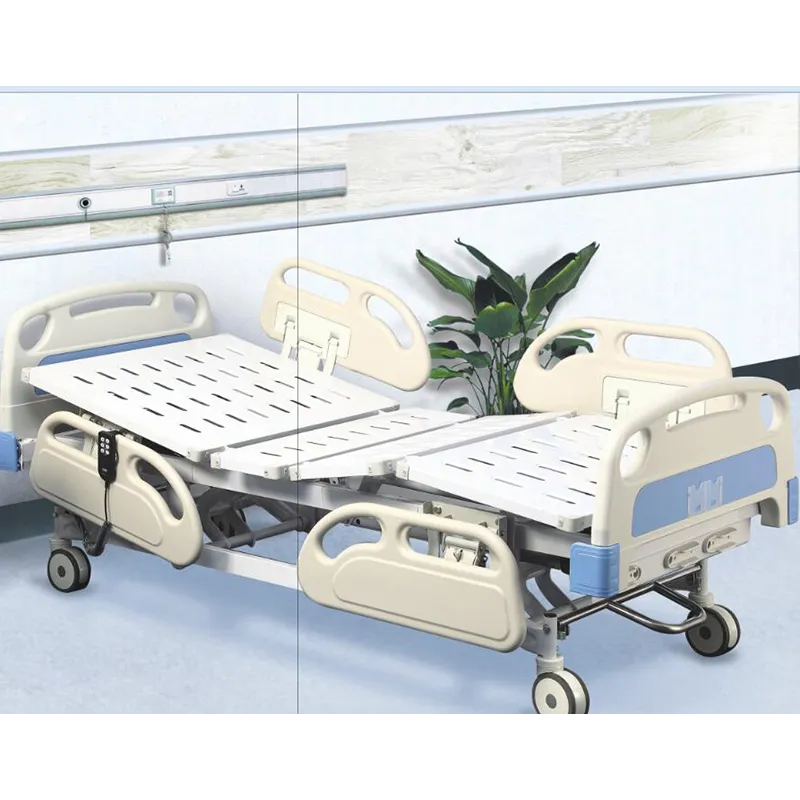
How Do Electric ICU Beds Work?
An electric ICU bed is a medical device designed to drive the movement of various parts of the bed frame using a series of built-in DC motors. These motors independently control functions such as bed surface elevation, backrest angle adjustment, leg section angle adjustment, lateral tilting, and CPR positioning.
Key components include:
• Motor System: Typically composed of 3 to 5 low-power motors—each rated at approximately 100W—used to drive the various movement units.
• Control System: Includes the main control board, handheld remote, and nurse control panel, which utilize low-voltage signals to regulate motor operation.
• Power Supply System: Generally accepts an input of AC 220V or 110V, which is then converted by a power adapter into a low-voltage DC 24V output to ensure operational safety.
• Standby and Safety Systems: Comprise overload protection, limit switch protection, leakage protection, and standby circuitry.
This implies that an electric ICU hospital bed is not a continuously running, high-energy-consumption device. The motors only activate when adjusting the patient's position; otherwise, the unit remains in a standby mode with extremely low energy consumption.
What is the Rated Power of an Electric ICU Bed?
1. Basis for Power Calculation
The rated power of an electric ICU hospital bed typically falls within the range of 300W to 600W. This figure represents the maximum power draw of the device when all motors are operating simultaneously to perform positional adjustments. In other words, this peak power output is reached only when the bed frame simultaneously performs multiple adjustment actions—such as raising the entire bed, lifting the backrest, and elevating the leg section. In actual daily use, such a scenario occurs very rarely.
2. Actual Operating Power
Typically, an electric ICU bed utilizes only one or two motors at a time; for instance:
• When adjusting the backrest angle: approx. 100W–150W
• When adjusting the bed surface height: approx. 200W–250W
• When adjusting the leg section or performing lateral tilting: approx. 100W
As is evident, the power consumption for a single adjustment action is quite limited. More importantly, the duration of each action typically does not exceed 10 to 20 seconds; thus, the motors do not operate continuously for extended periods.
What is the daily electricity consumption of an electric ICU bed?
1. Extremely Low Standby Power Consumption
When not in active use, the electric ICU hospital bed enters standby mode, during which it merely maintains the low-voltage power supply for its control system. In this state, power consumption is typically less than 3W.
Based on a 24-hour day, the standby electricity consumption amounts to: 3W × 24h = 72Wh (approximately 0.072 kWh).
In other words, an electric ICU hospital bed left in standby mode for an entire day consumes less electricity than a small night light.
2. Power Consumption During Operation
Assuming the bed is operated once every hour—with each adjustment lasting 20 seconds at a power draw of approximately 200W—the electricity consumed per single operation is: 200W × (20/3600 h) ≈ 1.1Wh.
Even if the bed is operated 30 times throughout the day, the total consumption remains a mere: 1.1Wh × 30 = 33Wh (approximately 0.033 kWh).
3. Comprehensive Calculation
By combining the standby and operational power consumption:
Total daily electricity consumption ≈ 0.072 + 0.033 = 0.105 kWh per day.
Even with continuous use for 365 days a year, the annual electricity consumption amounts to approximately 38 kWh.
Assuming an electricity rate of 1 RMB per kWh, the annual electricity cost for a single electric ICU hospital bed is a mere 38 RMB. Consequently, the energy consumption of electric ICU beds is extremely low—to the point of being almost negligible.
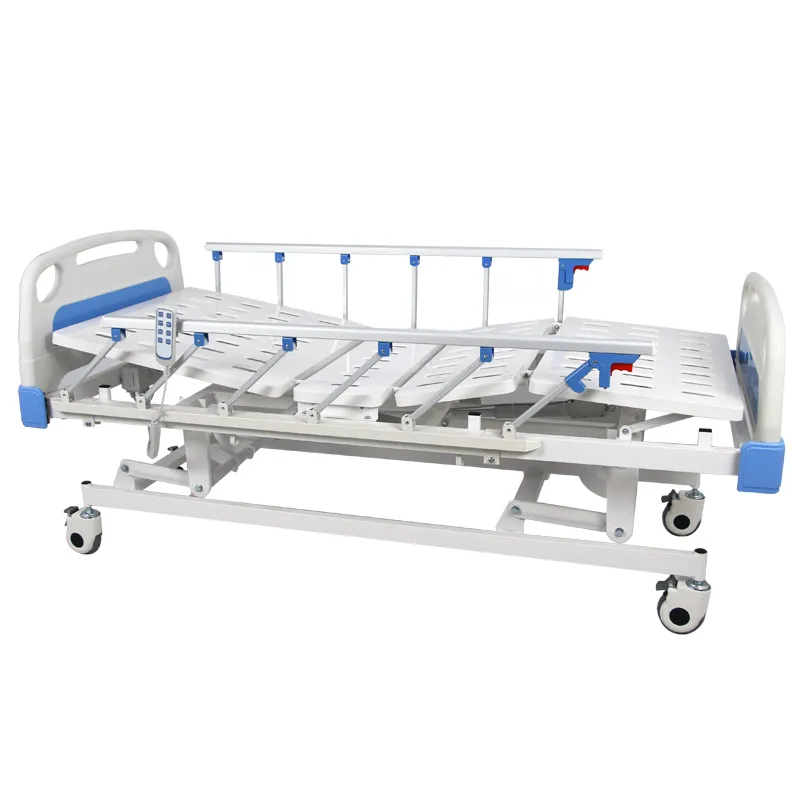
Why do electric ICU beds achieve such low energy consumption?
The excellent energy efficiency of electric ICU hospital beds is no accident; it is the result of several engineering design optimizations:
1. Low-Voltage DC Motor Design
By utilizing 24V DC motors instead of AC motors, the beds benefit from lower starting currents and higher energy conversion rates, while simultaneously avoiding the energy losses associated with high-voltage systems.
2. Segmented Drive Control
Motors responsible for different movements operate independently without interfering with one another, thereby preventing the peak load surges that occur when multiple motors run simultaneously.
3. Intelligent Limit System
Angle sensors automatically detect the end-point positions of movements, preventing over-extension and conserving energy.
4. High-Efficiency Power Modules
The adoption of switching power supply technology enhances energy conversion efficiency and reduces power consumption during standby mode.
5. Intermittent Operation Mode
The motors are powered on only when a specific movement is being executed; at all other times, they remain completely powered off in standby mode, significantly reducing overall energy consumption.
Collectively, these design features define the "high energy efficiency, low consumption" characteristics of electric ICU hospital beds.
Is the power consumption of electric ICU beds correlated with their frequency of use?
The answer is: yes, it is—though the impact is minimal.
1. Higher Operation Frequency, Higher Energy Consumption
In a hospital ICU setting, medical staff may adjust a patient's bed position multiple times throughout the day. Naturally, as the number of operations increases, the total power consumption rises accordingly.
However, because the energy required for each individual movement is extremely small, even with frequent use, the total power consumption remains very limited.
2. Operation Intensity Affects Power Output
When adjusting a patient's position—particularly if the patient is heavy or the bed's load is approaching its maximum capacity—the motor's power output may increase slightly. However, this constitutes only a brief power surge and does not have a significant impact on the overall power consumption.
3. Motor Efficiency and Maintenance Status
If a motor ages, lacks sufficient lubrication, or faces increased resistance within the transmission mechanism, its power consumption may rise slightly. Regular maintenance is essential for preserving the bed's high energy efficiency.
Consequently, even in high-intensity care environments, the annual power consumption of an electric ICU hospital bed typically remains below 50 kilowatt-hours (kWh).
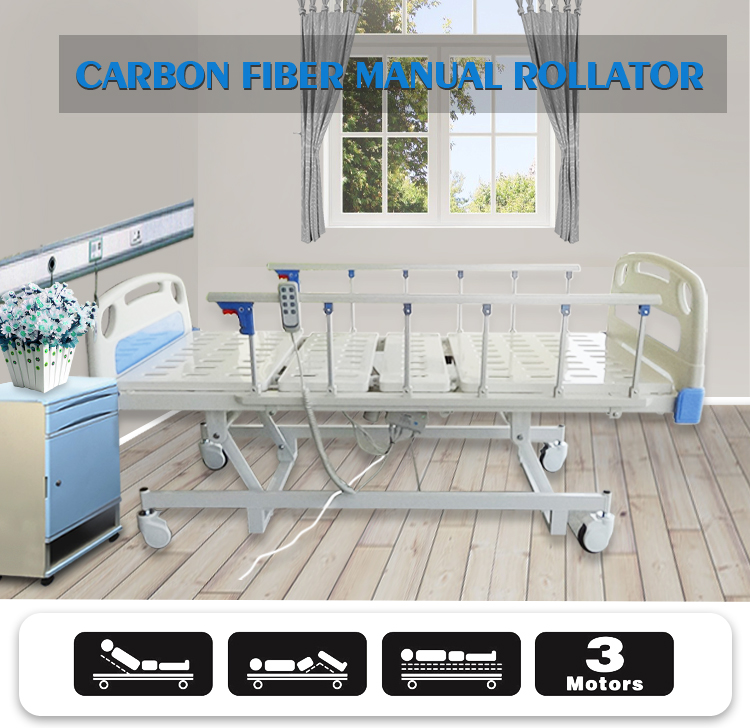
Does the power consumption of electric ICU beds impact a hospital's operating costs?
From a hospital management perspective, the power consumption of electric ICU beds has virtually no significant impact on overall operating costs.
Let's assume a hospital ICU is equipped with 30 electric ICU beds: the annual power consumption per bed is approximately 38 kWh. Thus, for 30 units, the total annual consumption is 38 kWh × 30 = 1,140 kWh.
Even if calculated at a rate of 1 yuan per kWh, the total annual electricity bill amounts to a mere 1,140 yuan.
Compared to high-power equipment found in the ICU—such as ventilators, patient monitors, air conditioning systems, and lighting fixtures—this energy consumption constitutes an extremely small proportion. Consequently, the electricity expenditure for electric ICU hospital beds is negligible within the context of a hospital's total power usage.
How can the power consumption of electric ICU beds be further reduced?
Although electric ICU hospital beds do not inherently consume much energy, their energy efficiency can be further optimized through proper operation and maintenance practices:
• Regularly clean the motors and drive components to minimize mechanical resistance.
• Avoid frequent and unnecessary adjustments to patient positioning to reduce the number of motor start-ups.
• Verify the efficiency of the power supply modules and ensure the use of compliant medical-grade power supplies.
• Disconnect the main power supply when the ward is unoccupied to reduce standby energy consumption.
Consider purchasing high-end models equipped with energy recovery functions; certain systems can convert gravitational potential energy back into electrical energy during lowering movements.
By implementing these methods, the energy efficiency of electric ICU hospital beds can be maintained at an optimal level, thereby further reducing the hospital's overall energy consumption.
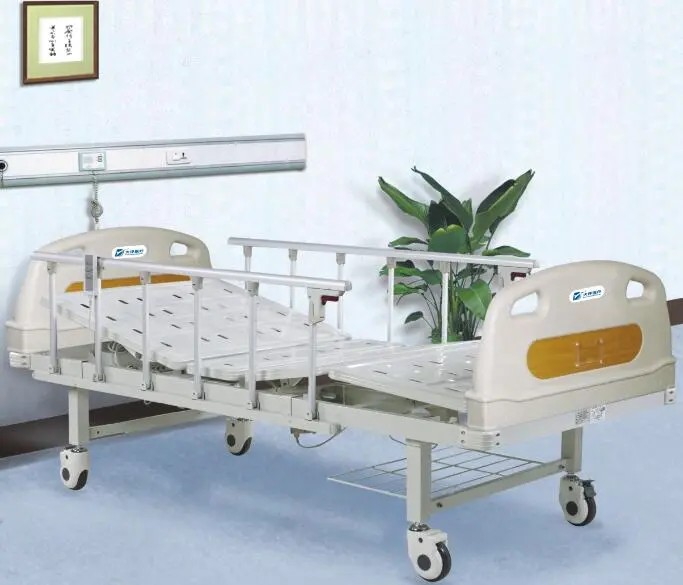
The Power Consumption of Electric ICU Beds Is Very Low—There Is Absolutely No Need for Concern
Electric ICU hospital beds have extremely low power consumption and are not classified as high-energy-consumption equipment.
• Although the power draw during a single operation may be high, the duration of such activity is brief.
• Energy consumption in standby mode is negligible.
• The annual power consumption is merely around 30 to 50 kWh.
While energy consumption is influenced by usage frequency and maintenance status, the impact remains limited.
• During periods of frequent operation, energy consumption increases slightly but does not rise exponentially.
• Regular maintenance ensures stable energy efficiency.
From a hospital operations standpoint, the electricity expenditure associated with electric ICU beds is negligible.
• Energy consumption accounts for less than 0.1% of the total load and places no burden on the hospital's electrical infrastructure.
Therefore, when selecting or using an electric ICU hospital bed, there is absolutely no need to be concerned about power consumption. Instead, the focus should be placed on its safety, reliability, and functional suitability.