

In modern healthcare environments, hospital beds are no longer merely places for sleeping. Driven by advancements in medical technology, evolving nursing philosophies, and a growing emphasis on patient comfort, traditional fixed beds are increasingly being replaced by adjustable hospital beds that offer a wider range of functions. For hospital procurement officers, administrators of elderly care facilities, home caregivers, and patients' families, a frequently asked question is: "Do adjustable hospital beds support height adjustment?"
The answer is clear: absolutely.
In fact, height adjustment is not only one of the most fundamental features of medical adjustable beds but also a critical component of modern healthcare systems. Today, the vast majority of electric adjustable hospital beds feature adjustable bed-surface heights and support various movements, such as backrest elevation, leg elevation, overall tilting, and transitions between sitting and lying positions. Particularly in Intensive Care Units (ICUs), rehabilitation wards, elderly care centers, and long-term care facilities, the height adjustment function has become an essential tool for enhancing nursing efficiency, ensuring patient safety, and improving rehabilitation outcomes.
Data from global market research on medical beds indicates that height adjustment is now a standard requirement in over 85% of procurement projects for mid-to-high-end medical facilities. In many developed countries and regions, adjustable hospital beds with electric height adjustment capabilities account for more than 70% of the total hospital bed inventory. This trend demonstrates that height adjustment is no longer an optional luxury feature but a key standard for modern adjustable hospital beds.
So, what specific types of height adjustment do these beds support? What practical problems does this function solve? How do the height adjustment designs differ across various types of adjustable hospital beds? This article provides a comprehensive analysis from multiple perspectives.
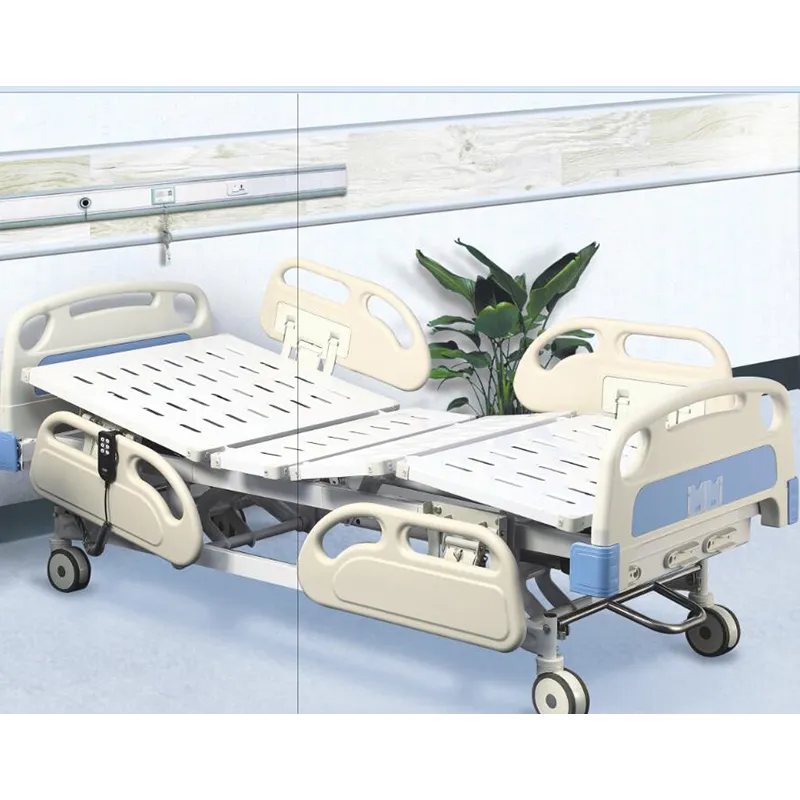
What is the height adjustment function of an adjustable hospital bed?
When encountering adjustable hospital beds for the first time, many people simply assume that "height adjustment" refers to raising or lowering the bed's overall height. In reality, the height adjustment capabilities of modern adjustable hospital beds are far more extensive than one might imagine.
From a professional standpoint, the height adjustment functions of these beds encompass several components, including overall bed height adjustment, backrest elevation, leg elevation, and combined positional adjustments. "Overall height adjustment" refers to changing the height of the entire bed surface relative to the floor. For instance, caregivers can lower the bed to approximately 40 cm to make it easier for patients to get in and out, or raise it to 70 cm or higher to facilitate nursing procedures.
"Backrest adjustment" involves using an electric actuator to lift the back panel, allowing the patient to transition gradually from a lying-flat position to a semi-reclined or seated position. Many adjustable hospital beds offer a backrest tilt range of 70° to 80°.
"Leg elevation" is primarily used to raise the lower limbs, improve blood circulation, reduce edema, and help patients achieve a more comfortable resting posture.
Some high-end adjustable hospital beds also support synchronized adjustment modes—such as the "cardiac chair" position, "zero-gravity" position, and automatic sit-up functions—enabling patients to adjust their posture without assistance.
Therefore, when people ask, "Do adjustable hospital beds support height adjustment?" the answer is that modern adjustable beds not only support this feature but have evolved into comprehensive, highly intelligent systems capable of multi-dimensional adjustments.
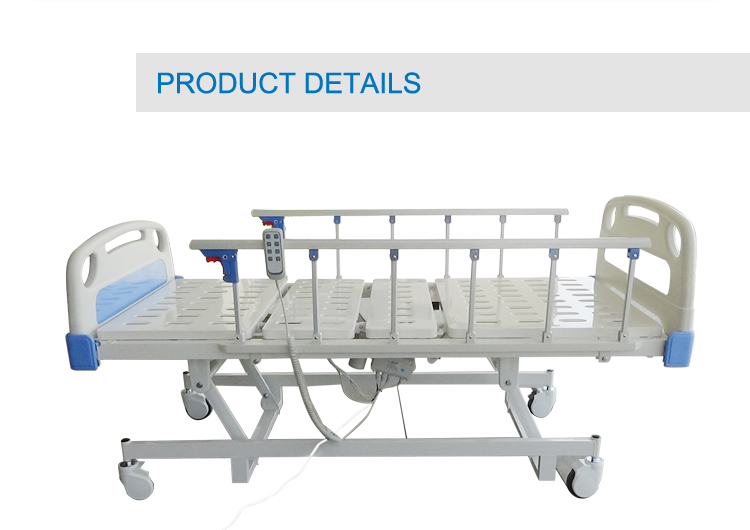
Why is the height adjustment function so important for medical adjustable beds?
Height adjustment has become a core feature of medical adjustable beds not merely because of the advanced technology involved, but because it effectively addresses numerous practical challenges in medical care.
First, height adjustment significantly improves safety when patients get in and out of bed.
For the average healthy adult, getting out of bed seems like a simple task. However, for elderly patients, those recovering from surgery or fractures, stroke survivors, and long-term bedridden patients, getting in and out of bed is often when falls are most likely to occur.
Research data indicates that over 40% of patient falls in hospitals happen while getting in or out of bed. When an adjustable hospital bed is lowered to an appropriate height, patients can place their feet firmly on the floor more easily, thereby reducing the risk of falling.
Second, height adjustment reduces the physical strain on caregivers.
Occupational injuries to the lower back have long been a common issue in the nursing profession. Surveys by international nursing associations show that more than 50% of nursing staff have experienced varying degrees of lower back pain, with frequent bending during patient care being a primary cause. When a medical adjustable bed is raised to a height suitable for caregiving tasks, nursing staff can perform procedures—such as turning the patient, changing sheets, catheter care, and wound dressing—without having to bend over for extended periods. This not only boosts work efficiency but also reduces the risk of occupational injury.
Furthermore, the height-adjustment function plays a positive role in patient rehabilitation. Many rehabilitation exercises require patients to gradually adapt to sitting, semi-standing, and changing body positions; adjustable hospital beds provide a stable and safe environment for these transitions.
What are the common lifting mechanisms for medical adjustable beds?
With technological advancements, the market now offers medical adjustable beds with a variety of lifting modes.
The most fundamental feature is the overall height adjustment. This design uses electric actuators to move the bed frame up and down, thereby altering the height of the sleeping surface. Typically, the adjustment range is between 40 cm and 80 cm, though some high-end models offer a range of 35 cm to 90 cm.
A second common mechanism is backrest adjustment. Patients can use a handheld remote or a bedside control panel to adjust the angle of the backrest, enabling transitions between positions such as lying flat, semi-reclining, and sitting up.
The third type is leg elevation. Many adjustable hospital beds utilize independent drive systems, allowing patients to adjust the position of their legs separately according to their needs. This is particularly important for patients with poor lower-limb venous return, edema, or those recovering from surgery.
The fourth type is "Trendelenburg" positioning, also known as tilt adjustment. This includes two modes: head-down/feet-up and head-up/feet-down. Such functions are commonly found in intensive care units and specialized treatment settings.
In recent years, some smart adjustable hospital beds have introduced "one-touch" positioning modes, such as:
•One-touch sit-up;
•One-touch reading position;
•One-touch dining position;
•One-touch cardiopulmonary care position;
•One-touch bed-exit assistance position.
These functions essentially combine multiple lifting movements, further enhancing the patient experience.
How do the lifting functions of medical adjustable beds assist different types of patients?
Different patient groups have varying needs regarding the lifting functions of medical adjustable beds. For postoperative patients, the bed's elevation function helps minimize pain caused by tension on the surgical wound. For instance, patients recovering from thoracic surgery often experience significant discomfort when attempting to sit up using only their own physical strength; however, using an adjustable hospital bed to gradually raise the backrest allows for a smoother, more controlled change in body position.
For patients with cardiovascular conditions, slightly elevating the upper body can improve respiratory function and reduce the workload on the heart. Consequently, many cardiology wards are equipped with adjustable hospital beds featuring backrest elevation capabilities.
For patients with respiratory disorders—such as COPD or pneumonia—a semi-recumbent position is often more beneficial for maintaining respiratory function than lying flat. Adjustable hospital beds enable patients to maintain this comfortable semi-recumbent position for extended periods.
For elderly patients, the low-position mode of an adjustable hospital bed reduces the risk of falls, while the high-position mode facilitates nursing care tasks. Furthermore, automated position adjustments help conserve the patient's physical energy.
In the field of rehabilitation medicine, adjustable hospital beds serve as vital training tools. They allow patients to gradually acclimate to sitting and prepare for standing, thereby laying the groundwork for subsequent rehabilitation exercises.
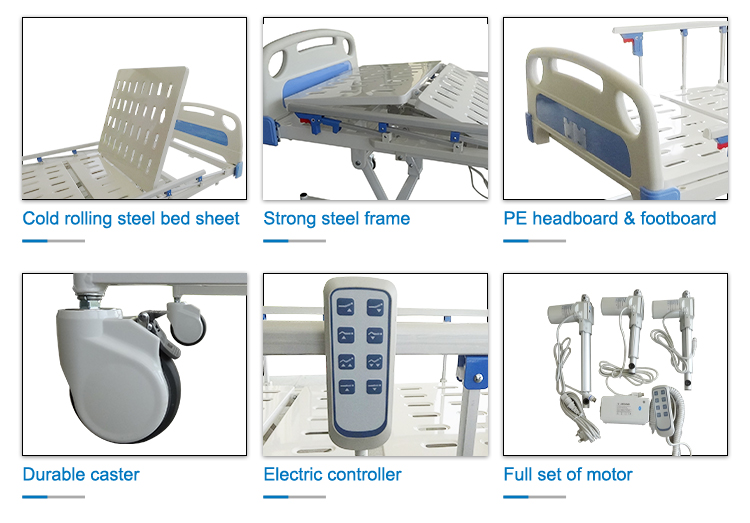
The Value of Bed Elevation Functions in Nursing Care
Beyond improving the patient experience, the elevation function of adjustable hospital beds is also highly significant for nursing management.
First, it enhances nursing efficiency. Nursing staff can perform a wide range of care tasks without having to repeatedly adjust their own body posture. This efficiency gain is particularly noticeable in high-intensity care units, such as the ICU, neurology departments, and geriatric wards.
Second, it reduces nursing-related risks. For example, when turning a patient, adjusting the bed to the optimal height allows staff to perform the maneuver with greater precision, thereby minimizing the risk of skin injury or falls from the bed.
Additionally, adjustable hospital beds reduce the need for multiple staff members to coordinate on a single task. Certain care procedures that previously required two or three people can now be performed by a single caregiver through the effective use of the bed's elevation features.
From a hospital management perspective, this not only helps optimize the allocation of nursing resources but also lowers costs associated with occupational injuries.
How do you choose an adjustable hospital bed with high-quality lifting capabilities?
When selecting an adjustable hospital bed, hospital procurement staff and home users should look beyond the mere presence of a lifting function and focus on the quality of the lifting performance itself.
First, consider the lifting range. Different patient groups have varying requirements for bed height, so a wider adjustment range offers greater adaptability.
Second, consider lifting stability. A high-quality adjustable hospital bed should remain steady during operation, without noticeable wobbling or sudden pauses.
Third, consider weight capacity. Standard medical-grade adjustable hospital beds typically support between 180 kg and 250 kg, while specialized models can handle 300 kg or more.
Additionally, consider factors such as the convenience of the control system, whether noise levels meet ward requirements, and the quality of the after-sales support and maintenance system.
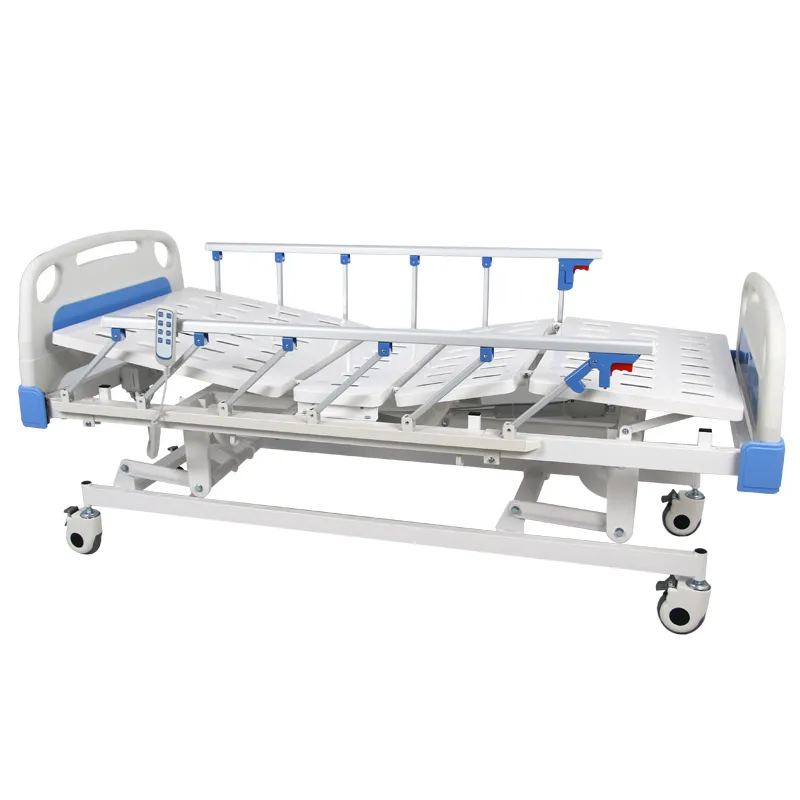
FAQ
FAQ 1: Do all medical adjustable beds support lifting functions?
The vast majority of modern medical adjustable beds support lifting functions, though the specific capabilities vary. Some models only allow for backrest and leg-section adjustments, whereas high-end models support full-bed height adjustment and various intelligent positioning options.
FAQ 2: What is the typical lifting range for adjustable hospital beds?
Common adjustable hospital beds usually offer a height adjustment range of 40 cm to 80 cm, while some high-end models can range from 35 cm to 90 cm or even wider.
FAQ 3: Does the lifting function affect the bed's stability?
Properly designed medical-grade medical adjustable beds prioritize stability; as long as the bed is used within its rated load capacity, the lifting process does not compromise overall safety.
FAQ 4: Can the bed still be adjusted during a power outage?
Many high-end adjustable hospital beds are equipped with a battery backup system, allowing for a certain number of lifting operations during a power outage to ensure patient safety.
FAQ 5: Is the bed noisy during lifting?
Modern electric adjustable hospital beds generally utilize low-noise motors and actuator technology, keeping operating noise between 45 and 55 decibels—levels that do not significantly disturb the ward environment.
FAQ 6: Is it necessary to purchase a medical adjustable bed with a lift function for home care?
If there is a bedridden patient, a patient recovering from surgery, or an elderly person in the home, a medical adjustable bed with a lift function can significantly improve the convenience of care and the patient's comfort, making it a highly practical choice.