

Transit wheelchairs and patient lift transfer chairs are two very common pieces of caregiving equipment used in home care, hospitals, and elderly care facilities. Many families caring for the elderly, people with disabilities, or post-operative patients face a common question: Can I use a transit wheelchair instead of a patient lift transfer chair?
While this question may seem simple, the answer actually depends on various factors, including the patient's physical condition, the care environment, the number of caregivers available, safety risks, and caregiving efficiency. Choosing the wrong product—perhaps based solely on price, appearance, or marketing—without understanding the differences between the two can not only increase the physical strain on caregivers but also expose patients to safety hazards such as falls, secondary injuries, or pressure sores.
In recent years, the World Health Organization (WHO) has consistently emphasized the importance of assistive technology in improving the quality of life for the elderly, people with disabilities, and patients with limited mobility. Meanwhile, UN data on population aging shows a steady global increase in the population aged 60 and older, signaling a growing demand for home care and long-term care services. Against this backdrop, transit wheelchairs and patient lift transfer chairs are attracting increasing attention from medical institutions, elderly care facilities, and home users alike.
So, what exactly is a transit wheelchair? What are the characteristics of a patient lift transfer chair? Can they be used interchangeably? This article provides a detailed analysis covering product structure, operating principles, suitable use cases, safety, caregiving efficiency, and purchasing advice to help you make an informed choice regarding the right caregiving equipment.
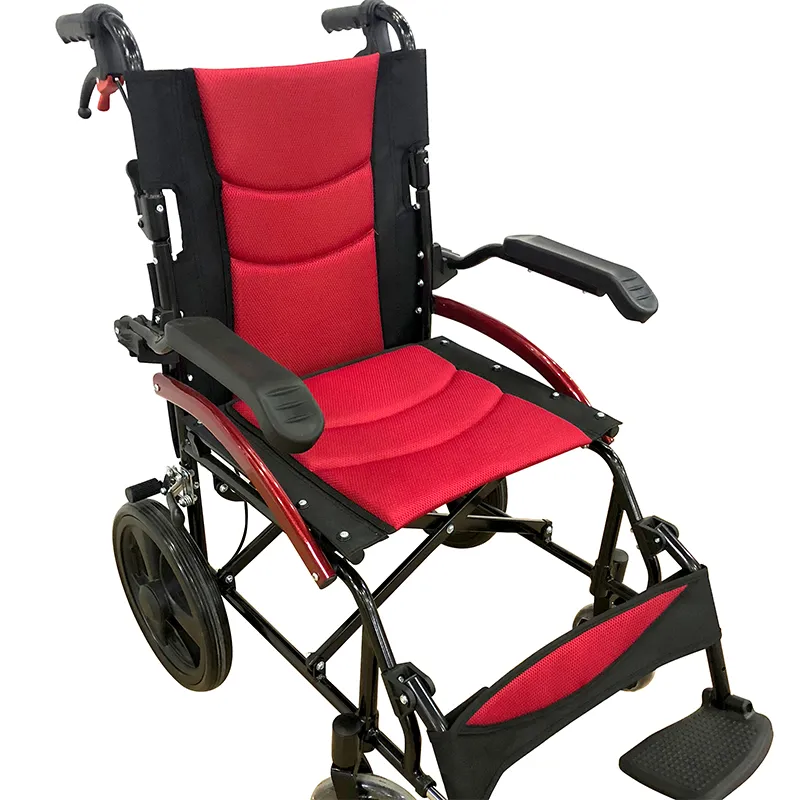
What is a transit wheelchair?
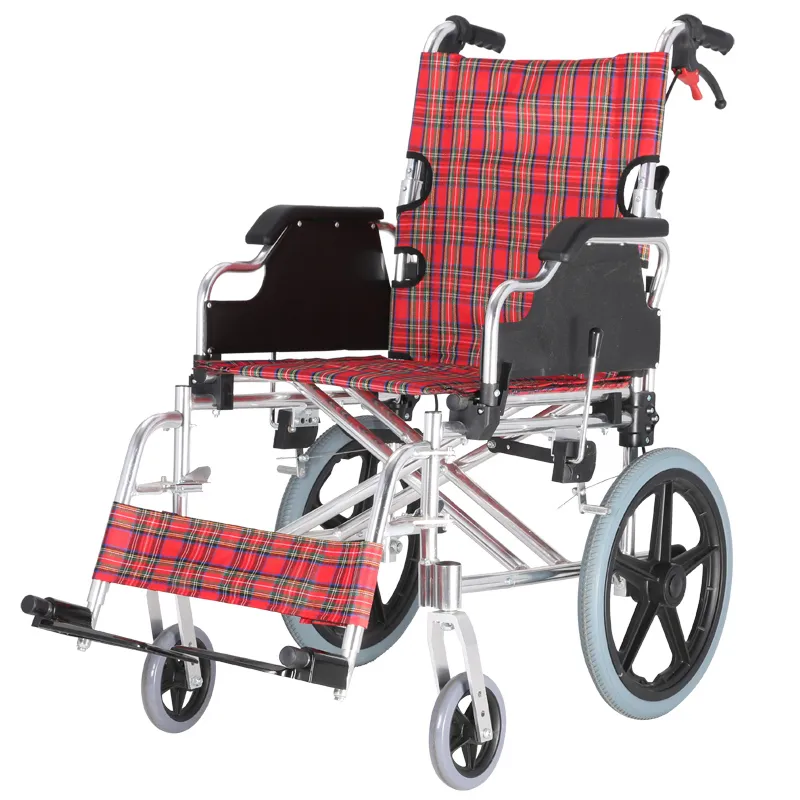
A transit wheelchair is designed specifically for the short-distance transport of individuals with limited mobility. Unlike standard self-propelled wheelchairs, transit wheelchairs typically feature smaller rear wheels and rely primarily on a caregiver or companion pushing from behind to move; the term "transit" in the name reflects this function of transporting or moving the user. Modern transport wheelchairs typically feature lightweight aluminum alloy or steel frames, offering advantages such as low weight, foldability, and maneuverability. Many models are equipped with features like foldable backrests, detachable footrests, non-slip armrests, and parking brake systems, facilitating patient transport within hospital wards, elevators, and home corridors, as well as into and out of vehicles.
In hospitals, transport wheelchairs are primarily used to move patients between wards, examination rooms, imaging centers, and rehabilitation areas. In elderly care facilities, caregivers use them to assist residents in reaching dining halls, activity rooms, or outdoor leisure areas. In home care settings, they are frequently used to accompany the elderly on outings for medical appointments, shopping, or walks.
It is important to note that while transport wheelchairs facilitate patient mobility, they are essentially transport devices rather than specialized care equipment designed for the physical act of transferring a patient.
What is a Patient Lift Transfer Chair?
Unlike transport wheelchairs, a patient lift transfer chair is a piece of care equipment specifically designed for patient transfers. Its core function is not merely mobility, but rather safely assisting the patient in moving from one location to another.
For instance, a bedridden patient may need to transfer from a bed to a wheelchair, from a wheelchair to a toilet, or from a sofa to a nursing bed. Such movements are often extremely difficult for the patient and entail significant physical strain and safety risks for caregivers. Patient lift transfer chairs address this need by utilizing lifting mechanisms, split-seat designs, caster locking systems, and ergonomic support structures, enabling patients to complete transfers safely and smoothly.
Current patient lift transfer chairs on the market typically employ hydraulic, electric, or mechanical lifting systems, allowing the seat height to be adjusted according to the patient's stature and care requirements. Some high-end models also feature 360-degree rotation, split-seat capabilities, adjustable armrests, and anti-pinch designs, making the care process more efficient and safe.
Compared to standard transport wheelchairs, patient lift transfer chairs place greater emphasis on the "transfer" process rather than simple "transportation." It reduces the frequency with which caregivers must bend, lift, or support patients, thereby lowering the risk of lower back strain, while also minimizing the likelihood of patients falling or bumping into objects due to a loss of balance.
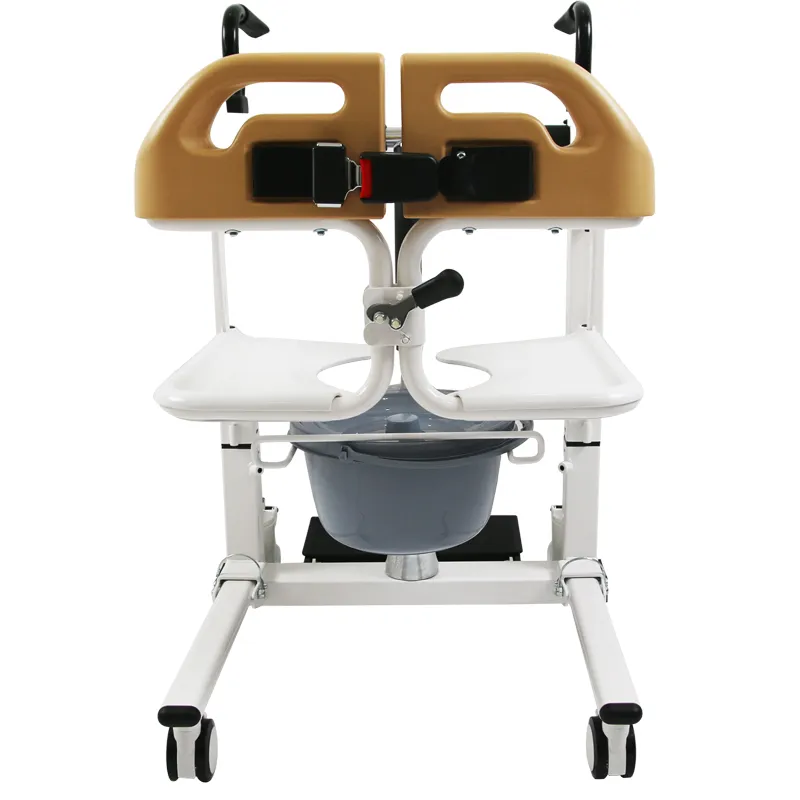
Transit Wheelchairs vs. Patient Lift Transfer Chairs: How do they differ in operation?
When encountering these two types of products for the first time, many consumers assume they serve similar functions because both feature seats, armrests, and casters. However, there are fundamental differences in their design philosophies.
The design of a transit wheelchair focuses on "mobility." The patient must first be able to sit safely in the chair, after which a caregiver pushes it to move them from one location to another. Consequently, the act of sitting down usually relies on the patient's own lower-body strength and upper-body support capabilities, or requires the caregiver to provide physical assistance with lifting and positioning.
In contrast, a patient lift transfer chair focuses specifically on the process of "getting seated." Many patients are not incapable of sitting in a wheelchair; rather, they cannot safely stand up and transfer from a bed, sofa, or toilet. Patient lift transfer chairs address this by utilizing features such as lifting, opening/closing mechanisms, and secure support structures to facilitate the entire transfer process with minimal manual lifting, thereby significantly reducing the difficulty of caregiving.
In other words, transit wheelchairs primarily solve the problem of "how to move once seated," whereas patient lift transfer chairs solve the problem of "how to safely get seated and complete the transfer." This is why many hospitals, rehabilitation centers, and elderly care facilities are equipped with both types of devices rather than choosing just one.
Can I use a transit wheelchair instead of a patient lift transfer chair?
This depends on a comprehensive assessment of the patient's physical condition, the caregiving environment, and specific usage needs.
If a patient possesses adequate lower-body strength and can stand, turn, and sit down with only light assistance from a caregiver—such as patients recovering from surgery, elderly individuals with mild mobility issues, or those undergoing short-term rehabilitation—then a transit wheelchair will usually suffice for daily mobility needs. In such cases, the caregiver simply assists the patient in standing up and sitting down, after which the transit wheelchair is used for short-distance movement within the hospital room, home, or facility. However, for patients who are bedridden for long periods, hemiplegic patients, severely disabled elderly individuals, those with advanced Parkinson's disease, patients recovering from fractures who cannot bear weight, and individuals with severely limited muscle strength, relying solely on a standard transit wheelchair often makes safe transfer difficult. Caregivers frequently have to lift or carry patients; this not only involves high physical exertion but also carries the risk of falls, collisions, or even secondary injuries caused by a loss of balance. In such scenarios, a patient lift transfer chair is usually the safer and more professional choice.
Therefore, while transit wheelchairs can handle patient transport tasks in certain situations, they cannot fully replace patient lift transfer chairs. This is particularly true when frequent transfers—such as moving between bed and chair, using the toilet, or performing caregiving tasks—are required; the two devices serve different roles, and indiscriminately substituting one for the other could compromise both caregiving efficiency and patient safety.
Transit Wheelchairs vs. Patient Lift Transfer Chairs: What Are the Key Differences?
Although both transit wheelchairs and patient lift transfer chairs are assistive devices that help individuals with limited mobility move around, they are designed with different objectives in mind.
Transit wheelchairs prioritize transport efficiency. Their primary function is to assist patients who are already able to sit upright in moving short distances; consequently, these products typically emphasize features such as lightweight construction, foldability for storage, maneuverability, and ease of getting in and out of vehicles. Whether in hospital outpatient departments, airports, train stations, nursing homes, or during family outings, transit wheelchairs enable the quick and safe transport of patients from one location to another, significantly reducing the physical exertion associated with walking.
In contrast, patient lift transfer chairs focus specifically on the act of "transferring" during caregiving. Examples include moving a patient from a nursing bed to a wheelchair, from a wheelchair to a toilet, or from a sofa to a shower chair. These actions involve not only a change in location but also complex steps such as shifting the center of gravity, rising, sitting, rotating, and adjusting height. Patient lift transfer chairs utilize lifting mechanisms, locking systems, and stable support structures to transform these complex movements into a safer, less physically demanding caregiving process. In other words, if patient care is likened to a complete journey, a patient lift transfer chair handles the task of safely getting the patient "in and out of the vehicle," while a transit wheelchair facilitates "reaching the destination." Since these products serve different stages of the process, they are not competitors in many care scenarios; rather, they complement and support each other.
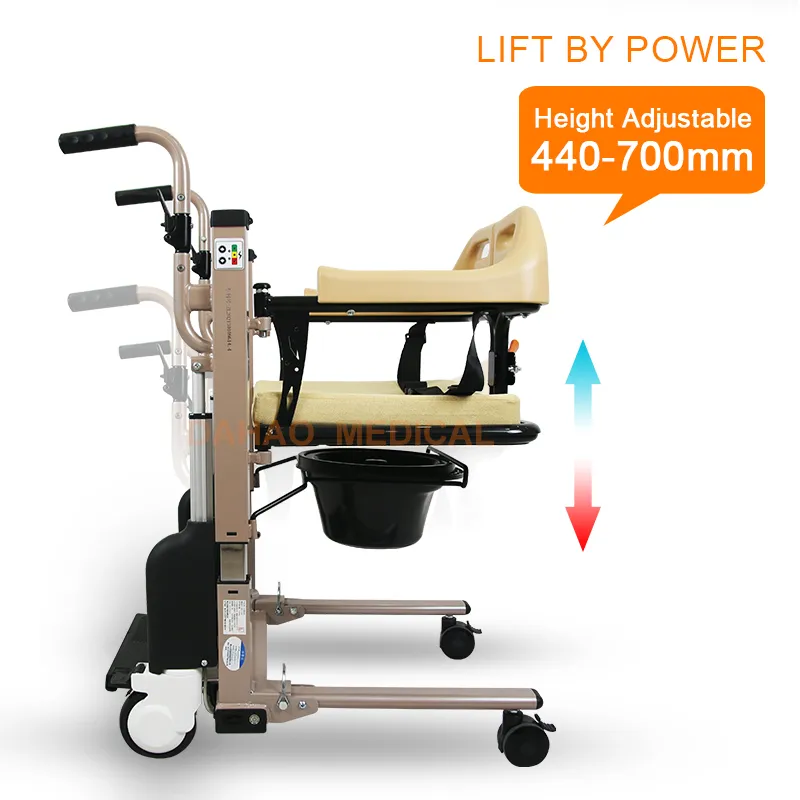
When is a transit wheelchair a suitable choice?
Not every patient requires a patient lift transfer chair. For individuals who retain some physical function and can cooperate with caregiving movements, a transit wheelchair is perfectly adequate for daily needs.
For instance, patients recovering from knee or hip replacement surgery or fracture fixation may not be ready for prolonged walking during the early stages of rehabilitation but often retain some ability to stand. Such patients can usually stand up and sit down with the assistance of a caregiver, making a transit wheelchair sufficient for hospital check-ups, rehabilitation exercises, or home activities.
Additionally, some elderly individuals move slowly but can still stand independently for short periods, even if they tire easily during longer activities. For this group, a transit wheelchair not only alleviates physical strain but also makes it easier for family members to accompany them on outings for medical appointments, shopping, or travel.
Patients with chronic conditions—such as mild cardiopulmonary disease, arthritis, or impaired balance—also frequently choose transit wheelchairs as mobility aids to enhance convenience in their daily lives.
When is a patient lift transfer chair recommended?
In contrast, a patient lift transfer chair is often more suitable for individuals with a higher degree of physical impairment.
Patients who are bedridden for extended periods often lack the muscle strength to sit up, stand, or turn around independently. If caregivers rely on manual lifting or supporting to move these patients, they risk suffering from lower back strain; furthermore, there is a danger of falls if the patient suddenly loses their balance.
Stroke patients with hemiplegia (paralysis on one side of the body) are another typical group for whom this device is appropriate. While a standard transit wheelchair can handle transportation, the process of transferring—such as moving from bed to chair or from chair to the toilet—carries significant risk. A patient lift transfer chair provides superior body support, thereby reducing the difficulty and risk involved in caregiving. In addition, patient lift transfer chairs are highly suitable for patients with advanced Parkinson’s disease, ALS (Lou Gehrig's disease), or severe osteoporosis, as well as for heavier individuals requiring care. Using mechanical assistance for transfers not only minimizes patient pain but also protects caregivers from occupational injuries caused by repetitive lifting and moving.
Impact on Caregiver Workload
In home care settings, caregivers are often spouses, children, or hired aides who may not have received professional nursing training. Relying on manual lifting over the long term frequently leads to issues such as lumbar muscle strain and shoulder injuries.
Surveys within the care industry indicate that lower back strain is among the most common occupational health issues for caregivers, with patient transfers being a primary cause of such injuries. For heavier patients, a single incorrect lifting or supporting movement can result in injury to the caregiver.
When using a patient lift transfer chair, the equipment bears the majority of the patient's weight, leaving the caregiver to focus on guiding and assisting; this significantly reduces physical exertion. In contrast, while transit wheelchairs reduce the distance a patient needs to walk, caregivers must still provide substantial physical support when the patient gets in or out of the chair.
Therefore, for households requiring frequent transfers—such as moving between bed and chair, using the toilet, or bathing—patient lift transfer chairs can markedly improve care efficiency and alleviate the physical strain associated with long-term caregiving.
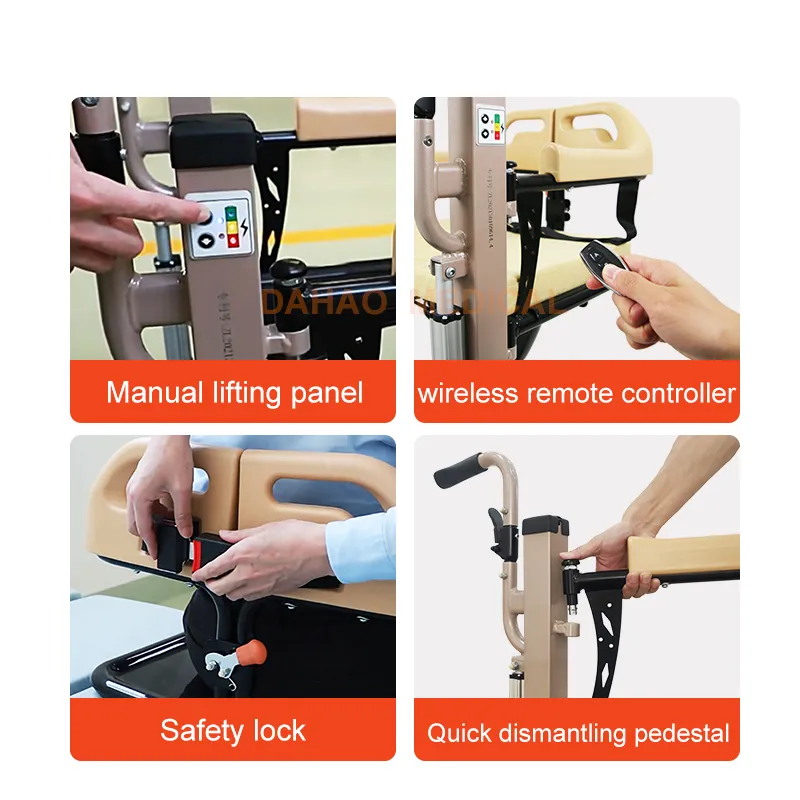
Safety Comparison: Transit Wheelchairs vs. Patient Lift Transfer Chairs—Addressing Transfer Risks
Although patient transfer may appear to be a simple action, it is actually one of the stages of care most prone to accidents. Particularly for individuals with limited mobility, a loss of balance while rising, turning, or sitting down can easily lead to falls, collisions, or joint sprains.
Transit wheelchairs lack active lifting capabilities, meaning patients must still perform a certain degree of physical movement themselves. If a patient is unable to cooperate, the caregiver must rely on manual lifting and support to complete the process; this not only complicates the task but also increases the likelihood of accidents.
In contrast, patient lift transfer chairs utilize adjustable heights, stable bases, locking casters, and ergonomic designs to facilitate smoother position changes, thereby reducing the risks associated with sudden physical strain. Therefore, for high-risk care recipients, choosing a specialized patient lift transfer chair is often safer than relying solely on a standard transport wheelchair.
Transit Wheelchairs vs. Patient Lift Transfer Chairs: How Should Home Care Settings, Hospitals, and Aged Care Facilities Choose?
Equipment requirements vary depending on the care environment.
In home care, the choice should be based on the patient's level of self-care ability. If a patient can stand independently and only needs a mobility aid for going out, a lightweight transport wheelchair usually suffices. However, if the patient requires frequent transfers—such as moving between bed and chair, to the restroom, or for bathing—a patient lift transfer chair is recommended as the primary choice, potentially supplemented by a transport wheelchair when necessary.
Hospitals typically stock both types of equipment, tailored to the specific needs of different departments. For instance, outpatient, emergency, and medical imaging areas make extensive use of transport wheelchairs to facilitate rapid patient movement. Conversely, departments such as rehabilitation, geriatrics, intensive care units (ICUs), and long-term care wards rely more heavily on patient lift transfer chairs to handle complex transfer tasks.
Elderly care facilities primarily serve seniors who are of advanced age, suffer from chronic illnesses, or have disabilities. Consequently, many facilities are equipped with both transport wheelchairs and patient lift transfer chairs, allowing staff to use the appropriate equipment based on the resident's physical condition and thereby balancing care efficiency with safety.
Buying Advice: How to Choose the Right Equipment?
Before purchasing caregiving equipment, it is advisable to assess the patient's physical condition. If the patient can stand independently and cooperate with caregiving movements, and the primary need is short-distance mobility (indoors or outdoors), a transfer wheelchair is often an economical and practical choice.
If the patient can no longer stand safely and requires frequent transfers between locations such as the bed, chair, and bathroom, a patient lift transfer chair offers more specialized support. If the budget allows, having both a transfer wheelchair and a patient lift transfer chair often covers a wider range of caregiving scenarios, providing complementary mobility and transfer functions.
Additionally, when selecting a product, consider factors such as weight capacity, seat dimensions, lifting range, braking systems, caster quality, ease of cleaning and maintenance, and after-sales service to ensure long-term, stable, and safe use.
FAQ
Q1: What is the difference between a transfer wheelchair and a standard wheelchair?
A: Transfer wheelchairs are primarily designed to be pushed by a caregiver; they usually feature smaller rear wheels and emphasize portability and short-distance transport. Standard wheelchairs, on the other hand, often come with larger drive wheels to allow the user to propel themselves.
Q2: Must a patient lift transfer chair be electric?
A: Not necessarily. The market offers electric, hydraulic, and mechanical models; you can choose the one that best fits your budget and specific needs.
Q3: Can a transfer wheelchair handle the transfer from bed to wheelchair?
A: If the patient can stand and cooperate with the movement, the transfer can be completed with the assistance of a caregiver; however, if the patient cannot stand, relying solely on a transfer wheelchair usually makes it difficult to complete the transfer safely.
Q4: Is a patient lift transfer chair suitable for home use?
A: Yes, it is—especially for households caring for patients who are bedridden, disabled, or have limited mobility. It simplifies caregiving tasks and improves the efficiency of daily care.
Q5: Can both types of equipment be purchased together?
A: Yes. For households or institutions with high caregiving demands, having both a transfer wheelchair and a patient lift transfer chair allows for greater versatility across various care scenarios.
Q6: Can a patient lift transfer chair help prevent caregiver injuries?
A: When used correctly, it reduces the need for frequent manual lifting of the patient, thereby alleviating strain on the caregiver's lower back and shoulders and reducing physical exertion.
Q7: What are the most important factors to consider when selecting care equipment?
A: Key factors to consider include the patient's physical condition, the frequency of care, the usage environment, safety requirements, and the number of caregivers available.