

—Yes, a sling-type patient lifter is one of the best tools for safe and easy transfer.
In home care settings, how to safely and efficiently help those with limited mobility transfer is always one of the most pressing concerns for caregivers and family members. Especially for those who are bedridden for extended periods, recovering from surgery, or elderly people with significantly weakened muscles, relying solely on manual assistance often poses significant safety risks.
Therefore, more and more families are starting to pay attention to a professional nursing device—the patient lifter.
So the question arises:
Can a patient lifter be used at home? Is it safe? Is it truly suitable for the home care environment?
The answer is a clear and affirmative: Yes. Using a patient lifter at home is not only feasible, but in many cases, it is a safer and more scientific choice.
Sling-type patient lifters, in particular, have become one of the core tools for achieving safe and easy transfer in home care.
This article will systematically answer the question "Can a patient lifter be used at home?" from a professional perspective, and will delve into its safety, applicability, working methods, and key factors to consider when using it at home.
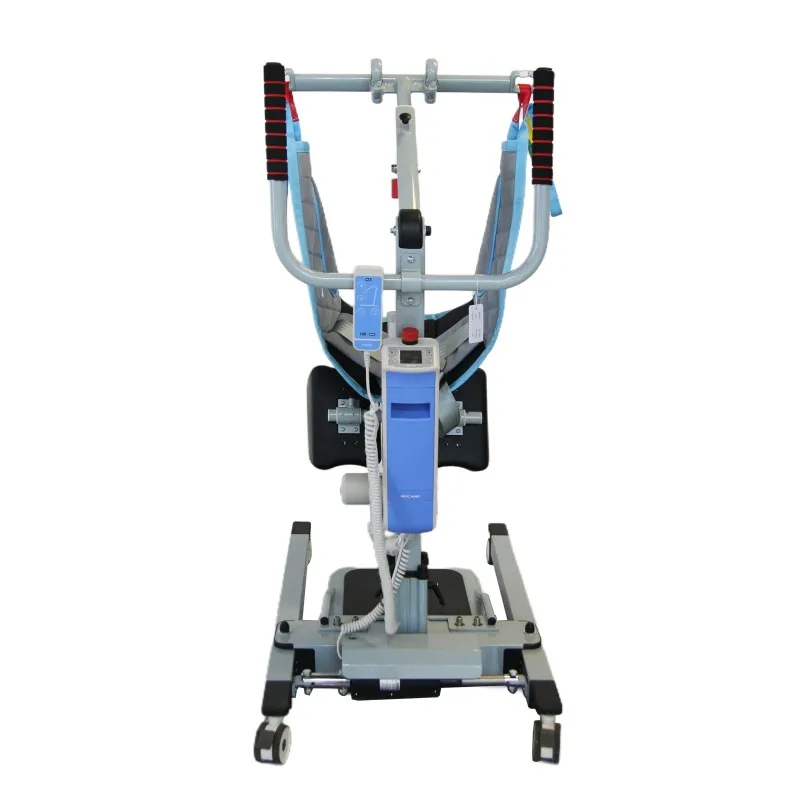
What exactly is a patient lifter? Why is a patient lifter used in home care?
Before discussing whether a patient lifter can be used at home, we first need to clarify a basic concept: What is a patient lifter?
A patient lifter is a nursing device that uses a mechanical structure and sling system to assist caregivers in safely transferring a patient from one location to another.
Common transfer actions include:
• Transferring from bed to wheelchair
• Transferring from wheelchair to toilet
• Transferring from bed to sofa
• Assisting with standing or short-distance movement
Throughout the process, the patient lifter bears the main weight-bearing burden, significantly reducing the risks associated with manual lifting.
For home care, the value of a patient lifter lies in:
• Reducing the physical burden on caregivers
• Lowering the risk of falls, slips, and sprains
• Improving the controllability and stability of the transfer process
• Making the care process more standardized and repeatable
Is a patient lifter truly suitable for use in a home environment?
Many people worry:
Is a patient lifter more suitable for a hospital?
Will it be inconvenient with limited space at home?
Can home caregivers, who are not professional nurses, operate it?
These questions are very common and very real. In fact, modern patient lifters are designed with home use in mind from the outset.
From a professional perspective, the home environment does not preclude patient lifters; on the contrary, they are highly adaptable in the following ways:
• Home care relies more on equipment to reduce human risk.
• Home caregivers often lack professional lifting training.
• Home care cycles are long, requiring long-term safety assurance.
As long as the appropriate type of patient lifter is chosen and used correctly, home use is not only feasible but also essential.
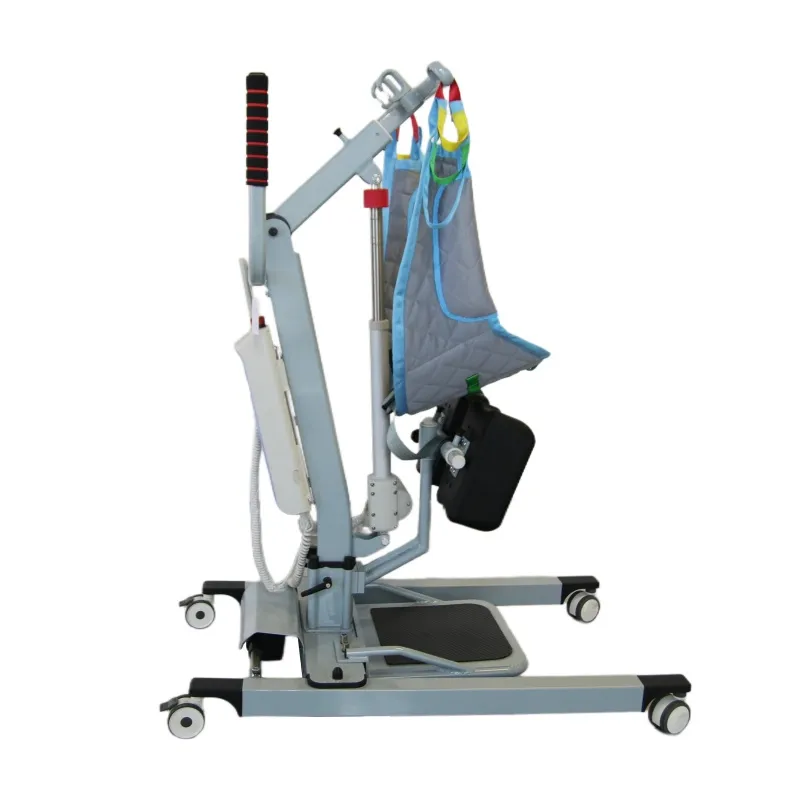
Which patient lifter is best suited for home use?
In home care scenarios, not all types of patient lifters are equally suitable. Among them, the sling-type patient lift is considered the most mature, safest, and easiest to use option.
Why is the sling-type patient lift more suitable for home use?
The sling-type patient lift uses flexible slings to wrap the patient's body, and then the main body of the transfer machine completes the lifting and transfer. Its core advantages include:
• No need for the patient to stand actively
• The device bears the weight throughout the process
• Smooth and controllable transfer
• Low physical demands on caregivers
The sling-type patient lifter is particularly suitable for bedridden, semi-recumbent, or muscle-deficient individuals commonly encountered in home care.
Is it safe to use a patient lifter at home?
Safety is the most crucial consideration in home care.
From a professional perspective, the patient lifter has the following significant advantages in terms of safety:
1. The patient lifter significantly reduces the risk of falls
Common risks during manual assistance include:
• Sudden loss of support by the patient
• Uneven force applied by the caregiver
• Loss of balance leading to a fall for both individuals
The patient lifter, through its stable mechanical structure and multi-point support, avoids these uncontrollable factors.
2. The patient lifter reduces the probability of injury to caregivers
In home care, caregivers are often family members who lack professional training. Prolonged bending and lifting can easily cause:
• Lumbar spine injury
• Neck and shoulder strain
• Excessive pressure on wrists and knees
Using a patient lifter, most of the force is borne by the device, and caregivers only need to operate and guide.
3. The sling system provides stable and even support
Sling-type patient lifters distribute force points, preventing excessive pressure on any one part of the body, which helps to:
• Improve transfer comfort
• Reduce skin friction
• Prevent sudden changes in posture
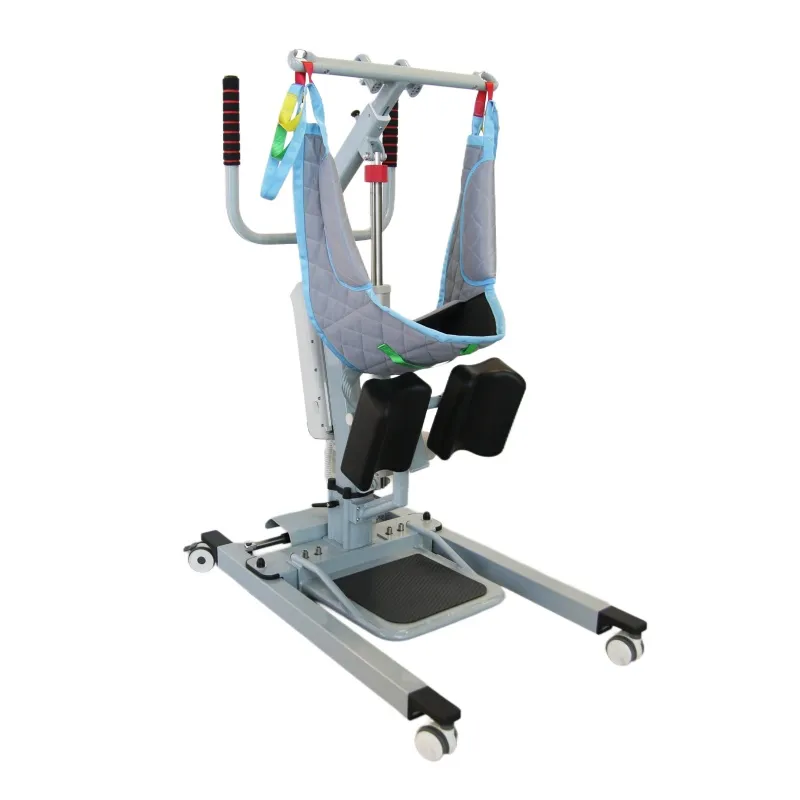
Is using a patient lifter at home complicated?
This is one of the biggest concerns for many families when deciding whether to buy a patient lifter.
In fact, home-use patient lifters have been significantly simplified in their operating logic.
Common home-use patient lifters have the following characteristics:
• Intuitive controls (hand controller or hydraulic handle)
• Smooth lifting and lowering movements, with the ability to stop at any time
• Clear structure and fixed operating steps
• No professional medical background required to master
As long as the basic procedures are familiarized before use, home caregivers can safely and independently use the patient lifter.
What transfer movements can a patient lifter perform in home care?
In a home environment, patient lifters have a wide range of applications, primarily including:
• Bed ↔ Wheelchair
• Bed ↔ Toilet
• Bed ↔ Sofa
• Lying down ↔ Sitting position assistance
• Position adjustment during local cleaning and care
These are all high-frequency and high-risk movements in home care, and patient lifters exist precisely to meet these needs.
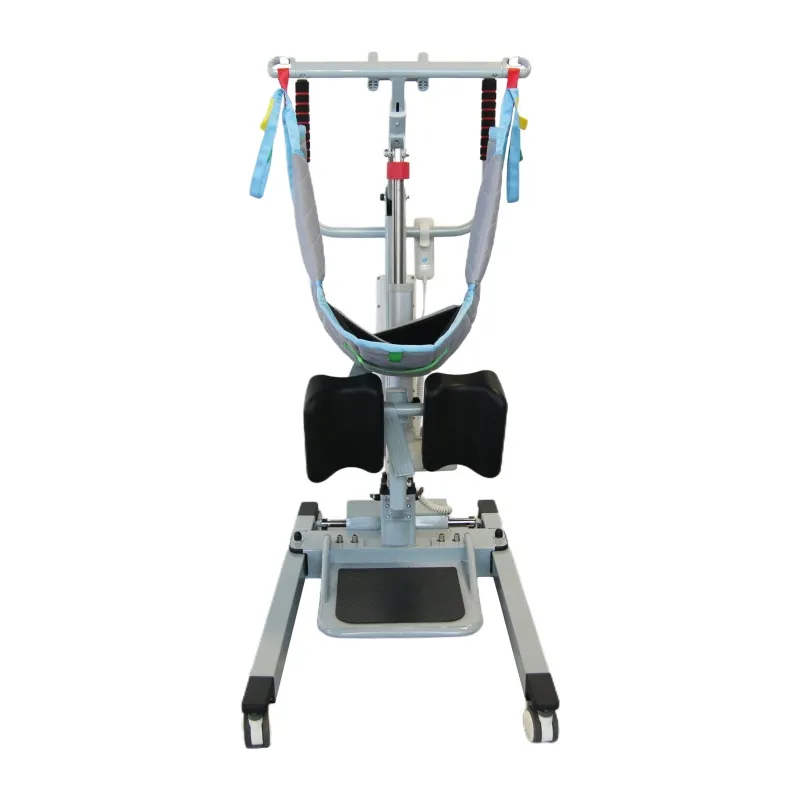
What space conditions should be considered when using a patient lifter at home?
Home space is indeed a practical factor, but it doesn't necessarily hinder its use.
When choosing a patient lifter, consider the following:
• Is there sufficient transfer space between the bed and wheelchair?
• Is the floor level?
• Is a movable base required?
• Are doorways and aisles wide enough for the device to pass through?
Most home patient lifters feature a compact design, suitable for typical home bedroom environments.
Are patient lifters suitable for long-term home care?
The answer remains yes.
From a long-term care perspective, the value of a patient lifter is even more pronounced:
• Reduces the physical burden on caregivers in the long term
• Reduces the risk of accidents in long-term care
• Improves the sustainability of care processes
• Makes care less reliant on physical exertion
For those requiring long-term home rehabilitation or care, a patient lifter is a basic care tool, not a luxury.
What factors should families focus on when choosing a patient lifter?
To ensure safety and suitability for home use, the following should be considered when selecting a patient lifter:
1. Does the weight-bearing capacity match the user's weight?
2. Are the size and type of straps appropriate?
3. Is the lifting mechanism smooth and controllable?
4. Is the base suitable for the home space?
5. Is the operation simple and intuitive?
These factors directly affect the user experience and safety of the patient lifter in a home environment.
Can a patient lifter replace manual care?
It is important to emphasize:
A patient lifter is a care assistive tool, not a substitute for caregivers.
Its functions are:
• Reduce the difficulty of care
• Improve safety
• Reduce physical exertion
• Optimize the care process
In home care, the patient lifter and caregiver have a "collaborative relationship," not a "substitute relationship."
Can a patient lifter be used at home?
The answer is a resounding yes:
Yes, and in many home care scenarios, a patient lifter is a safer, easier, and more scientific choice.
In particular: Sling-type patient lifters are one of the best tools for safe and easy transfer—whether you are a caregiver or someone recovering at home.
As long as you choose the appropriate type of patient lifter and use it correctly, it will become an indispensable piece of equipment in home care.
How can I purchase medical equipment directly from Dayang Medical?
Guangdong Dayang Medical Technology Co., Ltd. allows buyers to purchase medical equipment directly from our factory in China. Founded in 2009, we are a professional manufacturer and supplier of electric wheelchairs, manual wheelchairs, sports wheelchairs, hospital beds, shower chairs, commodes, walking aids, and canes.
Dayang Medical is a trusted supplier and manufacturer, supporting medical brands, distributors, hospitals, and clinics worldwide with reliable equipment and professional service.