

For patients who have undergone hip replacement or repair surgery, the method of movement during the post-operative recovery period is crucial. During this time, the hip joint is in the healing phase, and the artificial joint or repaired area needs to be protected from excessive bending, rotation, or undue pressure.
Therefore, patients must pay extra attention to their posture and support angles during actions such as sitting, standing, and transferring.
Many family members ask during the care process: "Can a lift transfer chair be used after hip surgery?"
The essence of this question is: Can a lift transfer chair safely assist the patient in sitting and standing without damaging the hip joint?
Before answering this question, we need to understand what a lift and transfer chair is and whether its functional design meets the requirements for post-operative rehabilitation patients.
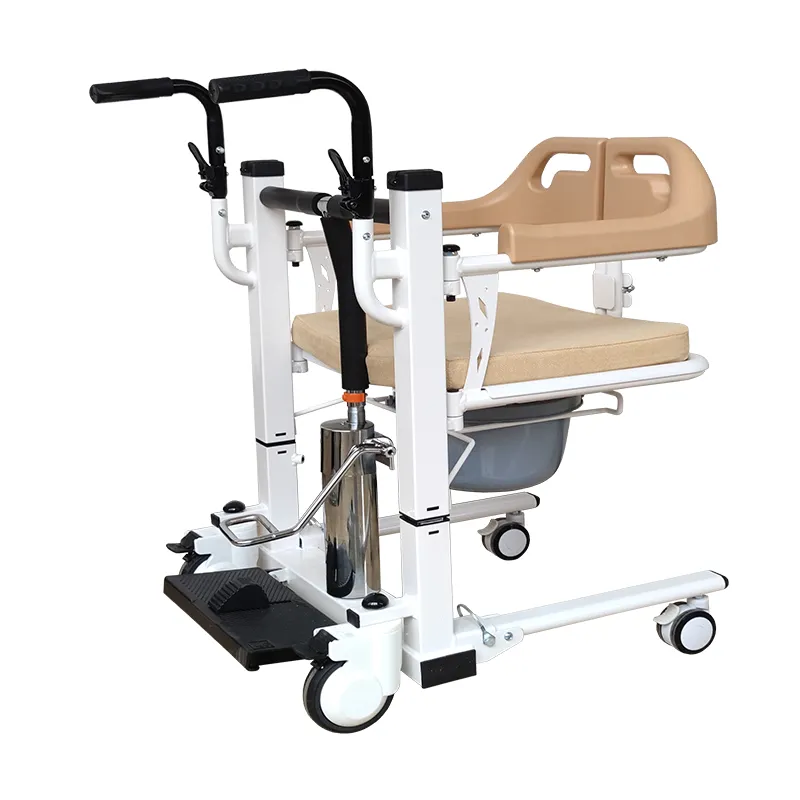
What is the design principle of a lift transfer chair?
A lift transfer chair is a nursing transfer device specifically designed for people with mobility impairments, those who are bedridden for extended periods, or patients recovering from surgery.
Its main function is to help patients safely transfer between different positions such as beds, wheelchairs, toilets, and sofas, reducing the burden on caregivers and preventing secondary injuries caused by pulling or straining.
The core structure of a lift transfer chair includes:
• Electric or hydraulic lifting system – allowing the seat height to be adjusted up and down, avoiding bending over during transfers;
• Safety support bars and restraints – maintaining body stability during transfers;
• Adjustable footrests and backrest structure – providing ergonomically sound support;
• Four-wheel mobility system – enabling short-distance transfers;
• Braking and locking devices – ensuring stability and preventing sliding during use.
Unlike traditional wheelchairs, a lift and transfer chair is not a mobility aid, but a safe transfer device. Its core design is to "assist patients in sitting and transferring," not for "long-term sitting and movement."
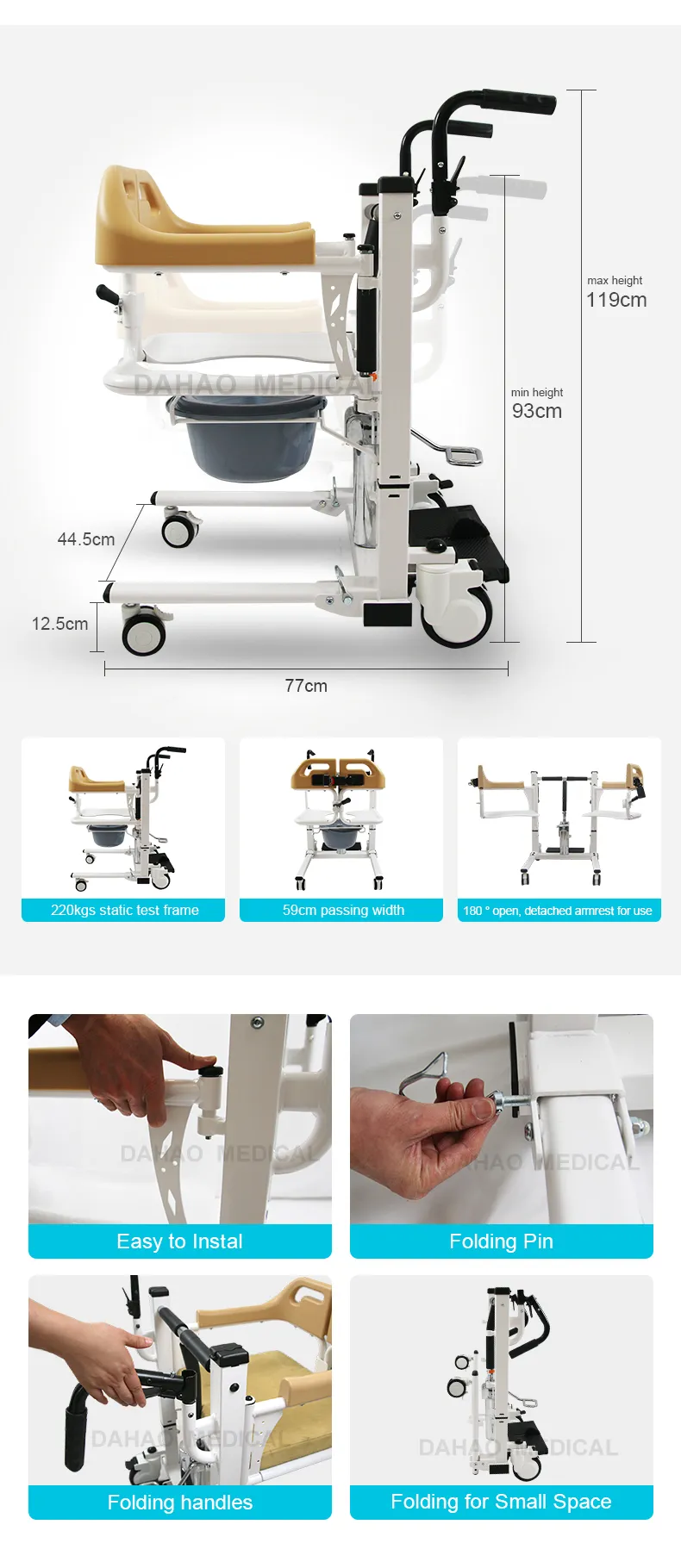
Can a lift transfer chair be used after hip surgery?
The answer is:
With the doctor's permission, a lift transfer chair can be used after hip surgery.
However, it must be emphasized that it must be used with the correct posture, at the appropriate height, and within a reasonable time frame.
This is mainly based on the following considerations:
1. A lift transfer chair can help patients safely stand up and sit down
In the early stages of rehabilitation after hip surgery, patients should generally avoid bending their hips more than 90 degrees and should not use one leg to stand up forcefully. When using a lift transfer chair, the seat can be raised to near standing height, allowing the patient to sit down with only a slight downward movement, thus avoiding excessive hip flexion.
This is safer than using low seating surfaces such as ordinary wheelchairs or sofas.
2. Lift transfer chairs reduce external force during transfers
Caregivers no longer need to hold, support, or lift the patient, avoiding "hip joint torsion" or "asymmetrical support" during transfers.
The patient maintains a stable sitting posture throughout the process, with the device performing the lifting and lowering movements, significantly reducing the risk of postoperative dislocation.
3. The adjustable structure of the lift transfer chair facilitates postoperative rehabilitation posture
Most lift and transfer chairs are equipped with adjustable backrests and armrests, allowing for adjustment of the sitting angle according to the postoperative recovery stage, helping patients maintain a safe angle for their hip joint.
What are the precautions for using a lift transfer chair after hip surgery?
Although the lift transfer chair has a safe structure, there are still some key usage points that need to be followed for postoperative patients:
1. Use as directed by your doctor
Not all patients are suitable for sitting up immediately.
In the early stages after hip surgery (usually 1-2 weeks post-surgery), whether to use a lift transfer chair should be determined based on the doctor's advice.
Sitting up too early may lead to incision stretching or prosthesis displacement.
2. Adjust the lifting height appropriately
When sitting down, the knees should be below the hip joint level to avoid excessive hip flexion.
The height of the lift transfer chair should be slightly higher than a regular chair to ensure a smooth movement when the patient sits down.
3. Keep your body straight and do not twist your hips
During sitting down or standing up, be sure to avoid twisting your waist and legs.
The body should be facing the lift transfer chair, and both feet should be firmly on the ground before sitting down or lifting.
4. Do not sit for too long
The lift and transfer chair is mainly used for transfers and short rests, not for prolonged sitting or lying down.
Prolonged sitting can restrict blood circulation in the lower limbs, which is not conducive to recovery.
5. Ensure the device is stable
Before operating the lifting mechanism, be sure to lock the brakes and secure the seat to ensure the device does not slide.
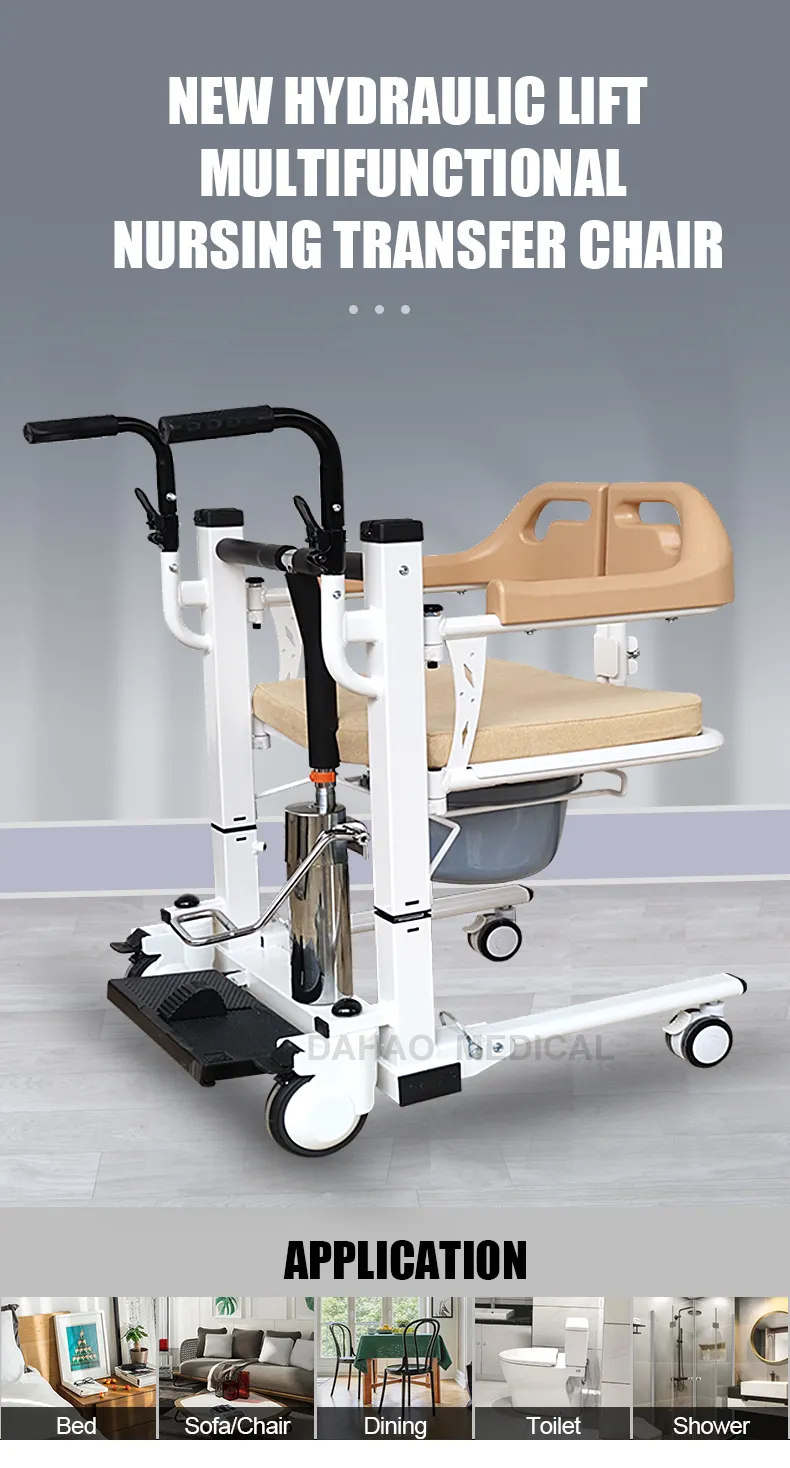
What are the benefits of a lift transfer chair for hip joint recovery after surgery?
Proper use of a lift transfer chair will not only not affect hip joint recovery but will also play a positive role.
1. Facilitating Early Activity and Promoting Blood Circulation
Doctors usually encourage post-operative patients to engage in limited activity as early as possible.
The lift transfer chair is designed to allow patients to safely and smoothly transition "from bed to chair," helping to restore mobility in the lower limbs.
2. Reducing Caregiver Burden
Traditional lifting methods can easily lead to pain or improper joint stress due to uneven force distribution.
The electric or hydraulic system of the lift transfer chair makes care easier and safer.
3. Preventing Secondary Injuries
Post-operative patients are most afraid of falls or incorrect movements.
The lift and transfer chair provides a stable support surface and securing devices, effectively preventing accidents caused by instability.
4. Maintaining Correct Sitting Posture
Adjustable backrest angle, armrest height, and footrest position help maintain the hip joint within a safe range of motion.
What are some common mistakes to avoid when using a lift transfer chair after hip surgery?
Although the lift transfer chair is convenient to use, improper methods can still pose risks. The following behaviors should be avoided:
1. Sitting Too Low
When the hips are lower than the knees, the joint bending angle exceeds 90 degrees, which can easily lead to prosthesis dislocation.
Ensure that the lift transfer chair is adjusted to a height where the hips are higher than the knees.
2. Twisting the Body While Sitting Down or Standing Up
When sitting down and standing up, the body should be facing the lift transfer chair directly; do not twist your body while sitting.
3. Using Without Locking the Wheels
Performing lifting operations without engaging the brakes can cause the chair to slide, increasing the risk of falls.
4. Over-reliance on the Device
The lift and transfer chair is an assistive tool and should not replace the patient's own rehabilitation exercises.
It should be used in conjunction with active rehabilitation training under the guidance of a doctor.
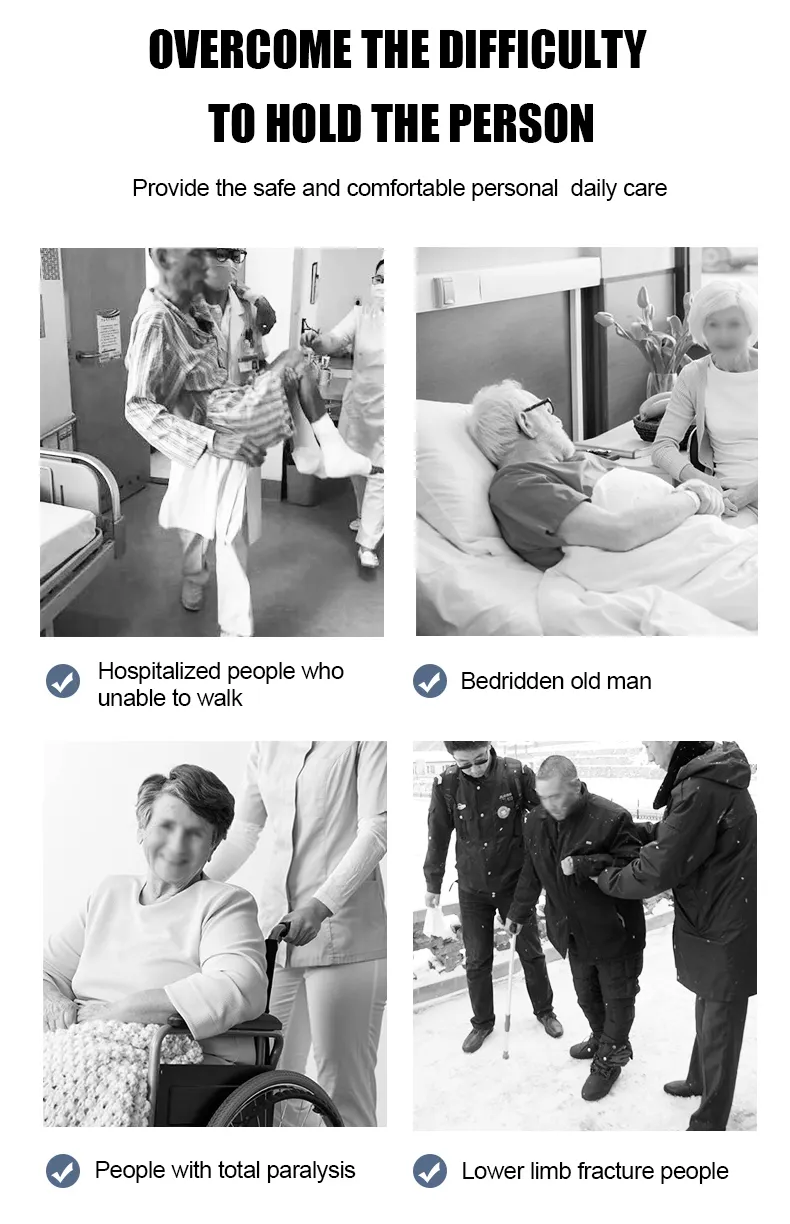
What parameters should be considered when choosing a lift transfer chair after hip surgery?
Not all lift transfer chairs are suitable for post-operative use. When choosing, it is recommended to pay attention to the following points:
1. Lifting Range
Ensure that the lifting range covers the common heights of hospital beds, wheelchairs, and toilets for smooth transfers.
2. Seat Cushion Design
Opt for a wider, thicker seat cushion that conforms to the body's curves to reduce pressure on the ischial tuberosities and improve comfort.
3. Adjustable Backrest Angle
This allows for control of the hip joint's range of motion, preventing excessive bending. 4. Braking Stability
A four-wheel independent braking system is safer, especially on uneven surfaces or during transfers.
5. Weight Capacity
The weight capacity should generally be no less than 100 kg to ensure safe long-term use.
6. Electric Control for Easier Operation
Electric lift transfer chairs are easy to operate and suitable for caregivers with limited physical strength.
What is the difference between a lift transfer chair and a regular wheelchair?
Many people confuse lift and transfer chairs with wheelchairs when choosing equipment, especially during post-operative rehabilitation. There are significant differences in function and usage scenarios:
Comparison Items | Lift and transfer chair | Wheelchair |
| Main Functions | Assistance for standing up and transferring | Long-distance mobility |
| Applicable Scenarios | Transfer between bed, toilet, and sofa | Indoor and outdoor use |
| Height Adjustment Function | Available (electric or hydraulic) | None |
Seating Angle | Adjustable, beneficial for post-operative protection | Fixed |
| Safety Belt | Multiple points of fixation to prevent slipping and displacement | Usually with waist restraint |
| Hip Joint Protection | Excellent | Weak |
| Suitable Duration | Suitable for short-term sitting and transfers | Suitable for prolonged use |
Therefore, for patients in the post-hip surgery rehabilitation phase, a lift and transfer chair is a more scientific choice.
Can a lift transfer chair be used after hip surgery? Yes, but with proper use
1. A lift transfer chair can be used after hip surgery, but you must follow your doctor's instructions;
2. The lift transfer chair helps patients safely stand up and sit down, reducing the risk of sprains and dislocations;
3. When using it, pay attention to height adjustment, brake locking, and maintaining an upright posture;
4. The lift transfer chair is mainly used for short-term transfers and rest, and should not be used for extended periods.
In summary:
For patients after hip surgery, the lift and transfer chair is a "safe, labor-saving, and scientific" care assistant. When used correctly, it will not only not increase the burden but will significantly improve the comfort and safety of the rehabilitation process.
Can Dayang Medical assist with marketing materials?
Yes, we provide professional product photos, videos, and catalogs for buyers who plan to sell online or in retail stores. These resources support marketing campaigns and make it easier for distributors to showcase products. Buyers who purchase from our factory benefit from low price purchasing, wholesale discounts, and factory promotions, all while receiving high quality marketing support.
Our comprehensive service makes Dayang Medical a valuable supplier and partner for businesses expanding their mobility equipment sales.