

With the evolution of modern healthcare concepts, adjustable hospital beds have become essential equipment in hospitals, rehabilitation centers, elderly care facilities, and home care settings. Unlike traditional fixed-height beds, adjustable hospital beds allow for flexible adjustments to the bed surface height as well as the positioning of the backrest, leg section, and overall posture, thereby providing a more comfortable, safe, and ergonomic care experience. However, a question frequently raised by patients' families, caregivers, and facility managers during daily care is: at what height should the bed be set at night?
While this may seem like a simple operational detail, it actually has significant implications for patient safety at night, care efficiency, fall risks, the occupational health of caregivers, and the overall quality of care. If the bed is set too high, patients risk falling when getting in or out at night; conversely, if the bed is set too low—while reducing the potential fall distance—caregivers face an increased risk of lower back strain due to frequent bending while turning patients, conducting rounds, monitoring vital signs, and performing care procedures. Therefore, there is no "one-size-fits-all" answer for the nighttime height setting; instead, the decision requires a comprehensive assessment based on the patient's age, mobility, medical condition, specific care needs, and institutional protocols.
In recent years, the global aging of the population and the rising demand for long-term care have led to the widespread adoption of medical adjustable beds. United Nations population projections indicate that the global population aged 60 and older will continue to grow over the coming decades, resulting in a higher proportion of elderly patients. Meanwhile, the World Health Organization (WHO) has repeatedly highlighted patient falls as one of the most common adverse events in healthcare and long-term care facilities, noting that the proper use of care equipment, optimized care workflows, and improved environmental management are crucial measures for reducing fall risks. Against this backdrop, correctly adjusting the height of hospital beds is not merely a basic care skill but a vital component of ensuring patient safety.
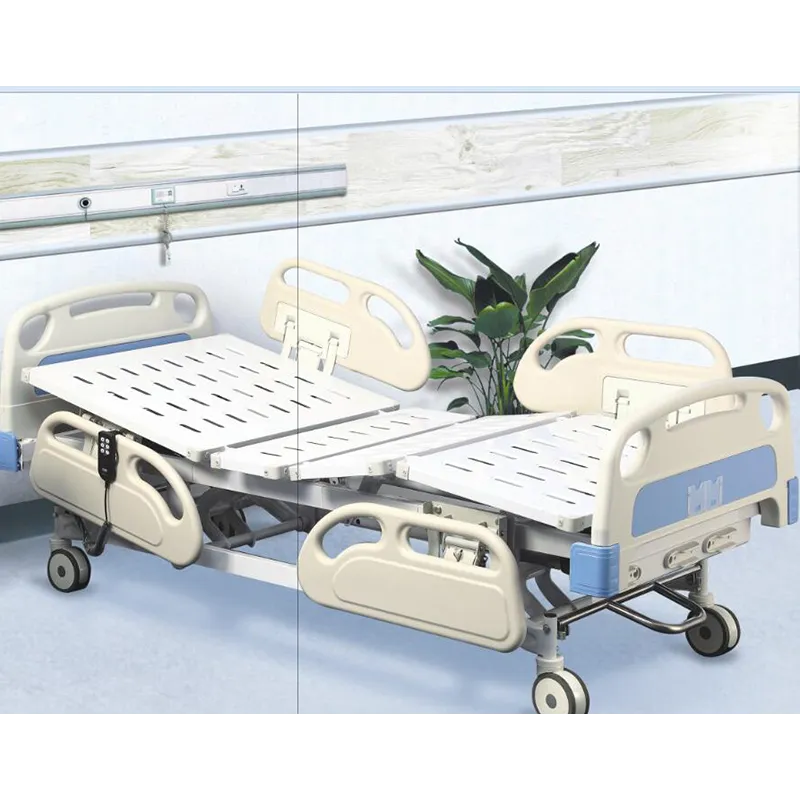
What is an adjustable hospital bed?
An adjustable hospital bed is a specialized piece of care equipment designed to allow adjustments to the bed's height and the angle of the sleeping surface using mechanical, hydraulic, or electric systems. Compared to traditional fixed beds, their greatest advantage lies in the ability to flexibly adjust the bed's position based on patient needs and specific care scenarios, thereby enhancing patient comfort and caregiving efficiency.
Modern medical adjustable beds typically feature functions such as height adjustment, backrest elevation, leg elevation, and overall tilting. Some high-end models are equipped with smart features like one-touch positioning, integrated weighing systems, bed-exit alarms, bedside lighting, central control systems, and remote monitoring capabilities. These designs not only facilitate patient recovery but also alleviate the physical burden on nursing staff.
In hospitals, medical adjustable beds are widely used in general wards, intensive care units (ICUs), and departments specializing in rehabilitation, geriatrics, neurology, and post-operative recovery. In elderly care facilities and home care settings, an increasing number of bedridden seniors, post-operative patients, and individuals with limited mobility are using these beds to assist with daily activities such as sitting up, turning over, eating, and resting.
Why is the height of the hospital bed so critical at night?
During the day, patients are often accompanied by family members, caregivers, or medical staff and are more active; bed height can be adjusted according to the specific needs of care procedures. At night, however, ambient light is dim and caregiver rounds are less frequent, yet the frequency of patients getting in and out of bed, using the toilet, or turning over may actually increase. Consequently, the setting of the bed height becomes particularly important.
Medical research and nursing practice indicate that a significant proportion of patient falls at night occur while getting in or out of bed. For the elderly, post-operative patients, stroke survivors, and those taking sedatives, balance and reaction times are often compromised at night. If a medical adjustable bed is set too high—preventing the feet from resting firmly on the floor—patients can easily lose their balance when rising, thereby increasing the risk of a fall.
Conversely, if the bed is kept at its lowest position for extended periods, the potential fall distance is reduced, but caregivers face ergonomic risks. Performing tasks such as turning the patient, suctioning secretions, changing dressings, monitoring vital signs, adjusting IV lines, or assessing the patient's condition requires frequent bending, which can lead to chronic strain on the lower back muscles. Thus, the nighttime bed height setting affects not only patient safety but also the occupational health of the nursing staff.
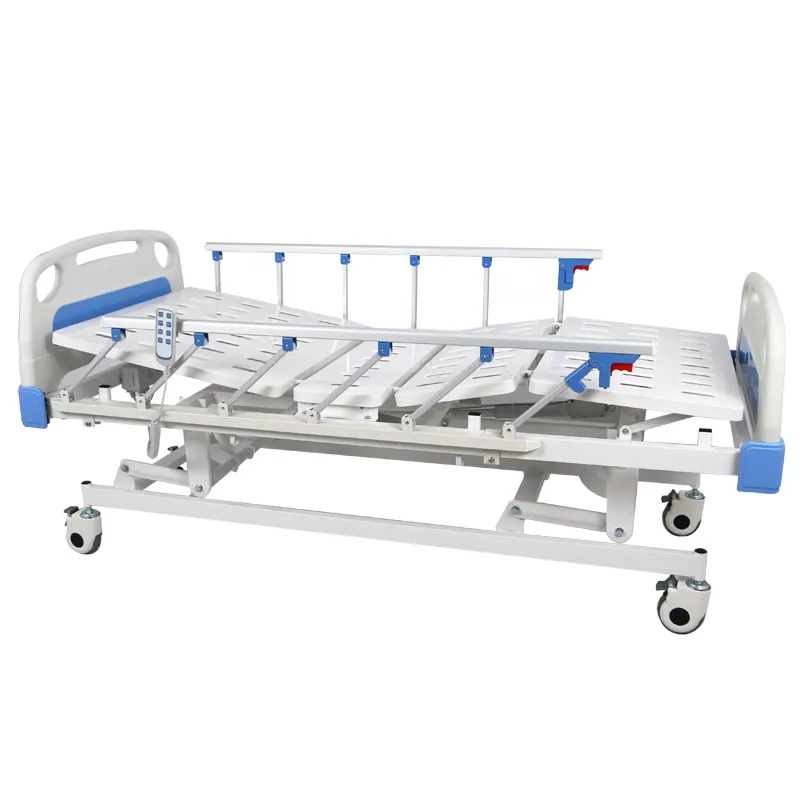
To what height should caregivers adjust the hospital bed at night?
Current nursing practices and ergonomic principles suggest there is no single "universal" height suitable for every patient; however, a widely accepted principle applies: when the patient is resting and not undergoing immediate care procedures, the medical adjustable bed should be lowered to the minimum safe height. When care is required, the bed should be raised to an ergonomically appropriate working height and then promptly returned to the lower position once the task is complete.
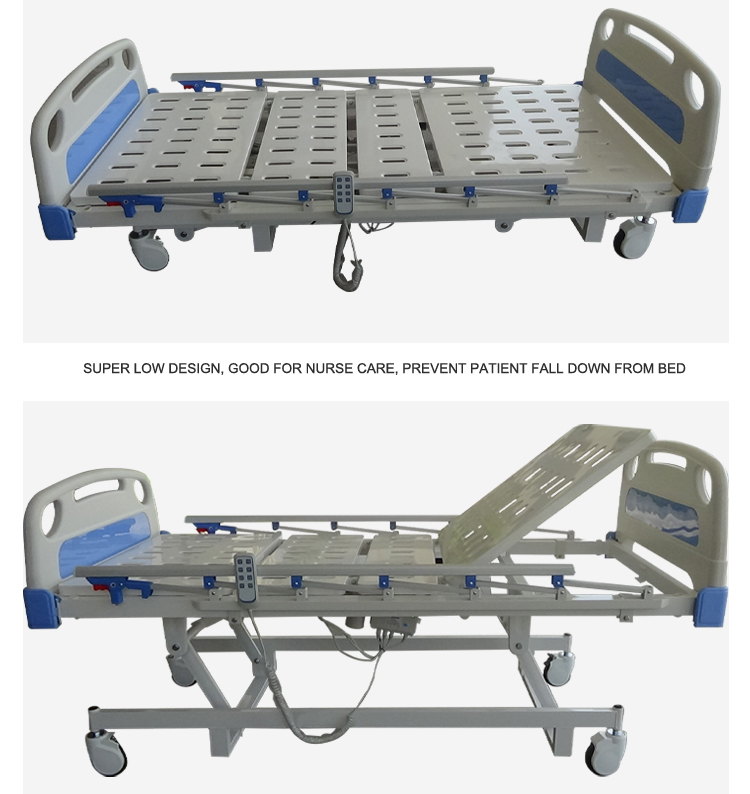
The "minimum safe height" generally refers to a level where the patient's feet can easily touch the floor, or where the distance of a potential fall is minimized in the event of an accidental slip. While minimum heights vary by brand, standard models typically have a minimum bed-surface-to-floor distance of approximately 35 to 45 centimeters, with ultra-low nursing beds capable of descending to around 30 centimeters. This height balances ease of getting in and out of bed with a reduced risk of serious injury from falls.
Caregivers performing tasks such as turning the patient, bed baths, changing linens, or wound care should adjust the bed height based on their own stature and the specific procedure. Ideally, the height should allow the caregiver to work without significant bending, keeping their shoulders relaxed and elbows in a comfortable position. After completing care, the bed should be returned to the safe nighttime height, and the caregiver should verify that the casters are locked, the side rails are properly positioned, and the call button is within easy reach of the patient.
Recommendations for Nighttime Bed Height Based on Patient Needs
Patient conditions vary, so nighttime settings for medical adjustable beds should be tailored accordingly.
For general patients in good physical condition who can get in and out of bed independently, the height can be fine-tuned based on where their feet naturally rest on the floor while standing, facilitating nighttime movement.
For the elderly, fall prevention is the priority. Due to age-related decreases in bone density, falls can easily result in hip fractures, wrist fractures, or head injuries. Therefore, it is recommended to keep the medical adjustable bed at a lower position during the night and supplement this with nightlights, non-slip floor mats, and bedside grab bars. For post-operative patients—particularly those recovering from hip, knee, or spinal surgeries—the bed height should be adjusted according to the recommendations of doctors and rehabilitation therapists. The goal is to avoid excessive joint flexion while ensuring the patient can safely get in and out of bed.
For patients confined to bed for long periods, the primary nighttime objectives are comfort and safety. Although these patients do not need to get in and out of bed frequently, caregivers still need to turn them regularly, check their skin condition, and prevent pressure ulcers. Consequently, the adjustable hospital bed can be raised temporarily during care procedures and returned to a lower position afterward.
What are the differences between hospital care and home care?
Hospitals typically have comprehensive nursing protocols in place. In most wards, nursing staff are required to return the medical adjustable bed to its lowest safe height and lock the casters after completing a procedure. This not only facilitates patient movement at night but also helps reduce the incidence of falls.
In contrast, home care requires more flexibility based on individual circumstances. For instance, some family caregivers are older and risk lower back injury if they frequently bend over to care for the patient; they can utilize the bed's height adjustment function to make caregiving more comfortable, then lower the bed again when the patient is resting.
Additionally, the home care environment requires attention to factors such as adequate bedside space, level flooring, effective anti-slip measures, and sufficient lighting. Even with an advanced adjustable hospital bed, accidents can still occur if the care environment presents significant safety hazards.
Common Mistakes When Using Adjustable Hospital Beds
Certain common errors in actual caregiving deserve special attention. For example, some caregivers forget to lower the bed after finishing a task; some patients lower the bed rails themselves for easier access; and some home users keep the bed at its maximum height for extended periods, thinking it makes caregiving easier, while overlooking the risk of the patient falling at night.
Furthermore, many people mistakenly believe that installing bed rails guarantees absolute safety. In reality, bed rails are merely auxiliary protective devices and cannot completely prevent falls. If a patient is disoriented, agitated, or attempts to climb over the rails, the danger may actually increase. Therefore, managing the height of the adjustable hospital bed remains a crucial aspect of nighttime care.

FAQ
Q1: Is it mandatory to lower the medical adjustable bed to the minimum height at night?
A: In most cases, it is recommended to lower the bed to the minimum safe height, especially for patients at risk of falling. However, if a doctor has specific instructions, those should be followed.
Q2: What is the minimum height (in centimeters) of a hospital bed?
A: It varies by brand and model; the common minimum bed surface height is around 35–45 cm, though some ultra-low nursing beds can go below 35 cm.
Q3: Why should the hospital bed be raised when caregivers are performing tasks?
A: Raising the bed to an appropriate height helps reduce the need for bending and excessive leaning forward, thereby minimizing lower back strain and improving caregiving efficiency.
Q4: How can the risk of falls be reduced for elderly patients at night?
A: It is recommended to adjust the hospital bed to a lower position and combine this with measures such as nightlights, non-slip flooring, bedside grab bars, and call systems.
Q5: Is an electric adjustable hospital bed necessary for home care?
A: For individuals who are bedridden long-term, recovering from surgery, or have limited mobility, an electric adjustable hospital bed can significantly enhance the convenience and safety of care.
Q6: Does the height of the hospital bed affect a patient's ability to get in and out of bed?
A: Yes. If the bed is too high, the patient's feet may not touch the floor securely; if it is too low, rising from the bed may be difficult. Therefore, the height should be adjusted appropriately based on the patient's height and physical condition.
Q7: Can the hospital bed remain at a higher level if the side rails are raised?
A: No. Side rails cannot replace proper bed height management; the two should be used in conjunction.
Q8: What is most easily overlooked after caregiving tasks are completed?
A: Forgetting to return the medical adjustable bed to a safe nighttime height, failing to lock the bed's casters, or not placing the call button back within easy reach of the patient.
Q9: Is it necessary to frequently adjust the hospital bed height during the night?
A: Frequent adjustment is usually unnecessary; changes should only be made when performing caregiving tasks, when the patient needs to get up, or if there are specific medical orders.
Q10: How can the full potential of a medical adjustable bed be realized?
A: By taking into account the patient's physical condition, the care plan, and the care environment; effectively utilizing functions such as height, backrest, and leg-rest adjustments; and combining these with standardized care procedures and safety management measures.