

In daily life, as people's understanding of assistive devices increases, the terms "four-wheeled rollator" and "wheelchair" are mentioned more and more frequently. Many people often have this question when purchasing assistive devices:
"Are four-wheeled rollators and wheelchairs functionally the same?"
This is actually a very crucial question. Although they both have a "seat" and "four wheels," they differ fundamentally in their functional positioning, usage methods, and target users.
This article will analyze the differences between four-wheeled rollators and wheelchairs from a professional perspective, examining five dimensions: structural design, intended use, support methods, user capabilities, and care needs, helping you scientifically determine which device is more suitable for your or your family's mobility needs.
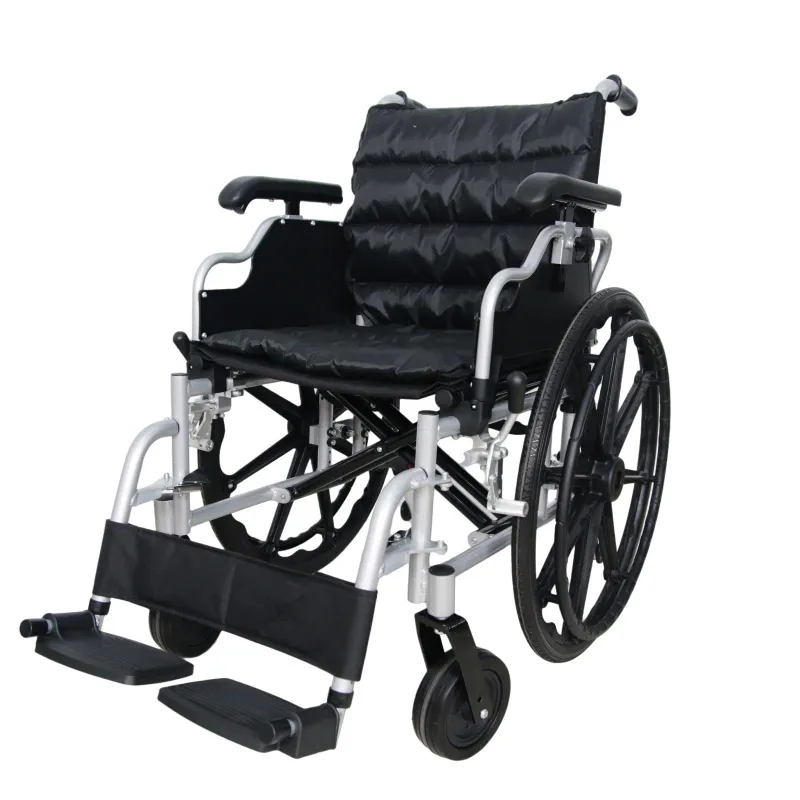
Why do many people confuse "four-wheeled rollators" and "wheelchairs"?
In everyday conversation, people easily refer to any wheeled assistive device as a "wheelchair."
However, in fact, four-wheeled rollators and wheelchairs are completely different in their design concepts.
1. Similar Appearance Leads to Misunderstanding
Four-wheeled rollators typically have a seat, brake handles, and four wheels; wheelchairs also have a seat, armrests, and wheels.
This superficial similarity leads people to mistakenly believe they function the same way.
2. Both Designed for People with Mobility Disabilities
Both belong to the category of "mobility assistive devices," helping people with mobility impairments to complete daily tasks, thus easily being considered similar products.
However, in terms of functional positioning, four-wheeled rollators emphasize "walking assistance," while wheelchairs emphasize "mobility."
This difference determines that they are completely different in terms of usage, body involvement, and target audience.
What is a four-wheeled rollator? What are its main functions?
A "four-wheeled rollator" is a walking assistive device designed to help users maintain balance, distribute weight, and provide temporary rest support during walking.
1. Structural Components
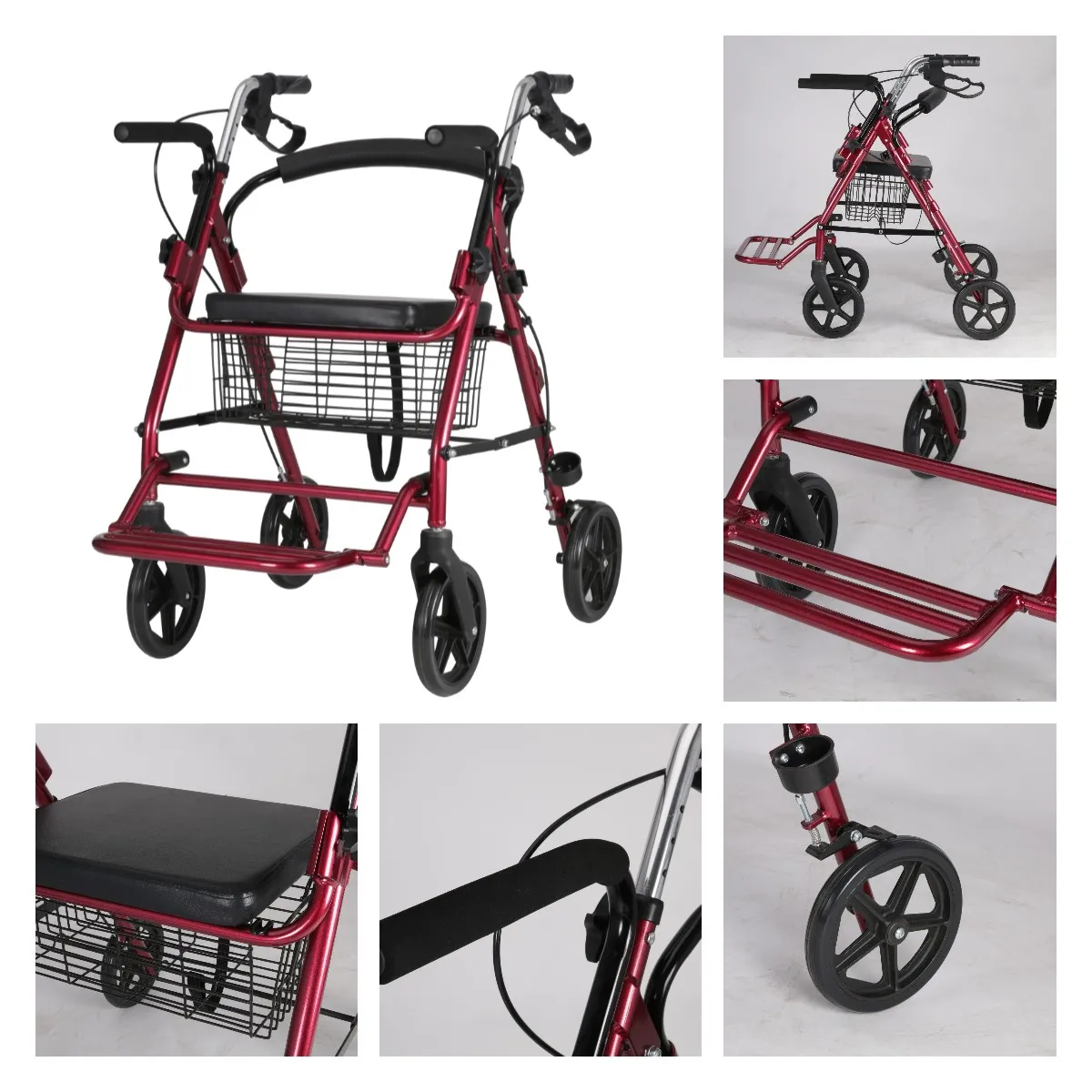
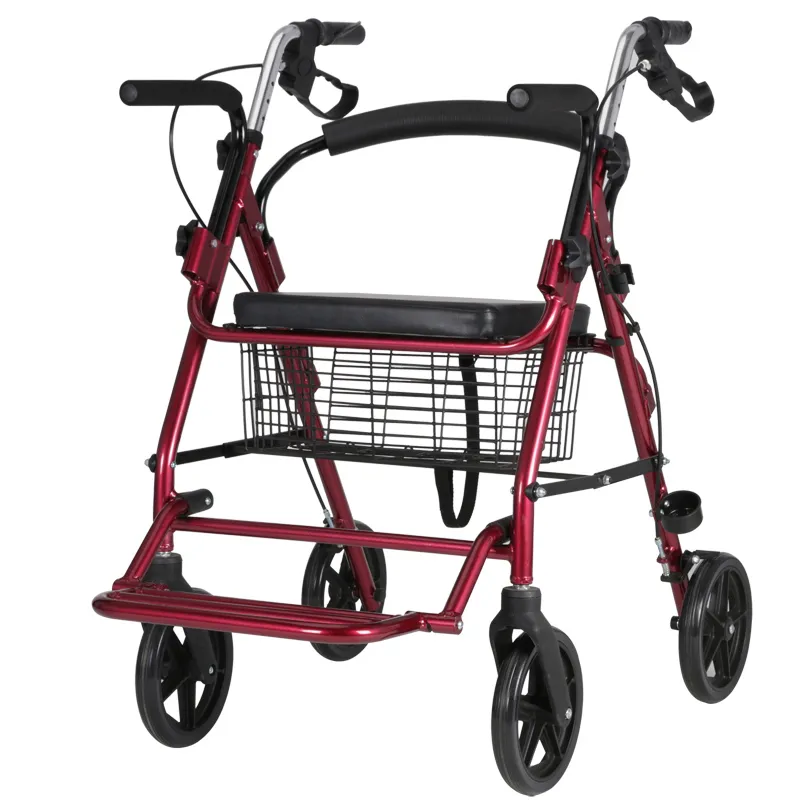
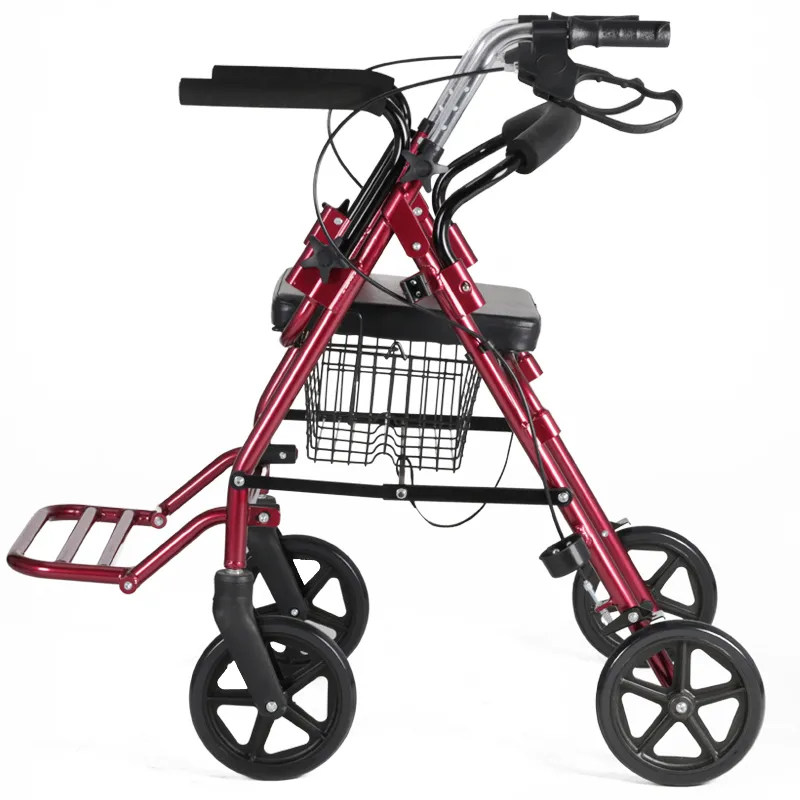
A four-wheeled rollator typically includes:
• Four wheels (front wheels rotate, rear wheels are fixed);
• Height-adjustable handles;
• Built-in braking system;
• Foldable seat (for short rests);
• Storage basket or backpack.
Its lightweight structure, often made of aluminum alloy, makes it suitable for the elderly or those with reduced mobility who can still walk independently.
2. Functional Positioning
The primary function of a four-wheeled rollator is not "transportation," but "walking assistance."
Users still need to walk with their feet; the rollator only provides support and balance.
In short, it is a tool to "help people walk," not a tool to "replace people's walking."
3. How to Use
Users hold the handlebars with both hands, using the roll to support their weight while moving forward with their feet.
When feeling tired, they can temporarily sit on the seat to rest, but the rollator walker is not designed for "long-term sitting and walking."
What is a wheelchair? What are its functions and core design principles?
A wheelchair is a mobility aid designed to assist individuals who are unable to walk normally or stand for extended periods.
1. Design Purpose of Wheelchairs
The core function of a wheelchair is to "replace walking."
It helps individuals with lower limb mobility impairments move manually or electrically, without requiring the user to stand or walk.
2. Common Types
• Manual Wheelchairs: The user pushes the large rear wheels themselves, or a caregiver pushes them.
• Electric Wheelchairs: Driven by a motor, the user moves using a joystick.
• Lifting/Transfer Chairs: Designed for caregivers, primarily for getting patients in and out of bed or for short-distance transfers.
3. Characteristics of Wheelchair Users
Wheelchair users are primarily:
• Individuals with lower limb dysfunction;
• Post-operative recovery patients;
• Individuals with extreme weakness or loss of balance.
Unlike four-wheeled rollators, wheelchair users are typically unable or unsuitable to support their body weight with their feet.
What is the difference between a four-wheeled rollator and a wheelchair?
Although both have wheels, their functional logic is completely different.
A four-wheeled rollator is a tool for "assisting walking," while a wheelchair is a tool for "replacing walking."
Although both are mobility aids, their functional positioning is completely different.
Why does the four-wheeled roller emphasize "active participation"?
1. Requires a certain level of lower limb strength from the user
The prerequisite for using a four-wheeled roller is that the user can stand and take steps.
The device only provides support and balance, not a replacement.
Therefore, it is more suitable for individuals with weakened muscle strength but who still have the ability to walk independently.
2. Promotes Physical Activity
Compared to wheelchairs, four-wheeled rollators allow users to maintain lower limb mobility, continuously exercising balance and coordination during use, and reducing the risk of muscle atrophy.
3. User-Controlled Motion
When using a four-wheeled rollator, the user has complete control over the pace and direction, providing a greater sense of "autonomous movement," which is crucial for maintaining confidence and independence.
Why are wheelchairs more suitable for long-term mobility and caregiving?
1. Complete Replacement for Lower Limb Support
Wheelchairs are designed to allow users to move freely even when they cannot walk.
Whether manual or electric, wheelchairs allow for mobility without lower limb involvement.
2. Suitable for the Frail or with Limited Mobility
For patients who have lost their balance or are recovering from surgery, wheelchairs provide safe support.
Their stable seating posture and braking system effectively prevent falls, making them essential equipment in medical care.
3. Easier for Caregivers to Assist
Wheelchairs can be pushed by caregivers, reducing the risks during patient movement.
A four-wheeled rollator cannot withstand complete weight transfer and is therefore unsuitable for being pushed by others.
From a user experience perspective, how different are the operation methods of a four-wheeled rollator and a wheelchair?
1. Different Operation Methods
• Four-wheeled rollator: The user holds the handles with both hands to control direction and moves forward by coordinating body weight and steps;
• Wheelchair: The user moves by pushing with handwheels or operating an electric system.
2. Stability and Flexibility Comparison
• Four-wheeled rollators are small, lightweight, and flexible to operate, suitable for indoor use or on flat surfaces;
• Wheelchairs have a low center of gravity, are highly stable, and are suitable for long-term use and use on various terrains.
3. Pushing Force and Control Difficulty
A four-wheeled rollator relies on walking power and requires almost no additional pushing force; a wheelchair requires the user's arm strength or electric drive to move.
When should a four-wheeled rollator be chosen?
A four-wheeled rollator is not a replacement for a wheelchair, but rather a balance support tool for people who still have the ability to walk.
The following groups are suitable for using this product:
• Individuals with mild balance disorders;
• Elderly individuals with decreased limb strength but still able to walk;
• Patients in post-operative recovery period;
• Individuals requiring short-term outdoor activities or shopping assistance.
A four-wheeled rollator helps them walk further and more steadily safely, while also providing a brief rest function.
When should a wheelchair be chosen?
When the user:
• Is unable to stand or walk independently;
• Has severe lower limb weakness;
• Requires long-term mobility assistance;
• Requires assistance with movement;
• Should choose a wheelchair as the preferred option.
Especially in caregiving or patient transfer scenarios, wheelchairs provide stable support and secure fixation, making them standard equipment in medical care.
Can a four-wheeled rollator and a wheelchair be substituted for each other?
Strictly speaking, a four-wheeled rollator and a wheelchair cannot be substituted for each other.
The reasons are as follows:
• A four-wheeled rollator cannot fully support the user's weight and is not suitable for people who have lost the ability to walk;
• A wheelchair reduces opportunities for walking and is not conducive to maintaining lower limb muscle strength.
Using the two interchangeably or misusing them can actually create safety hazards.
• For example, allowing an elderly person who cannot stand independently to use a walking aid can easily lead to falls;
• Conversely, allowing someone capable of walking to use a wheelchair for extended periods can lead to muscle atrophy.
Therefore, the appropriate device should be chosen based on physical condition and activity goals.
From a safety perspective, what are the differences in the risks between the two?
Safety points for a four-wheeled rollator:
• Ensure the handbrake is responsive;
• Prevent the wheels from slipping while walking;
• Do not sit or rest on slopes or uneven surfaces.
Safety points for a wheelchair:
• Ensure the brakes are locked before use;
• Push backwards when going uphill or downhill;
• Regularly check the tires and bearings.
Correct use is key to ensuring safety.
Four-Wheeled Rollator Vs. Wheelchair—The Fundamental Difference Between Assistive and Mobility Aids
The functions of a four-wheeled rollator and a wheelchair are not the same.
Four-wheeled rollator:
• Emphasizes "assisting walking";
• Users need to have some walking ability;
• Suitable for those with mild mobility impairments;
• Used to enhance stability and provide short-term rest.
Wheelchair:
• Emphasizes "alternative walking";
• Users do not need to use their lower limbs;
• Suitable for those with mobility impairments or those who are bedridden for extended periods;
• Used for mobility aids, care, and transport.
In short:
A four-wheeled rollator helps people "walk more steadily,"
a wheelchair helps people "move while seated."
Understanding the differences between the two is crucial for making informed purchasing decisions and ensuring safety and comfort.
What mobility aids does Dayang Medical supply besides wheelchairs?
In addition to wheelchairs, Dayang Medical supplies a wide range of mobility aids such as walkers, rollators, walking sticks, and commode chairs. As a diversified manufacturer, it supports different customer needs, from home care to medical institutions. Buyers can source multiple product categories from one supplier, simplifying purchasing and improving efficiency.