

A 4-wheel rollator is a common walking aid suitable for the elderly, patients in rehabilitation, or those with lower limb weakness. It provides stable support and a smooth movement experience, making walking easier and safer.
One of the most common questions consumers have when purchasing a rollator walker is: Are bigger wheels always better? Is it necessary to buy a rollator walker with large wheels?
On the surface, larger wheels seem to mean greater stability and smoother movement, but in reality, wheel diameter is not necessarily "the bigger the better."
This article will comprehensively answer this question from the perspectives of physical structure, usage environment, ergonomics, and safety, allowing you to truly understand the differences between 4-wheel rollators with different wheel diameters and make the right choice based on your needs.
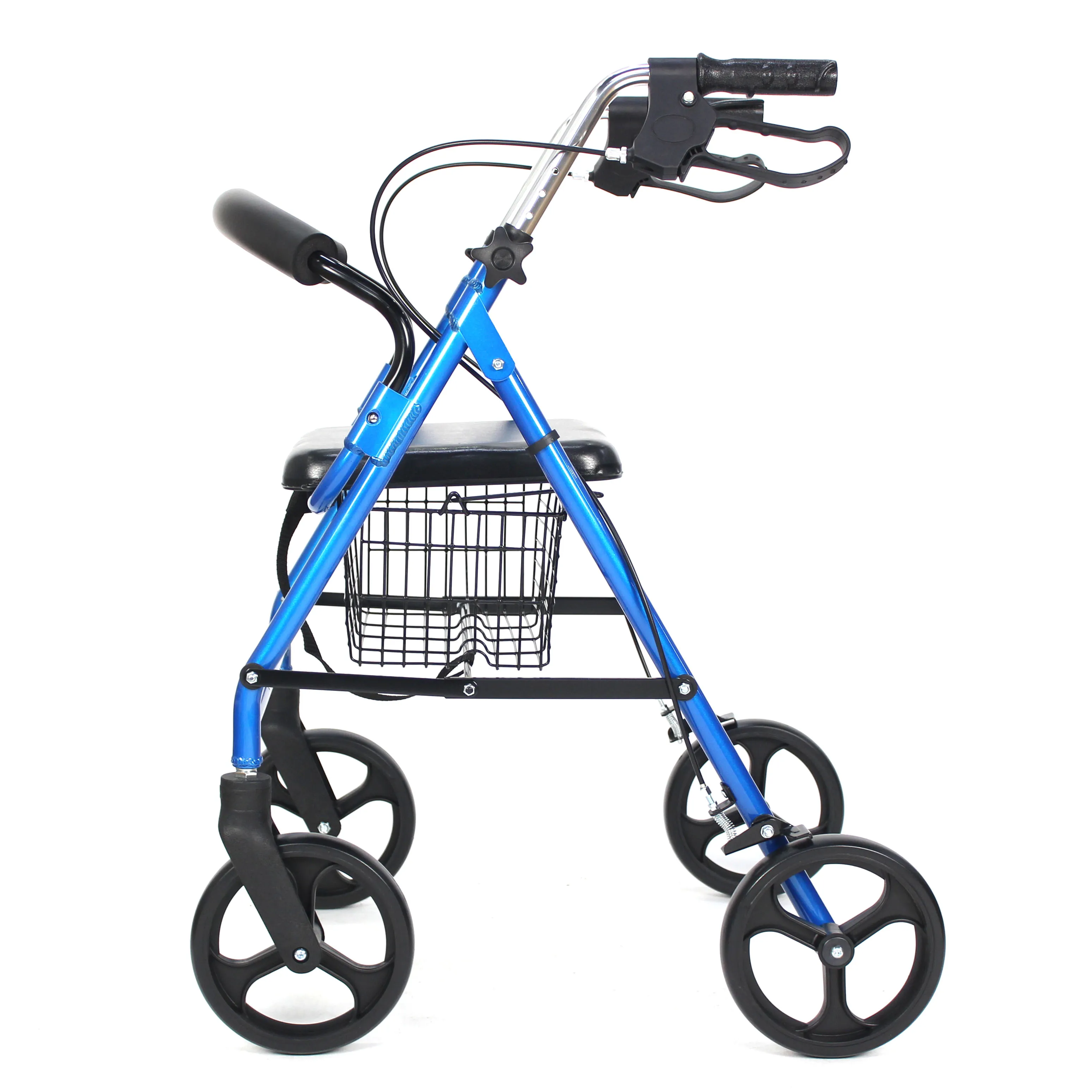
What is the significance of the size of the rollator walker wheels?
The wheels are one of the most critical components of a 4-wheel rollator. They not only determine the smoothness of movement but also affect safety, weight, portability, and many other aspects of performance.
In professional rehabilitation equipment design, the wheel diameter of a rollator walker typically ranges from 6 inches (approximately 15 cm) to 10 inches (approximately 25 cm).
The performance differences resulting from different wheel diameters mainly include the following aspects:
1. Obstacle Clearance
Larger wheels offer better clearance over small obstacles, steps, carpets, or grass.
2. Stability
Larger wheels have a larger contact area with the ground, providing better shock absorption, but also raising the center of gravity; smaller wheels are closer to the ground, providing stability but not resistant to rough terrain.
3. Maneuverability
Smaller-wheeled rollator walkers have a smaller turning radius, making them more suitable for use in confined spaces; larger wheels offer a wider turning range but are easier to push.
4. Weight and Portability
Larger wheels increase overall weight, making them unsuitable for users who frequently carry the device or go up and down stairs.
In other words, the size of the rollator walker's wheels is not a matter of superiority or inferiority, but rather a design choice based on different usage scenarios.
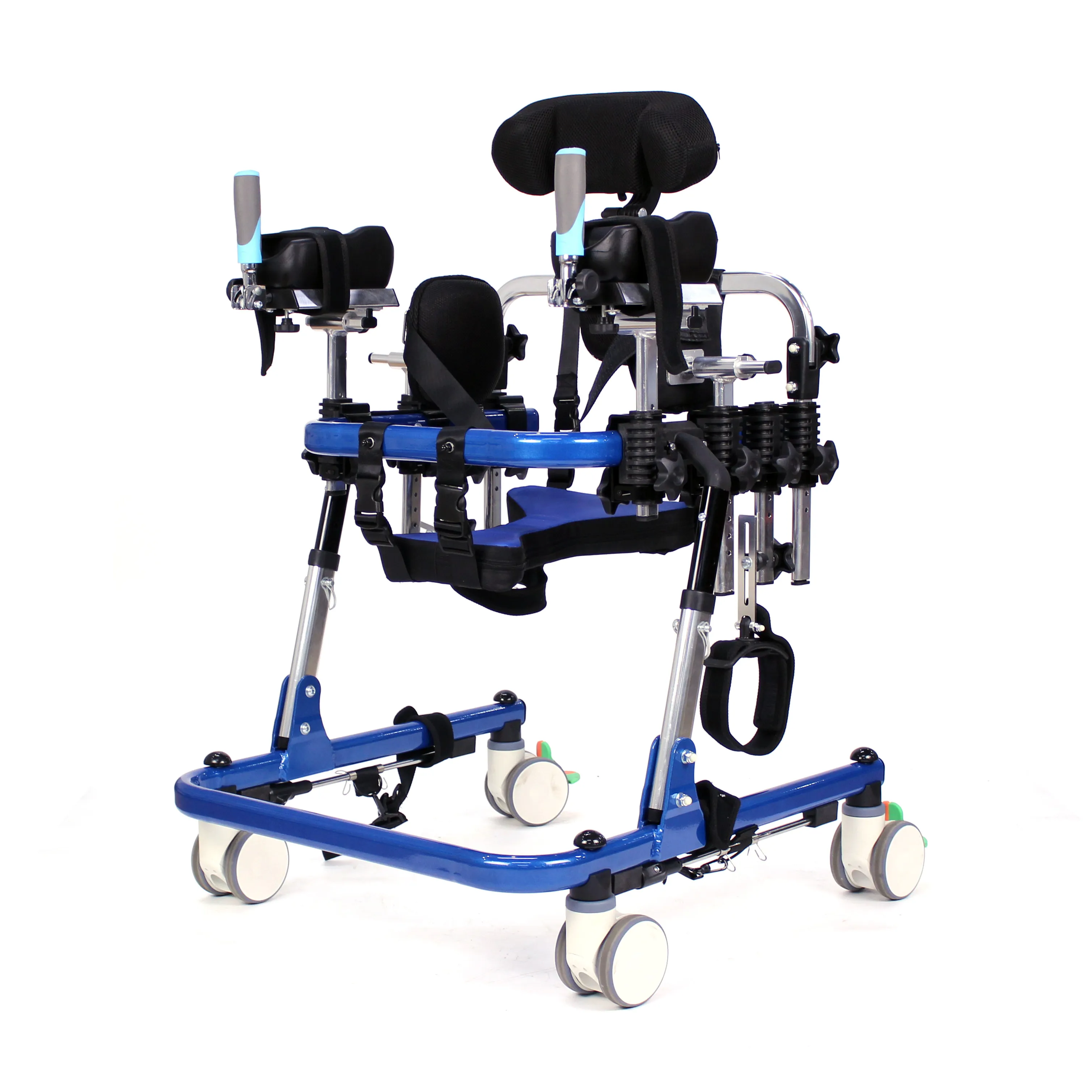
What are the advantages of large-wheeled rollator walkers?
When we say "large-wheeled rollator walker," we usually mean models with wheels 8 inches or larger in diameter.
They do perform better in certain environments, especially for outdoor use.
1. Why are large-wheeled rollator walkers better suited for outdoor use?
Because larger wheels offer better ground adaptability.
On grass, brick, gravel paths, or slightly sloping surfaces, larger wheels can more easily traverse gaps and uneven ground.
The reason is:
• Larger wheel diameter means less rolling resistance, resulting in smoother walking;
• A gentler contact angle allows for better traversing of small obstacles;
• Stronger shock absorption reduces wrist and shoulder fatigue.
Therefore, if you plan to frequently use your rollator walker in parks, sidewalks, or community outdoor paths, a large-wheeled model is generally more ideal.
2. Are large-wheeled rollator walkers easier to push?
In most cases, yes.
Because larger wheels have a lower coefficient of rolling friction with the ground, less effort is required to push them, especially on rough surfaces, significantly reducing arm resistance.
This means that larger-wheeled rollator walkers allow elderly people with weaker upper limb strength or post-operative patients to move more easily.
3. Are larger-wheeled rollator walkers more comfortable?
In terms of shock absorption, larger wheels do perform better.
For example, when traversing gaps in paving stones or small potholes, larger wheels act like shock absorbers, making pushing smoother and the user experience more comfortable.
4. Are larger-wheeled rollator walkers safer?
This requires specific analysis.
In outdoor environments, larger wheels do reduce the risk of tripping because they can better "cross obstacles";
However, when used indoors, the higher center of gravity of a larger wheeled rollator walker may actually make it less stable than a smaller wheeled one during sharp turns.
Therefore, the higher safety of larger wheels depends on the environment being spacious, flat, and with a gentle slope.
What are the advantages of smaller-wheeled rollator walkers?
Small-wheeled rollator walkers typically have wheels around 6 inches in diameter, designed primarily for indoor environments and operation in confined spaces.
In practical use, small-wheeled rollator walkers still offer many unique advantages.
1. Are small-wheeled rollator walkers more stable?
Yes.
Small-wheeled rollator walkers have a lower center of gravity, making them more stable when turning, especially on smooth floors or tile surfaces, reducing the likelihood of tilting or tipping over.
This is the main reason why small-wheeled designs are commonly seen in hospitals, nursing homes, and homes.
2. Why are small-wheeled rollator walkers more suitable for indoor use?
• Smaller turning radius, allowing for flexible movement in narrow hallways, bathrooms, or bedrooms;
• Compact size, less likely to scratch furniture or walls;
• Requires less thrust, making short-distance movement convenient and safe.
For elderly people or patients whose primary mobility is at home, small-wheeled rollator walkers are more practical.
3. Are small-wheeled rollator walkers lighter and easier to carry?
Most small-wheeled rollator walkers use a lightweight aluminum alloy structure, making them lighter overall and easier to fold and carry in a car trunk or up and down stairs.
Therefore, if you frequently need to move between floors or take short trips, a small-wheeled rollator walker is more convenient.
4. What are the disadvantages of small-wheeled rollator walkers?
• Unstable on uneven surfaces;
• Easily gets stuck on steps or carpet edges;
• Poor shock absorption, leading to wrist fatigue during prolonged outdoor use.
Therefore, small-wheeled rollator walkers are more suitable for flat surfaces.
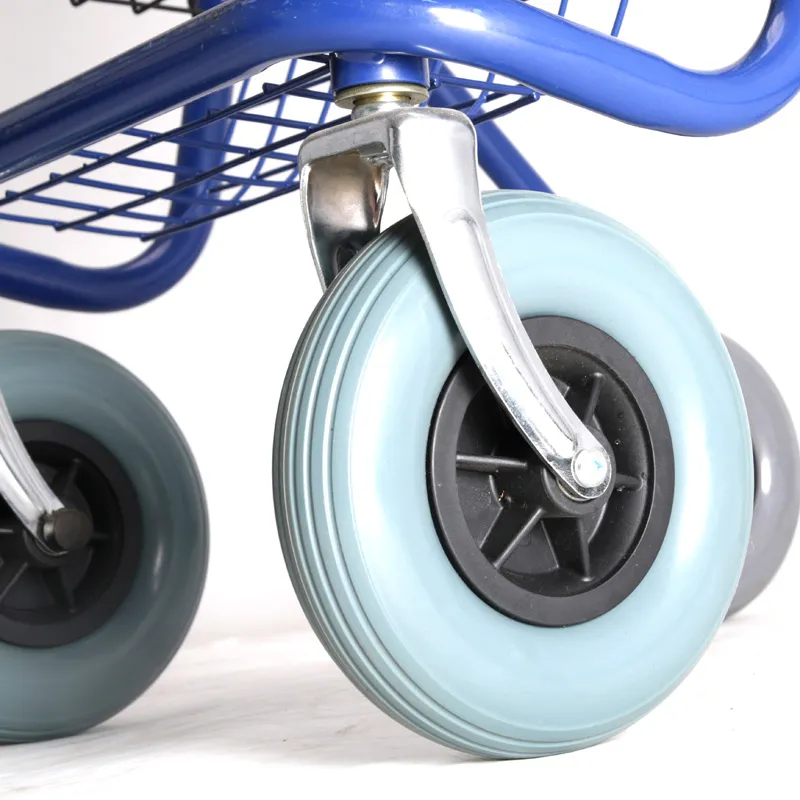
Is a larger wheel diameter always better for rollator walkers?
Many people mistakenly believe that "larger wheels = more advanced," but from a professional rehabilitation engineering perspective, this understanding is inaccurate.
Larger and smaller wheel diameters are essentially different in function, not in quality.
1. The wheel diameter of a rollator walker is not directly proportional to its safety
While larger wheels improve obstacle crossing performance, they also increase the overall height and center of gravity.
For users with poor balance or weak arm control, a high center of gravity can actually increase the risk of tipping over.
Furthermore, larger wheels usually come with a higher seat, which is not ideal for shorter individuals.
2. Large-wheeled rollator walkers may be "too bulky" in indoor environments
When used at home, especially in confined spaces like bedrooms, bathrooms, and kitchens, large-wheeled rollator walkers are difficult to maneuver, less agile, and may even collide with furniture.
Therefore, a large-wheeled rollator walker is not necessarily better; it depends on the usage environment.
3. Large-wheeled rollator walkers are generally heavier and more expensive
The larger the wheels, the more complex the structure, and the stronger the frame needs to support them.
This makes large-wheeled rollator walkers heavier overall, more inconvenient to move, and generally more expensive than smaller-wheeled ones.
Therefore, if you primarily use it indoors on flat surfaces, there's no need to pay extra for "large wheels."
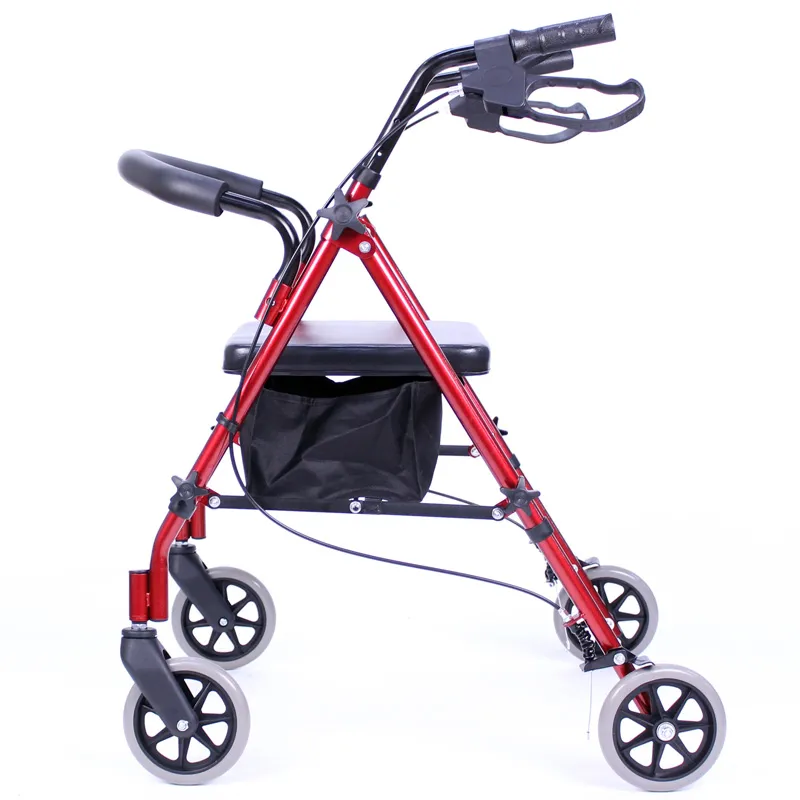
How to choose the right rollator walker wheel diameter based on your usage environment?
The key to choosing the right rollator walker is "environmental suitability," not blindly pursuing a particular size. Here is a professional recommendation guide:
1. Primary Indoor Users: Choose a Small-Wheel Roller Walker
• Wheel Diameter: Approximately 6 inches;
• Advantages: Flexible, space-saving;
• Suitable Surfaces: Tile, wood flooring, carpet;
• Target Users: Elderly people living at home, post-operative recovery patients, those with good balance.
2. Outdoor or Multi-Purpose Users: Choose a Medium-to-Large-Wheel Roller Walker
• Wheel Diameter: 8–10 inches;
• Advantages: Strong obstacle crossing ability, good shock absorption;
• Suitable Surfaces: Sidewalks, lawns, community roads;
• Target Users: Frequent outdoor users or those with a larger build.
3. Slopes or Rural Environments: Choose a Shock-Absorbing Large-Wheel Roller Walker
• Wheel Diameter: 10 inches or more (some have even larger front wheels);
• Features: Equipped with shock-absorbing structure and braking system;
• Target Users: Those living in rural areas or on uneven roads.
4. For those who need lightweight portability: Prioritize small wheels or foldable models
• Recommended wheel diameter: 6–8 inches;
• Features: Foldable and portable, lightweight;
• Suitable for: Those who frequently go up and down stairs or store in their car trunk.
What other factors should be considered when choosing the wheel diameter for a rollator walker?
Besides wheel size, the overall user experience of a rollator walker is influenced by other design factors.
• Tire material: Rubber tires offer strong anti-slip performance, while foam wheels are lightweight but have slightly lower wear resistance.
• Braking system: Large-wheeled rollator walkers often come with a handbrake or locking brake to ensure safety downhill.
• Seat height: Shorter users should choose an adjustable seat to prevent their feet from dangling in the air.
• Frame width and weight: Confirm whether it can pass through doorways or narrow passages.
• User weight: Heavier users should choose a reinforced model with higher load-bearing capacity.
Bigger isn't Always Better for Your Rollator Walker; the Right Wheels are for You
The size of the wheels on your rollator walker isn't the most important factor. The choice should be based on your environment, physical condition, and usage habits.
If you primarily use it indoors on flat surfaces with limited space, a smaller-wheeled rollator walker is more maneuverable and stable.
If you frequently walk outdoors and need to cross obstacles, a larger-wheeled rollator walker is more suitable.
If you need to handle both environments, choose a balanced design with medium-diameter wheels (approximately 8 inches).
In other words: The right rollator walker isn't the one with the biggest wheels, but the one that best suits your needs.
Does Dayang Medical have experience with international trade?
Yes, we have been exporting medical equipment for over a decade, serving clients in Europe, North America, Asia, and the Middle East. Our factory in Foshan has full logistics support, ensuring smooth delivery and compliance with global import requirements.
Buyers can purchase directly from us at factory prices, receive wholesale discounts, and benefit from promotional deals. With ISO and FDA certifications, Dayang Medical is a trusted supplier in China for international purchasing and sales.