

In modern medical and home care, adjustable hospital beds have become increasingly common. They not only help patients adjust their position and reduce discomfort while bedridden, but also improve the efficiency of caregivers.
However, many people ask a common question when purchasing one: "Is an adjustable hospital bed the same as an electric hospital bed?"
The answer is: Not necessarily.
Although "adjustable hospital bed" and "electric hospital bed" sound similar, there are significant differences between the two.
This article will analyze the relationship and differences between the two from multiple dimensions, including structure, principle, function, and applicable scenarios, to help you better understand these two concepts and make a more informed decision when purchasing.
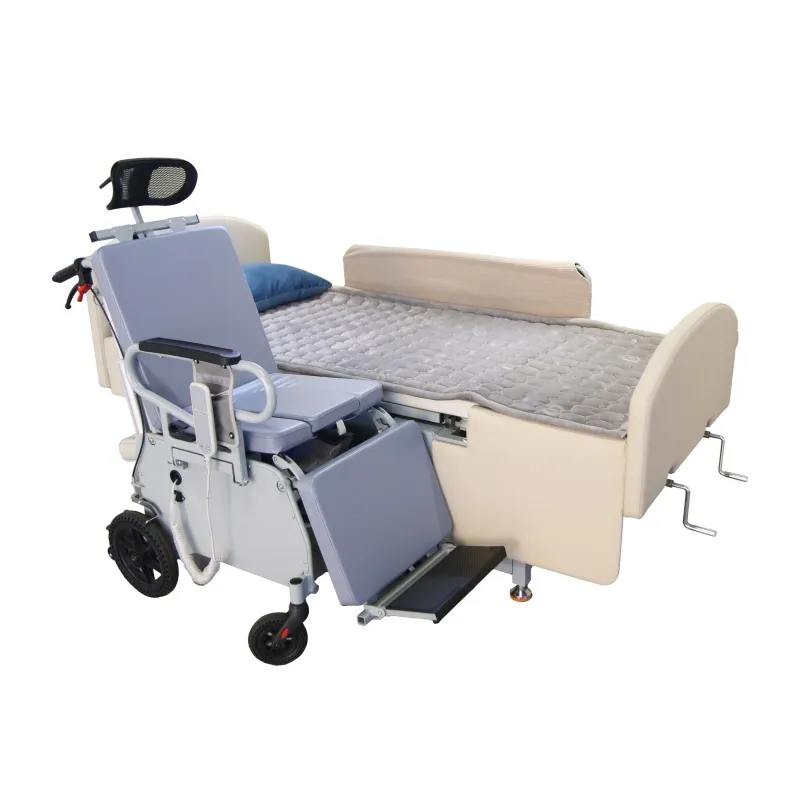
Why Use an Adjustable Hospital Bed?
Maintaining a proper position is crucial in bedridden care. For patients, maintaining the same posture for extended periods can lead to poor blood circulation, muscle stiffness, and even bedsores. Caregivers also face significant physical strain when turning patients, feeding them, and changing dressings.
The emergence of adjustable hospital beds is precisely to solve these problems.
By adjusting the angle or height of the bed, patients can easily sit up, lie down, raise their legs, or tilt in bed, improving comfort and facilitating care and rehabilitation.
Adjustable hospital beds can be manually or electrically adjustable—this is the fundamental difference between "adjustable hospital beds" and "electric hospital beds."
What is an Adjustable Hospital Bed?
An adjustable hospital bed is a medical or nursing bed whose surface angle or height can be adjusted. Its core characteristic is "adjustability," not a limitation on the method of adjustment.
In other words, "adjustable hospital bed" is a functional concept, not a structural one.
Its adjustment methods can be:
• Manual adjustment: Raising or lowering the bed surface or changing the angle is achieved through a crank or mechanical device;
• Electric adjustment: Precise control is achieved through a motor and control system.
Main components of an adjustable hospital bed:
• Bed frame: Typically constructed of steel or aluminum alloy frame to ensure stability;
• Bed board: Divided into backrest, legrest, and hiprest areas;
• Adjustment mechanism: Can be mechanical handle, electric actuator, or hydraulic system;
• Guardrails and casters: Provide safety and ease of movement.
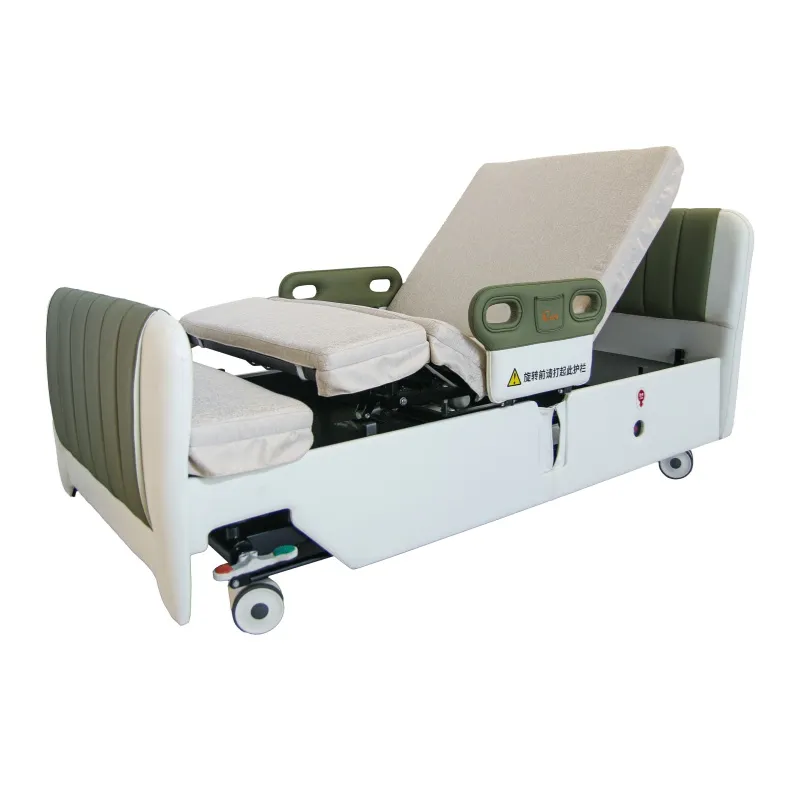
What are the common types of adjustable hospital beds?
Based on the adjustment method, adjustable hospital beds can be divided into the following three types:
1. Manually adjustable hospital bed: Primarily operated by mechanical cranks;
2. Semi-electric adjustable hospital bed: Some functions are electrically controlled, while others are manually operated;
3. Fully electric adjustable hospital bed: All adjustment movements are driven by a motor.
Therefore, electric hospital beds are a type of adjustable hospital bed, but not all adjustable hospital beds are electric hospital beds.
What is an electric hospital bed?
An electric hospital bed is a modern hospital bed driven by a motor system, using a control panel or hand controller to adjust the bed height, backrest, legrest angle, and other positions.
The main goals of electric hospital beds are:
• To reduce the difficulty of patient positioning;
• To reduce the physical exertion of nursing staff;
• To improve nursing efficiency and safety.
The main structural components of an electric hospital bed are:
• Electric push rod system (core component)
• Controller/remote control
• Safety rails and casters system
• Anti-pinch and limit devices
• Removable and washable bed board
The main functions of an electric hospital bed are:
One-button height adjustment: Adjusts the overall bed height for easy getting in and out of bed;
• Back/leg adjustment: Allows patients to sit up comfortably or raise their legs;
• Overall tilting: Assists blood circulation or nursing procedures;
• Emergency reset: One-button return to a supine position.
Electric hospital beds are significantly superior to traditional manually adjustable hospital beds in terms of ease of operation and nursing efficiency.
What is the relationship between adjustable hospital beds and electric hospital beds?
Many people confuse these two concepts because there is indeed a relationship of inclusion.
Concepts | Is it adjustable? | Adjustment methods | To which category does it belong? |
| Adjustable hospital bed | ✅ Yes | Manual, electric, hydraulic, etc. | It includes multiple types |
| Electric hospital bed | ✅ Yes | Electric control only | It is a type of adjustable hospital bed |
Simply put:
An "electric hospital bed" is an advanced form of an "adjustable hospital bed."
All electric hospital beds are adjustable, but not all adjustable hospital beds are electric.
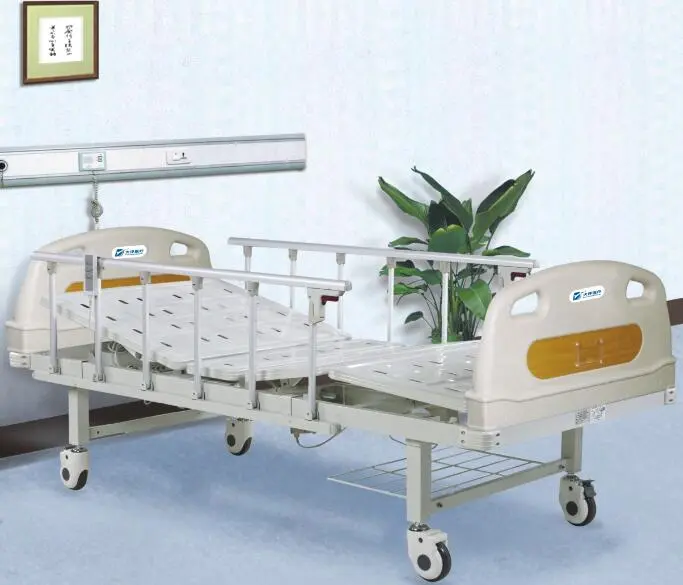
How are adjustable hospital beds classified?
1. By Adjustment Method
• Manual Adjustable Beds: Use a crank-operated mechanical device;
• Semi-Electric Adjustable Beds: Partially motor-driven, partially manual;
• Fully Electric Adjustable Beds: Entirely motor-controlled.
2. By Number of Functions
• Single-Function Beds: Only the backrest is adjustable;
• Dual-Function Beds: Both backrest and legrests are adjustable;
• Triple-Function Beds: Backrest, legrests, and height are all adjustable.
3. By Usage Scenario
• Hospital Wards: Multifunctional, high load capacity, comprehensive safety systems;
• Home Care: Easy to operate, compact;
• Rehabilitation Facilities: Used in conjunction with assistive devices.
The choice of an adjustable hospital bed should be based on a comprehensive consideration of the usage environment, patient condition, and budget.
Does an adjustable hospital bed have to be electric?
Answer: Not necessarily.
Adjustable hospital beds emphasize functionality—the ability to adjust, not the method of adjustment.
Manually adjustable hospital beds can still meet basic nursing needs, such as:
• Allowing patients to sit up to eat;
• Elevating legs to promote blood circulation;
• Adjusting the bed angle for easier nursing care.
If the patient's bedridden period is short, or the budget is limited, a manually adjustable hospital bed is sufficient.
However, if the patient is bedridden for a long time, is frail, or requires frequent care, an electric hospital bed is more suitable.
Therefore:
Adjustable hospital bed ≠ Electric hospital bed.
Electric hospital bed ⊂ Adjustable hospital bed.
How to choose between an adjustable or electric hospital bed?
When choosing, consider the following aspects:
1. Usage needs
For patients with short-term bed rest/recovery: a manually adjustable hospital bed is recommended; For patients with long-term bed rest or in the recovery period: an electric hospital bed is more suitable, facilitating frequent position adjustments.
2. Intensity of Care
If frequent assistance from family members is required for turning, feeding, and moving the patient, an electric hospital bed is recommended.
If the frequency of care is low and the patient is highly self-sufficient, a manual bed can be chosen.
3. Space and Mobility
Home spaces are limited, so lightweight adjustable beds are a good option. Hospital environments tend to prefer sturdy, fully functional electric beds.
4. Cost Budget
Manual adjustable beds cost approximately $200–$1000; electric beds can range from $1500 to $5000.
Why are electric beds more popular?
Although electric beds are more expensive, they offer significant advantages in user experience and care efficiency.
Key advantages include:
• Easy operation: One-button adjustment, even elderly people can operate independently;
• High nursing efficiency: Reduces the physical burden on caregivers;
• Enhanced safety: Equipped with anti-pinch and limit functions;
• Improved comfort: Precise angle adjustment, ergonomically designed;
• Strong functional expandability: Can be equipped with IV stands, bedside controls, turning devices, etc.
For these reasons, electric hospital beds are gradually becoming the first choice for hospital and home care.
Maintenance and Care Points for Adjustable Hospital Beds
Whether it's a manually adjustable or electric hospital bed, proper maintenance can extend its lifespan.
1. Regularly check connecting parts
Ensure that screws, cranks, and guardrail connections are not loose.
2. Electric hospital beds require inspection of the motor system
Prevent dust and liquid from entering the motor, and regularly check for aging wiring.
3. Keep the bed clean
Wipe the bed surface daily to prevent bacterial growth, especially for patients who are bedridden for extended periods.
4. Check the braking system
The wheel locks should be sensitive and reliable to prevent accidental slippage.
5. Regularly lubricate moving parts
Mechanically adjustable hospital beds especially require lubrication to prevent jamming.
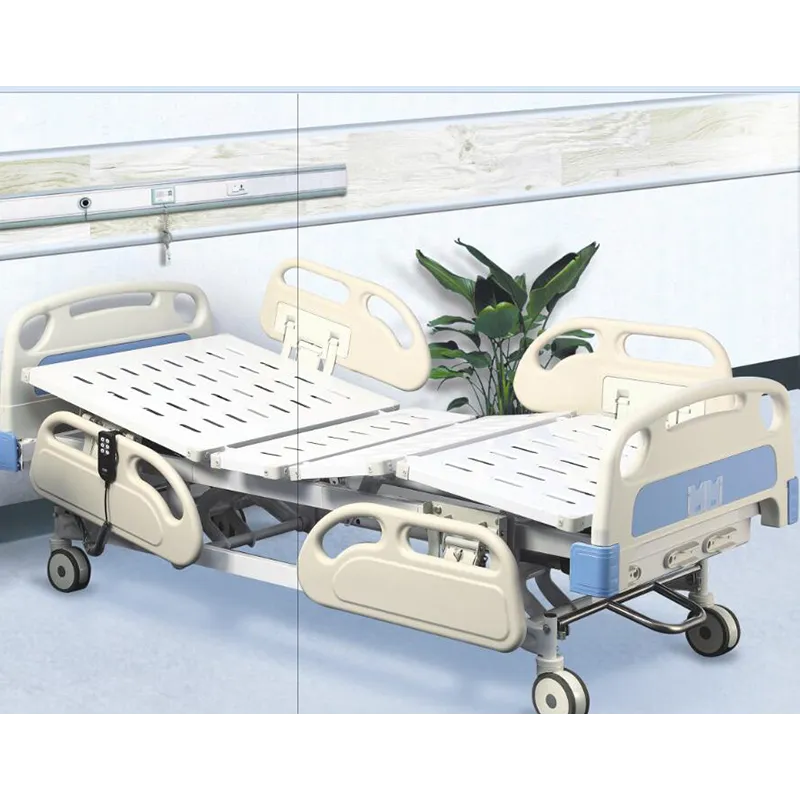
Can an electric hospital bed be operated manually?
Generally not. Electric hospital beds rely entirely on a motor system, but some models are equipped with emergency batteries.
Can a manually adjustable hospital bed be upgraded to an electric one?
Theoretically, it is possible, but not recommended. It involves modifications to the electrical circuits and structure, posing a higher safety risk.
What is the load-bearing capacity of an electric hospital bed?
Generally 150kg–250kg, some heavy-duty models can reach 300kg.
Does an electric hospital bed require a dedicated power supply?
Usually uses standard 220V AC power. Some models have a built-in battery backup system.
Are adjustable hospital beds suitable for home use?
Yes. Especially for the elderly, post-operative patients, or those requiring long-term bed rest, they can significantly improve comfort.
How to Purchase High-Quality Mobility Products from Dayang Medical?
Guangdong Dayang Medical Technology Co., Ltd. is a leading manufacturer and supplier of high-quality mobility products from China. Since 2009, the company has specialized in electric wheelchairs, manual wheelchairs, sports wheelchairs, hospital beds, commodes, mobility scooters, walkers, shower chairs, and walking sticks. Dayang Medical operates two R&D and production bases in Foshan, ensuring CE-certified products with ISO13485, ISO9001, FDA, and TUV compliance.