

A walker is an assistive device designed to provide support and aid with balance for individuals with mobility impairments, the elderly, or patients undergoing rehabilitation.
For many first-time buyers, a crucial question often arises: What factors should be taken into account when purchasing a walker?
Factors such as the walker's type, stability, dimensions, weight, and intended usage environment directly impact both safety and comfort. An improper choice not only diminishes the assistive benefits but may even increase the risk of falls.
Drawing upon a professional perspective, this article systematically analyzes the core elements you should prioritize when selecting a walker, helping you make a scientifically sound and rational choice to find the device best suited to your needs.
What Are the Main Types of Walkers? Why Is It Important to Understand the Types First?
Before considering a purchase, the first step is to identify the specific type of walker you need. This is because different types of walkers are suited to different users and environments; selecting the wrong type can result in instability during use or suboptimal performance.
Currently, common walkers generally fall into the following three categories:
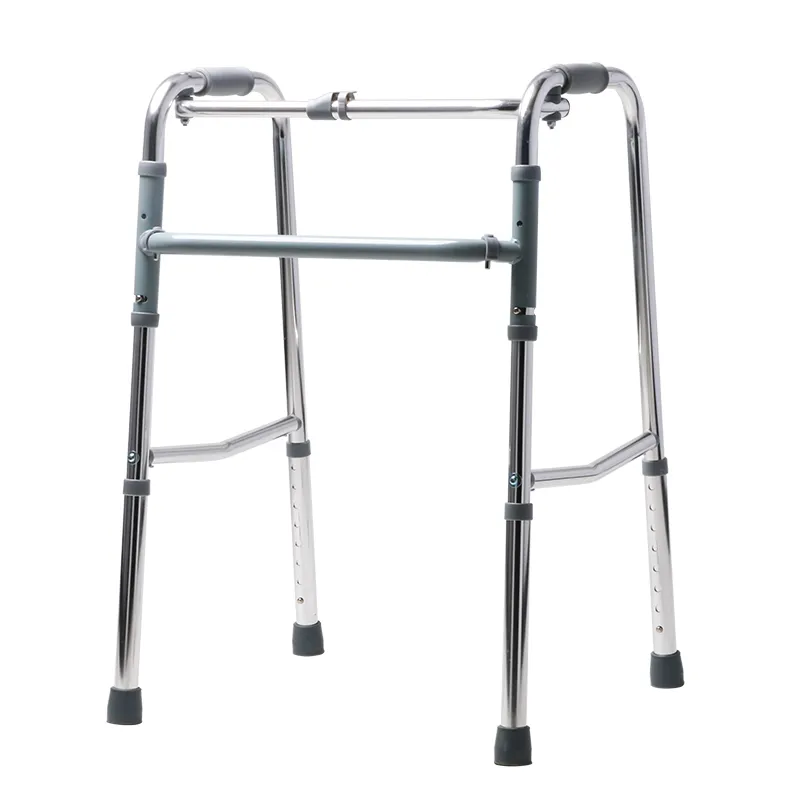
1. Non-Wheeled Walkers (Fixed Walkers)
• Feature the most stable structure, with four legs firmly planted on the ground and no rolling components.
• Ideal for users with poor balance, those in the early stages of rehabilitation, or individuals with limited physical strength.
• To move forward, the user must lift the walker; every step is fully controlled by the user.
Pros of Non-Wheeled Walkers: Maximum stability and high safety levels.
Cons of Non-Wheeled Walkers: Moving requires slightly more physical effort and is not ideal for walking long distances.
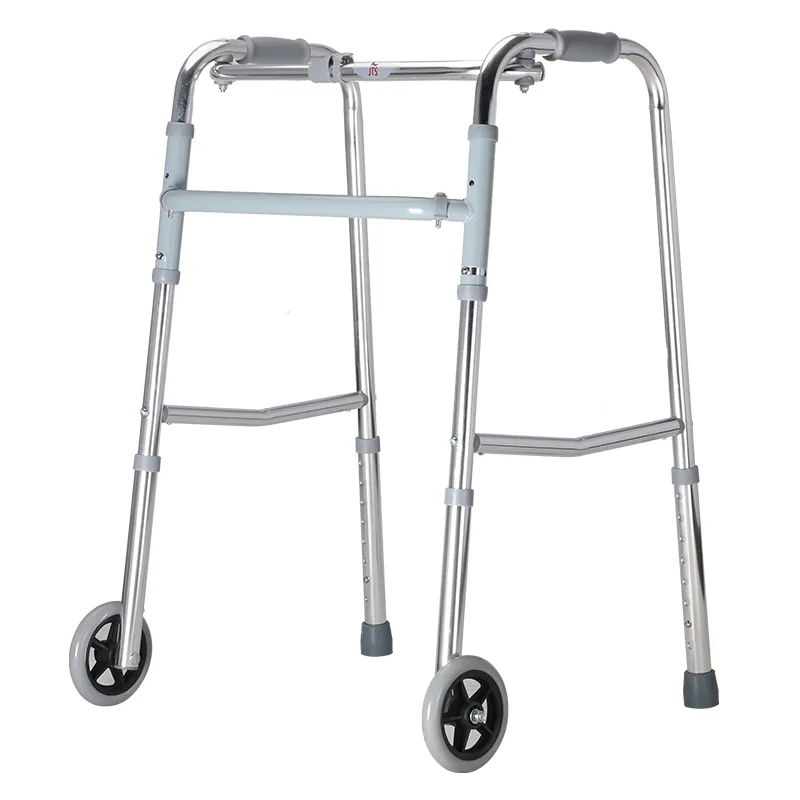
2. Two-Wheeled Walkers (Front-Wheeled Walkers)
• Equipped with two small wheels at the front and non-slip rubber tips at the rear.
• Suitable for users who still possess reasonable lower-body strength but require some assistance to reduce the physical burden of lifting the device.
• To move, the user simply needs to push gently to glide forward, making it less physically demanding than a fixed walker.
Pros of Two-Wheeled Walkers: Easy to operate and allows for a more natural walking rhythm.
Cons of Two-Wheeled Walkers: Slightly less stable than non-wheeled walkers and requires a certain level of balance ability.
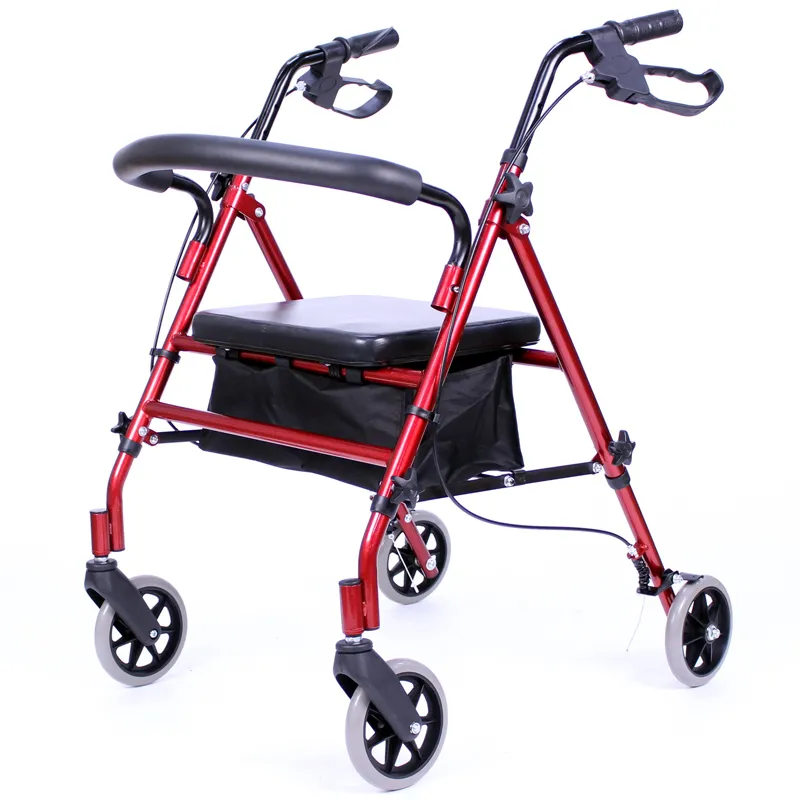
3. Four-Wheeled Walkers (Rollators)
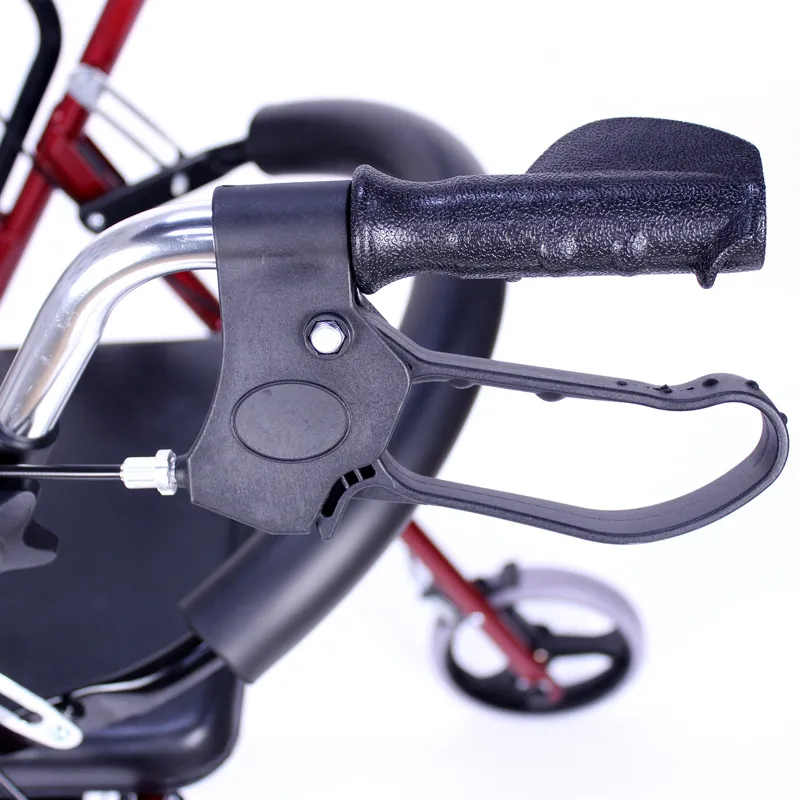
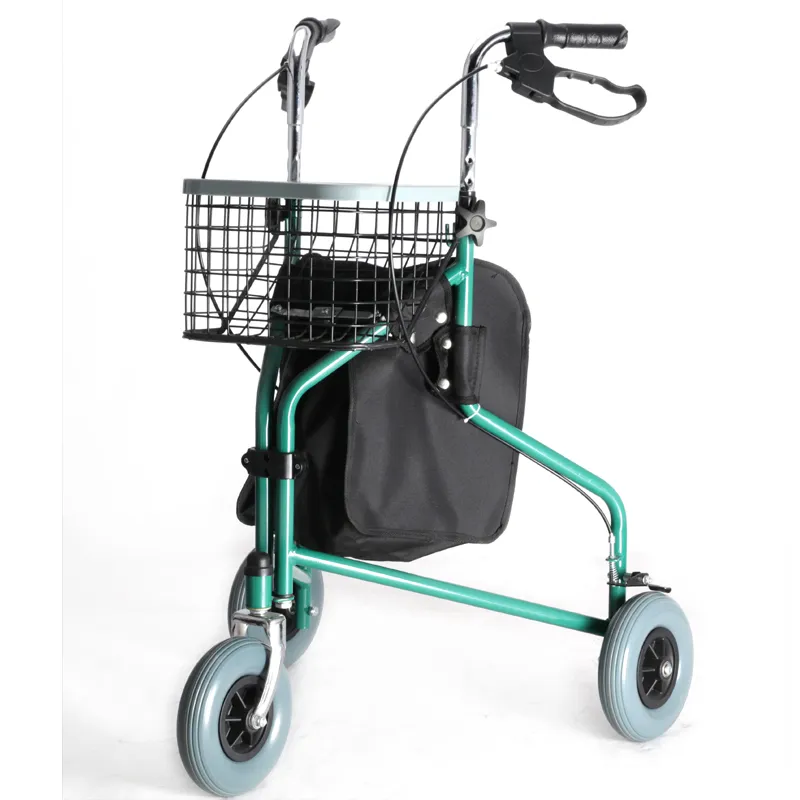
• Feature four freely rolling wheels and are typically equipped with braking mechanisms and a built-in seat.
• Primarily designed for outdoor use and are best suited for individuals in the later stages of rehabilitation or those with a stable gait. Advantages of Four-Wheeled Walkers: Lightweight and easy to maneuver; suitable for walking longer distances.
Disadvantages of Four-Wheeled Walkers: Offers the lowest stability; requires a high level of balance from the user.
Conclusion:
Walkers are generally intended primarily for indoor use. Among the various types, non-wheeled walkers offer the highest stability; conversely, the more wheels a walker has, the greater the demand on the user's balance, and the higher the associated risk of falling.
Therefore, when selecting a specific type, it is essential to base your decision on your own physical condition and the environment in which the walker will be used.
Why is stability the primary consideration when purchasing a walker?
"Stability" is one of the most fundamental attributes of a walker. The greater the stability, the stronger the safety assurance for the user.
1. Stability Determines Safety of Use
The purpose of a walker is to assist with walking and help maintain balance. If a walker has an unstable structure or is prone to sliding, it will severely compromise safety.
Non-wheeled walkers—because they lack rolling wheels—provide completely stationary support and represent the most stable structural design.
While wheeled walkers require less physical effort to use, they are prone to losing control on wet, slippery, or sloped surfaces, thereby posing a risk of falling.
2. Stability Depends on Structure and Support Point Distribution
The four legs of a walker make contact with the ground to form a stable support base. The larger this support base, the more stable the center of gravity.
Non-wheeled walkers utilize a fixed four-point support system, whereas four-wheeled walkers—due to the mobility of their wheels—naturally possess lower static stability.
3. Stability is Linked to the User's Physical Condition
Individuals with poor balance or lower-limb weakness should prioritize the selection of a fixed-frame walker, which offers superior stability.
Wheeled walkers are suitable only for users who are capable of independently controlling their walking speed and maintaining their balance.
Therefore, among all factors to consider when making a purchase, stability should always be ranked first.
The primary objective of a walker is not to enable the user to "walk fast," but rather to enable them to "walk steadily."
When purchasing a walker, how should one select the appropriate size and height?
The size and height of a walker directly impact the user's posture and walking safety. Choosing an inappropriate height can lead to shoulder strain, a hunched back, or a shifted center of gravity—all of which increase the risk of falling.
1. Principles for Height Adjustment
Standard Measurement Method:
When the user is standing in a natural, upright position with their arms hanging loosely at their sides, the walker's handgrips should be level with their wrists. This ensures that while walking, the elbows remain slightly bent—approximately 15 degrees—providing both energy efficiency and stability.
• A walker that is too high: Can easily lead to shoulder and neck fatigue.
• A walker that is too low: Causes the body to lean forward, resulting in an unstable center of gravity.
2. Choosing the Right Width
The width of the walker should be slightly narrower than the width of your doorways to ensure free and easy passage within the home.
If your living space is limited, consider choosing a foldable or narrow-profile design.
3. Weight Considerations
For users with limited physical strength or for the elderly, a lightweight aluminum alloy model is recommended, as it is easier to lift and maneuver.
However, structural integrity must not be compromised; the walker should not be *too* light, as this could negatively impact its stability.
Summary:
When purchasing a walker, it is essential to have the user personally test-grip and test-walk with the device to ensure that its height, width, and weight are perfectly matched to their physical condition.
How does the intended usage environment influence the purchasing decision?
Before buying a walker, you need to answer one fundamental question: Where will you be using the walker most of the time?
Different usage scenarios call for different types of walkers:
1). Indoor Use: Prioritizing Stability and Slip Resistance
• For environments with flat, even floors—such as homes, hospitals, or rehabilitation centers—a non-wheeled walker or a two-wheeled walker is the most suitable choice.
• Requirements: Solid support, non-slip rubber tips, and a compact design.
• Non-wheeled walkers perform best in this environment, offering the highest level of safety.
2). Outdoor Use: Prioritizing Flexibility and Durability
• If you need to venture outdoors occasionally, consider a four-wheeled walker (often referred to as a "rollator").
• Requirements: Large wheels, integrated brakes, and a shock-absorbing structure capable of handling various types of terrain.
• Important Note: This type of walker is not recommended for individuals with poor balance.
3). Mixed-Environment Use: Balancing Stability with Portability
• A two-wheeled walker (with wheels at the front) serves as a good compromise, offering smooth mobility indoors while still allowing for short walks outdoors.
• However, it is crucial to remain vigilant when using it outdoors to prevent accidental sliding, particularly on slopes.
Key Takeaway:
Before selecting a walker, your top priority should be to determine the primary environment in which it will be used.
• Primarily indoor use → Non-wheeled walkers are best;
• Indoor + light outdoor use → Two-wheeled walkers;
• Frequent outdoor use → Four-wheeled rollators.
Do the materials and quality of a walker matter?
They matter significantly.
The material not only affects the walker's weight and durability but also directly determines its stability and safety.
1. Aluminum Alloy Walkers
• The most common material.
• Pros: Lightweight, rust-resistant, high strength.
• Suitable for: The elderly, individuals undergoing rehabilitation, and indoor users.
2. Steel Walkers
• Sturdy structure with high load-bearing capacity.
• Cons: Heavier weight, making them less convenient to move.
• Suitable for: Users with higher body weight who require stronger structural support.
3. Carbon Fiber Walkers (Premium Material)
• Extremely lightweight and corrosion-resistant, though the price is higher.
• Primarily used in high-performance rollators; less common in standard daily-use walkers.
Additionally, welding quality, the sturdiness of connectors, and the material of the non-slip leg tips should all be considered key indicators when assessing quality.
Purchasing Advice:
Prioritize walker products that possess quality certifications and come from reputable brands to ensure reliable materials and structural stability.
What structural design details should be considered regarding a walker's stability?
When purchasing a walker, in addition to material and height, you should also pay attention to specific design details that impact stability:
• Leg Tip Structure: High-quality, non-slip leg tips enhance friction and prevent sliding on wet or slippery surfaces.
• Support Bar Angles: A well-designed triangular or square support structure effectively distributes pressure and improves overall stability.
• Folding Mechanism Locks: For foldable walkers, ensure the locking mechanism is secure to prevent accidental folding.
• Handle Material: Non-slip rubber or foam handles provide sweat resistance and grip security, enhancing user comfort.
• Base Width: The wider the base of support, the greater the static stability.
Although these structural details may seem minor, they have a profound impact on safety and comfort during use.
An excellent walker should strike a balance between structural stability and ease of operation.
Should the user's physical condition be taken into account when purchasing a walker?
Absolutely. The selection of a walker must be predicated upon the user's physical condition. The following aspects are particularly critical:
1. Balance Capabilities
• Poor balance → Choose a non-wheeled walker;
• Good balance → You may choose a two-wheeled or four-wheeled walker.
2. Muscle Strength
• If upper-body strength is weak, lifting a non-wheeled walker may be strenuous; a lightweight design should be selected.
• If lower-body strength is poor, a structure offering strong support should be chosen.
3. Rehabilitation Stage
• Early Rehabilitation: A non-wheeled walker is recommended to provide maximum stable support.
• Mid-stage Rehabilitation: Users may transition to a two-wheeled walker to help restore a natural gait.
• Late-stage Rehabilitation: A four-wheeled walker (rollator) may be used to assist with walking over longer distances.
Key Takeaway:
When it comes to walkers, "more advanced" does not necessarily mean "better"; rather, the safest choice is the one that best aligns with the user's specific physical condition.
Is the Adjustability of a Walker Important?
Extremely important.
An adjustable structure allows the walker to adapt to users of different heights and those at different stages of recovery.
• Adjustable Height: Almost all standard walkers feature multi-level height adjustment to accommodate users of varying heights.
• Foldable or Collapsible Width: Ideal for users with limited living space.
• Rotatable Handle Design: Enhances maneuverability and turning flexibility.
Conclusion:
An adjustable walker not only improves user comfort but also extends the product's lifespan.
How Should Walker Maintenance and Safety Checks Be Performed?
After purchasing a walker, regular maintenance is crucial. Proper maintenance ensures its long-term stability and safety.
Key Daily Maintenance Points:
• Regularly check screws and connectors to ensure they are not loose;
• Inspect the condition of the rubber tips (feet); if they appear smooth or cracked, replace them immediately;
• Keep the walker clean—especially the bottoms of the rubber tips—to prevent dust accumulation from compromising traction;
• Avoid prolonged exposure to direct sunlight or moisture to extend the lifespan of the metal components;
• Handle with care when folding or storing the device to prevent impacts that could cause weld points to crack.
These basic maintenance measures can significantly reduce the risks associated with using a walker and help maintain it in optimal working condition.
What Additional Factors Should Be Considered When Purchasing a Walker?
In addition to structural design and safety features, the following supplementary factors should be considered based on individual habits and preferences:
• Whether a foldable design is required: for ease of storage and portability;
• Whether a seat or tray is included: to facilitate brief periods of rest;
• Whether a braking mechanism is present (specifically for wheeled walkers);
• Whether the handle height features calibrated adjustment markings;
• Whether the device's overall weight and load-bearing capacity are appropriate for the user's body weight.
While not strictly core features, these functions can significantly enhance convenience and comfort during daily use.
What is the production capacity of Dayang Medical?
With two major production bases, Dayang Medical possesses robust manufacturing capabilities to meet growing global demand. The company’s advanced facilities and skilled workforce ensure efficient production and consistent product quality, making it a reliable partner for bulk supply and wholesale orders.